
News
History: A 3-Cent Gas Tax Passed 100 Years Ago

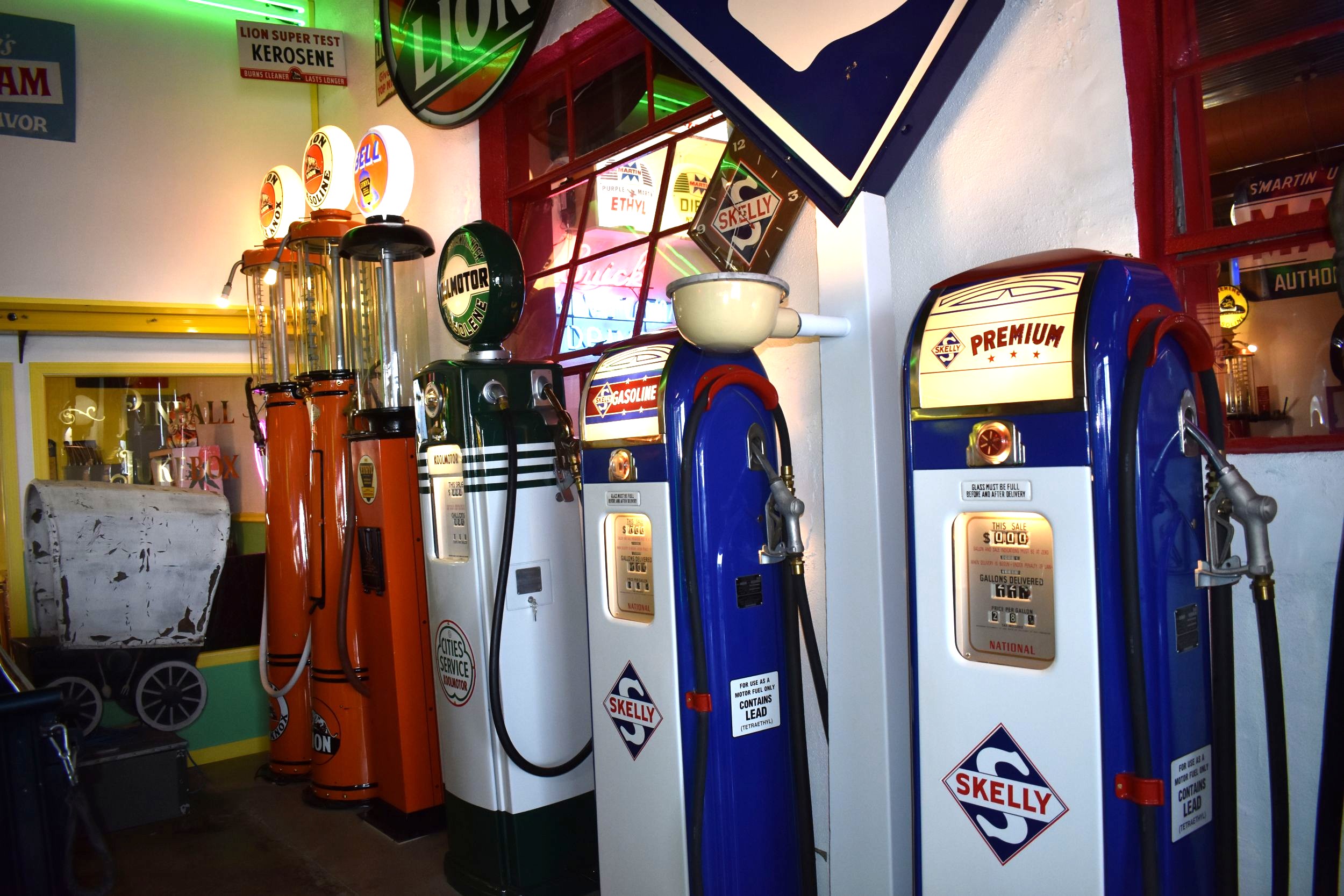
Today, most of us just pump gas into our cars without thinking how much of what we pay per gallon is tax.
In Wyoming there is a 24.4 cents per gallon tax on gasoline. This tax is used keep the Wyoming highways in good condition for the hundreds of cars that use them everyday. The tax funds road maintenance, construction and improvements. This ensures safe highways throughout the state.
Even though, as consumers, we might gripe about the gas prices, Wyoming does have one of the lowest fuel tax rates in the U.S.
There are approximately 30,000 miles of roads in Wyoming that need maintained by these taxes.
Like all taxes, gas tax has increased over the years. Here are some articles about raising the gas tax 100 years ago this month. Come along for the ride.
In 2023, there were 239,346 automobiles in Wyoming. One hundred years ago in 1920 there were 24,000 automobiles in Wyoming. In the following decade the number increased to and by 1930 there were 62,000 cars in the state.
Cars needed gasoline, and gasoline taxes were initiated by the state.
Sheridan Post-Enterprise, December 15, 1924 – Gasoline Tax is Urged as Prime Factor in Good Roads Program.
Pro and con discussion of legislation destined to come before the next session of the Wyoming legislature was heard Monday morning in the council chamber of the city hall here, at a pre-legislative council attended by the state legislators of Northeastern Wyoming.
But there was no lining up of sectional legislation; no building; of political fences the topics brought before the meeting were discussed openly by proponentsand opponents, while the legislators for tho most part contented themselveswith asking questions and listening to the wishes of the people.
J.C. Underwood of Underwood, Wyo., republican floor leader of the house, was also present, while Senators K. A. Froyd and Harry N. Free of Natrona county in north-central Wyoming will be present at the afternoon session.
A. W Strom of Hulett will also be present Monday afternoon. Among the out-of-town visitors were J.E. Ford of the American State Bank, bank of Moorcroft, and Charles F. Schilling, formerly of the Osage Oil News Tribune and now resident of Sheridan was also present.
The state highway department’s proposal for a three-cent gasoline tax brought the longest discussion of the session after the question had been submitted by C. R. Wood, district highway engineer, and G. W. Lansing, chairman of the good roads committee of the Sheridan Commercial club.
That the present one-cent gas tax brings in $210,000 —or enough revenue to pay for one-third of the state highway’s road maintenance—and that a three-cent tax would take care of all maintenance and leave the oil royalty funds to be used for permanent construction was the statement of Mr. Wood.
The state highway department will need approximately $640,000 —the amount the three-cent tax would bring to complete its budget, Mr. Wood said, adding that $250,000 would also be asked to tide over the department before the gas tax went into effect because flood damages in the state had drained the funds of the department.
Claiming that one-third of all the cars in Wyoming are foreign cars, the district, engineer declared that a three-cent tax would be the only tax that would reach the tourists who use the Wyoming roads.
In commenting upon the opposition of the dry cleaners, he said that. they could be eliminated from the additional tax because they use a high test gasoline.
Mr. Lansing, also supporting the added gas tax, said that it was the unanimous opinion of experts at the last convention of the American Roadbuilders Association that a gas tax was the most practicable way of making the persons who use the roads pay for them.
Under the proposed plan, in this state, he said, the revenue from the tax would be divided in proportion to the mileage of state roads in the county. Many of the persons present objected to that clause, declaring that a portion of the tax should he used for county roads, claiming they were as necessary to a community as the main routes.
A. M. Foss, a Tongue river rancher, declared that a three-cent tax would work a hardship on him, because he uses between 3,000 and 5,000 gallons each year for tractors, pumping and threshing. He said there would be no object in his evading the law if the tax was eliminated from gas for farm machinery, because it costs two cents per gallon to have the gasoline transported to his ranch. He said that there were but few kerosene burning tractors in his vicinity.
The hottest argument centered about whether or not the county roads should not also have a portion of the gasoline tax. Mr. Wood took the stand that that Additional money would have to be raised anyway if that was done. While opponents took the stand that road is a road whether it is state or county. County roads are now built and maintained by direction taxation.
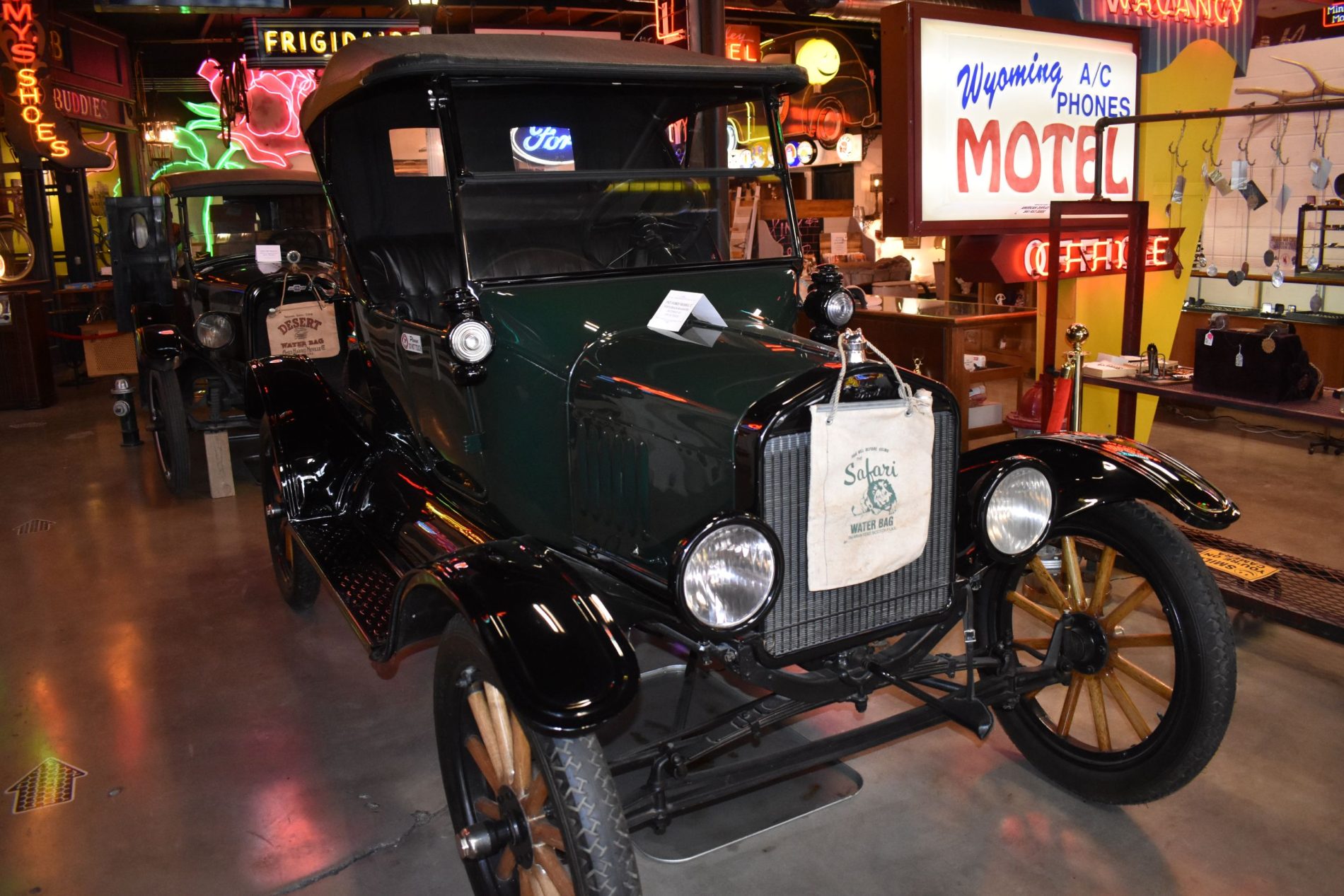
Taken at the Frontier Auto Museum, Gillette, Wyoming. Vannoy photo
Many people were for the tax, as we see in this story.
Sheridan Post-Enterprise December 8, 1924 – Higher Gasoline Tax Favored 8y Sheridan Commercial Club – Bill Asking Three Cent Assessment Will Be Presented to Legislature at Coming Session, Report.
The board of directors of the Sheridan Commercial club went on record Monday favoring a 3-cent gasoline tax for the state or Wyoming.
The present tax is one cent a gallon The action of the board was taken at the weekly luncheon at the Idlewild Cafe after support for a 3-cent gas tax bad been asked by the state highway department through Clyde R. Wood, district highway engineer Mr. Wood stated that the highway department was going to present a bill for a larger gasoline tax to the next stale legislature
He added that a 3-cent tax would take care of maintenance work in the state and make it unnecessary to draw on the oil royalty funds for such work and would also speed up maintenance work in the state. He also aid that it was probable that the government will discontinue federal aid work, and in that case it would be necessary for the state to raise more money.
Under the present 1-cent tax a total of $210,000 is raised annually for the state.
In this story we see how the funds were put to good use in Sheridan County. Sheridan Post-Enterprise, September 15, 1924 –Federal highway that will make a connecting link between Sheridan and Ucross byway of Jim Creek will be investigated Tuesday by L.E. Laird, Wyoming state highway superintendent, and a member of the United States bureau of public roads. It was announced by Mr Laird at the meeting of the board of directors of the commercial club at the Idlewild cafe Monday noon.
The road was decided upon by the state several months ago. A plea for the upkeep of the highway department was made by Mr. Laird, who stated that funds for the highway department’s work, which is growing every year, must be provided, by direct or indirect taxation. He lauded the gasoline tax as placing burden where it belongs, but said that the money from that source was not enough to run the department.
Clyde R. Wood, district highway engineer was present at the meeting to show the directors copies of “Wyoming Roads,” the new magazine publication of the state highway department.
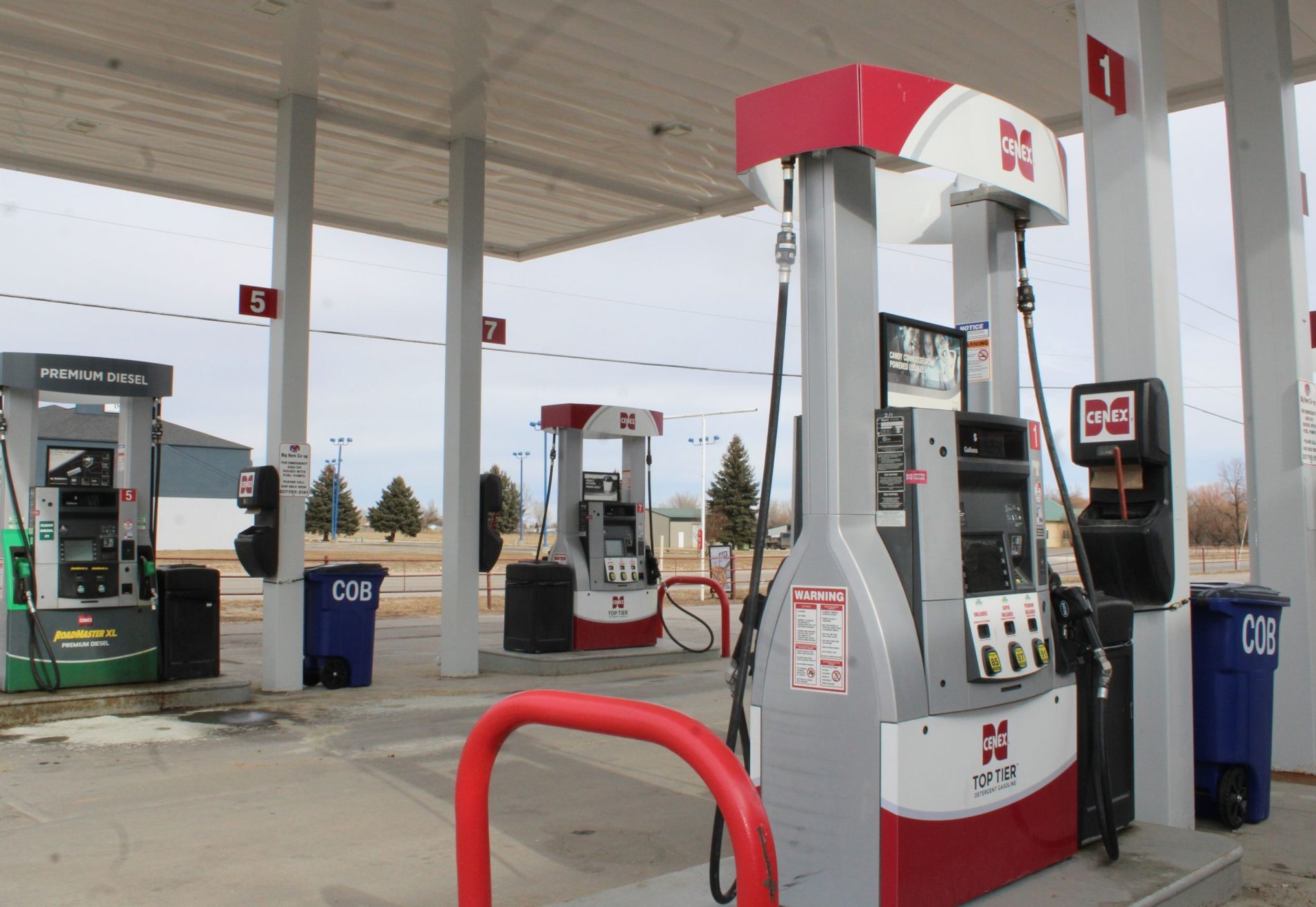
So, like it or loath it, taxation is here to stay, on a national level and local level. It is interesting to watch the progression of Wyoming as it went from horse and buggy to the automobile. Of course, a horse and wagon needed less road maintenance than the automobile did, so tax on gas became the major source of funding the highways for the automobiles.
Feature image taken at the Frontier Auto Museum, Gillette, Wyoming. Vannoy photo

Mark Steingass
February 9, 2026 at 9:27 am
With a 400 million dollar shortfall projected in the next ten years for WYDOT legislators should consider making I-80 a toll road (or other selected highway stretches) …trucks are doing most of the damage to I-80 so the trucking companies should pay a chunk of the bill to fix I-80