News
History: The Frontier Cavalry

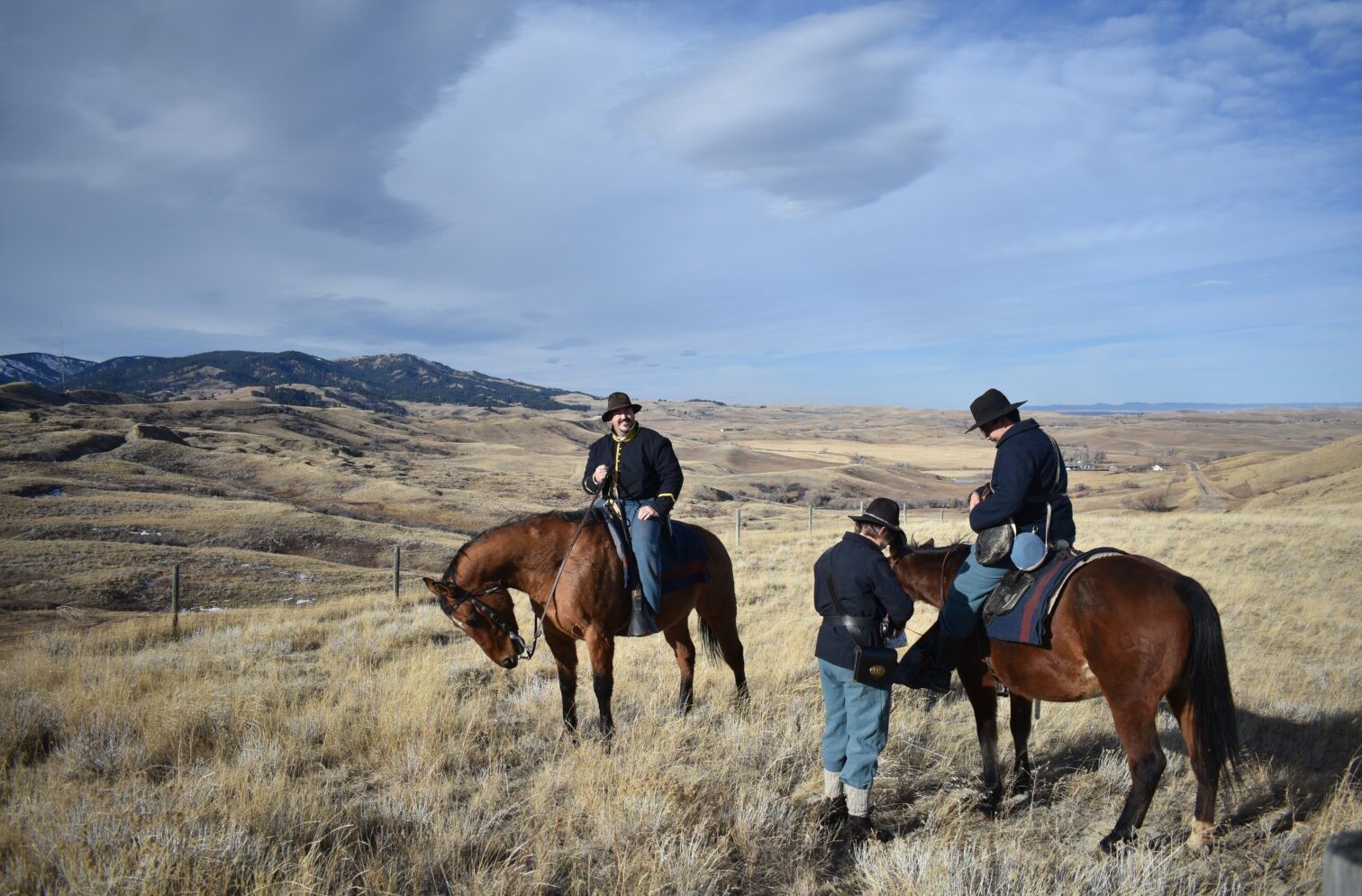
On the Western Plains, during the Indian Wars of the 1860s and 1870s, the cavalry was an important part of the Frontier Army. Horses could travel faster, carry more supplies, and could better carry the soldiers into battle against their often better mounted foe.
In this column we will look at a few interesting tidbits about the cavalry found in the old newspapers.
In this one from Daily Boomerang, Laramie, on November 23, 1888, it talks about how to sit and ride a horse, and the difference in saddles.
How To Sit A Horse. An Old Cavalryman’s Pointers to an Inexperienced Rider. Washington Star – “The best riders in the world.” said the old cavalryman, who was giving a greenhorn some points on equestrianism. “Are the Mexicans. Buffalo Bills cowboys are splendid riders, but the Mexicans are better still. And their superiority is in part due to the kind of saddle they use. That low English saddle you’ve got there,” He continued, “I couldn’t ride in. It isn’t fit for a man to ride in. Now, the great beauty of the Mexican saddle is that a man sitting in it has his legs almost straight down beside the horse, like a clothes-pin. A Mexican on horseback keeps his heels and shoulders nearly in line, his feet planted firmly in his stirrups underneath him and pointing straight ahead, parallel with the horse.
Our McClellan saddle would be as good as the Mexican saddle if it only had the stirrups placed couple of inches farther back. As it is, a man riding in a McClellan saddle has to bend his leg at the knee in the English style. Now, with the knee bent it is almost impossible to keep your feet pointed straight ahead.”
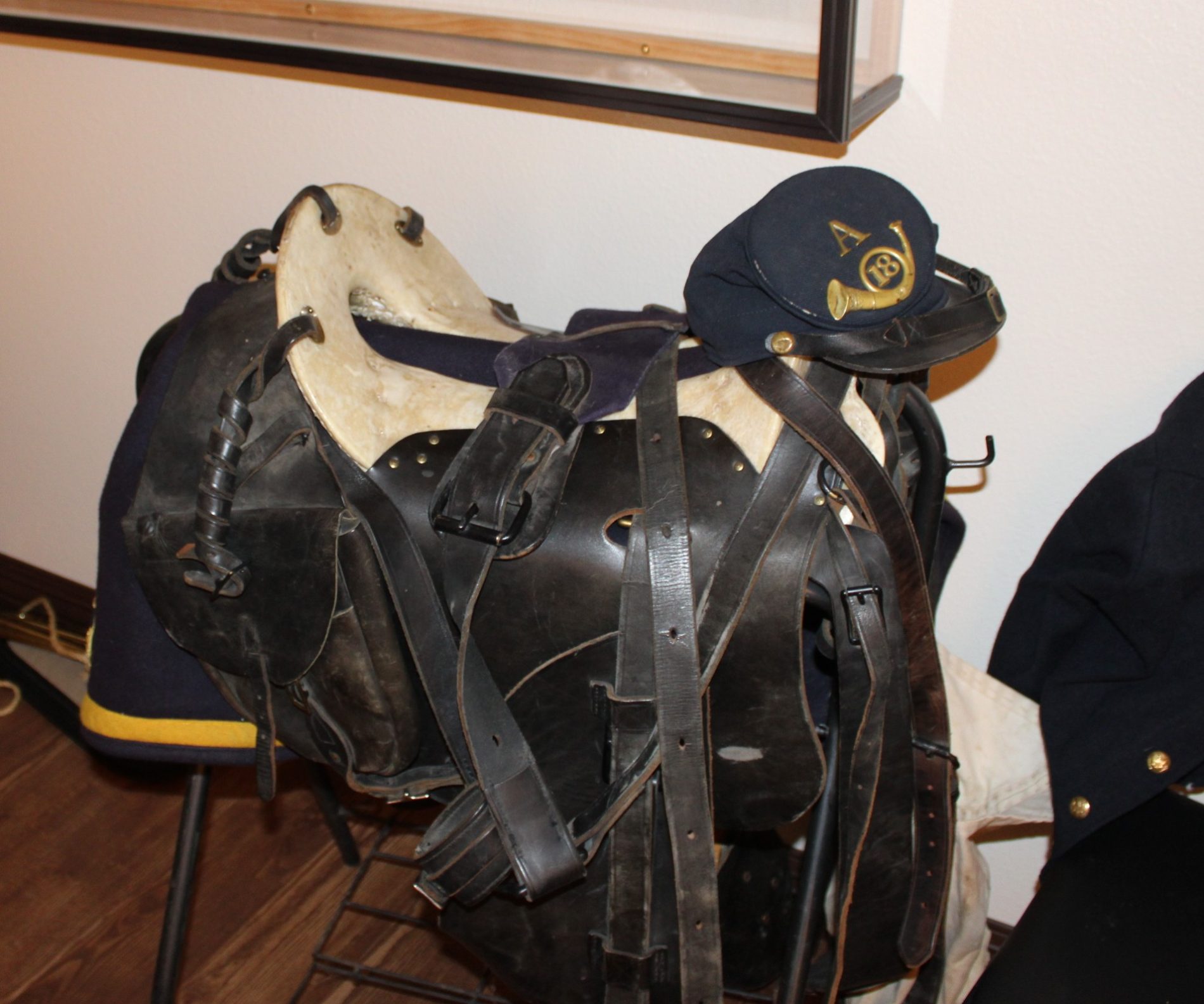
“This position of the feet,” the impromptu master continued, after pausing a moment to allow his casual pupil to absorb what he had already said, “is a very important thing in learning to ride properly. In fact, it is the thing. And yet nine-tenths of the riders you see about the streets and country roads every day have their toes turned at an angle of forty-live degrees from the sides of the horse. As a consequence, these riders can’t have a firm seat, and don’t enjoy the exercise half as much as they would if they rode properly.”
How is it the way the toes point has so much to do with good riding?” The Star reporter who happened to be on hand inquired.
“To sit firmly on a horse and at the same time to have the body erect and free to give with the horse’s motion,” the cavalryman said, “you must grip the animal’s sides with your knees. Not with the calves of the legs, mind, nor with the thighs, but with the knees alone. Now, if you don’t keep your toes pointing straight ahead, or nearly so, it is impossible to get this grip with the knees.
“Turn your toes out, and you will find at once that you grip the horse with the calves of your legs, and that your body is thrown forward from the hips, instead of being erect. Experiment a little when you get on your horse, and you’ll see it works just as I say.
“But if you keep your feet straight hold tight with your knees and bit erect, and you will find you can accommodate yourself to the motion of the horse more readily and gracefully, your seat will be firmer and riding will not tire you near as quickly. lf you will notice old cavalrymen when they walk, the gentleman continued, “You will see that instead of spreading their feet apart they keep them parallel. This is the result of their habit of riding, and it often makes them very ungraceful on their feet.
“The best and most graceful rider I ever saw was General Ashby, who was killed during the war. I never saw any man who looked so handsome on horseback. Off a horse, however, he walked like a duck-and was so clumsy he couldn’t get into a parlor without falling over all the furniture in sight.
“A Mexican astride his high-curved saddle with his legs hanging straight down rides as easily as if he were sitting in a rocking chair, and at the same time it is almost impossible to unseat him. He is clothes-pinned on to the horse and the latter can’t get out from under him. But a man riding on an English saddle with short stirrups, his legs bent at the knee and his toes turned out, has no chance when his horse jumps suddenly. He is also sure to be thrown forward on the horse’s neck and over his head.”
General Crook, who was a commander in the Civil War, as well as during the Indian campaigns, preferred the infantry, maybe due to the fact that cavalry men were often clumsy when not mounted.
This from the Cheyenne Weekly Leader, July 8, 1876 – General Crook has quite a fancy for infantry, and it is quite likely that a company or two of the “long guns” will be mounted on mules this summer and kept right up with the cavalry. Dismount a cavalryman in battle—as he often must be in this kind of warfare—and he is entirely out of his element, because he will naturally feel that he is lost, and that his solo means of locomotion are gone; but start out an infantryman and he goes ahead with the perfect realization that there is but one way to get out of a difficulty, and that is to fight out.
One problem commanders faced during the Indian wars, were new, raw recruits and ill-trained soldiers. Especially cavalry soldiers. Some didn’t even know how to ride a horse before they joined the army.
This from the Cheyenne Weekly Leader, November 11, 1876 – The recruits that have lately joined us have been the source of a very great deal of innocent amusement to old soldiers. One very funny thing happened the other day. The column was on the march when one of the “fresh fish” came galloping up along the line at full speed, his horse covered with foam.
He rushed frantically past General Merritt, who called out at the top of his voice, “Stop running that horse! Stop running that horse!” Imagine the effect when in a shrill treble came back from the Gilpin in blue kersey: ” I ain’t a-runnin’ the horse, the horse is a-runnin’ me; I’d give $5 if I could stop the —. “
And then to see them cross arroyo! Much to their astonishment, and evidently to their discomfort, the charger always will make a rush when going up the opposite side, and the recruit, to all appearances imagines that he is flying, and flops his arms accordingly, which adds vastly to the pleasure in life found by such old troopers as may be in sight.
Any these raw recruits, if they should be taken into battle with the Sioux, they would simply be shot, without doing us any good or the enemy any harm. They are taken direct from the recruiting station with no instruction whatever, and are expected to add strength to the regiments now in the field.
The fact is, that they are an element of weakness, and are more of a nuisance than a help; and there is no cavalry officer but that would rather have forty old men—tried and disciplined—than add to his troop an incubus of forty perfectly raw recruits. Cavalry recruits should at least remain at the depot for a year, and be thoroughly drilled and instructed during that time, before they are assigned to a regiment.
Then they will be of some little service when they reach us, instead of being no use whatever except to amuse the older soldiers. And they do get a powerful amusement out of them before they get well seasoned. They will send an “innocent ” to the commanding officer for an order on the doctor for a quart of whiskey, and make him believe that he is being defrauded by the First Sergeant when guy-ropes are not issued to him with his shelter tent.
About one half of the rank-and file of the Second, Third, Fourth, Fifth and Seventh Regiments of cavalry will be composed of this class of “troopers, ” when they are filled up to the maxim now allowed by law; and anybody can see what an immense amount of work it is going to require to get them into some kind of shape before the spring opens.
Sometimes, too, the horses decided to go off on their own. One wonders if the rider had been bucked off, as the horse still has the saddle.

Cheyenne Daily Leader, May 29, 1908
Many of the soldiers referred to the Native American warriors as the ‘finest light cavalry in the world,’ and this was undoubtedly true. The Sioux and Cheyenne and other tribes learned the value of the horse in warfare, and in many cases the U.S. Army was out maneuvered by the warriors in many battles.
However, the artillery, including cannons and repeating rifles, evened the score for the frontier army, and the fact that the U.S. Army could send an almost unlimited number of soldiers, even badly trained ones, into the field.
But, the cavalry was an important part of the U.S. Army on the frontier, and the image of a cavalry charge, with sabers drawn, riding into battle, has captured the imagination of the world for hundreds of years, and been an important part of many Western movies.