News
History: Buffalo Carnegie Library Building

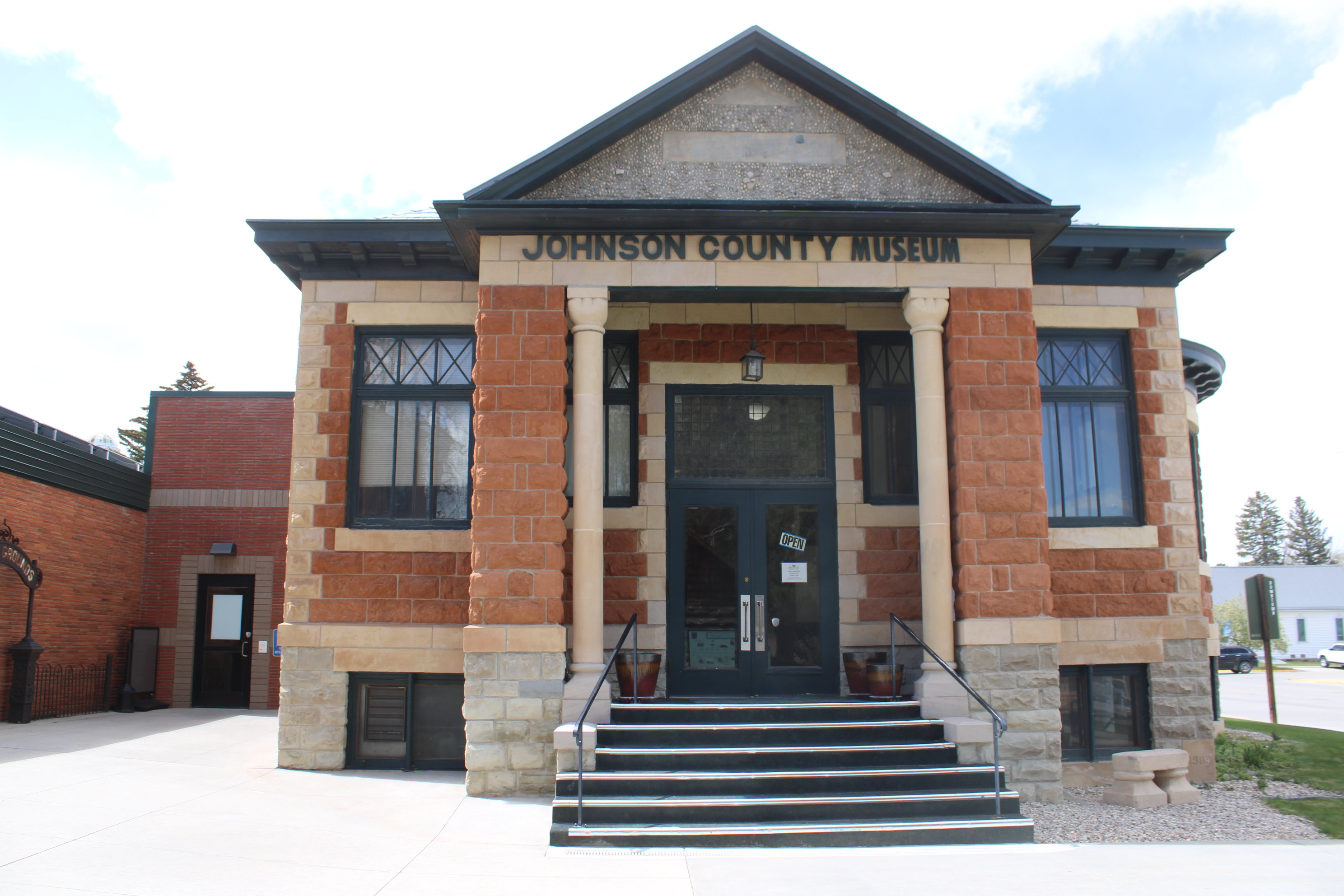
A few weeks ago, this column featured the Sheridan Carnegie Library. This column will feature the Buffalo library, and the building that once housed it is now a part of the Jim Gatchell Memorial Museum.
The first Carnegie library in Wyoming was built in Cheyenne in 1899, and the last one was built in Thermopolis in 1917 and finished in 1919. All in all, 16 libraries in Wyoming were built from money supplied by the Carnegie Foundation. Of these 16 original buildings, 10 are still in standing, and are either continuing to be libraries or having been put to other uses.
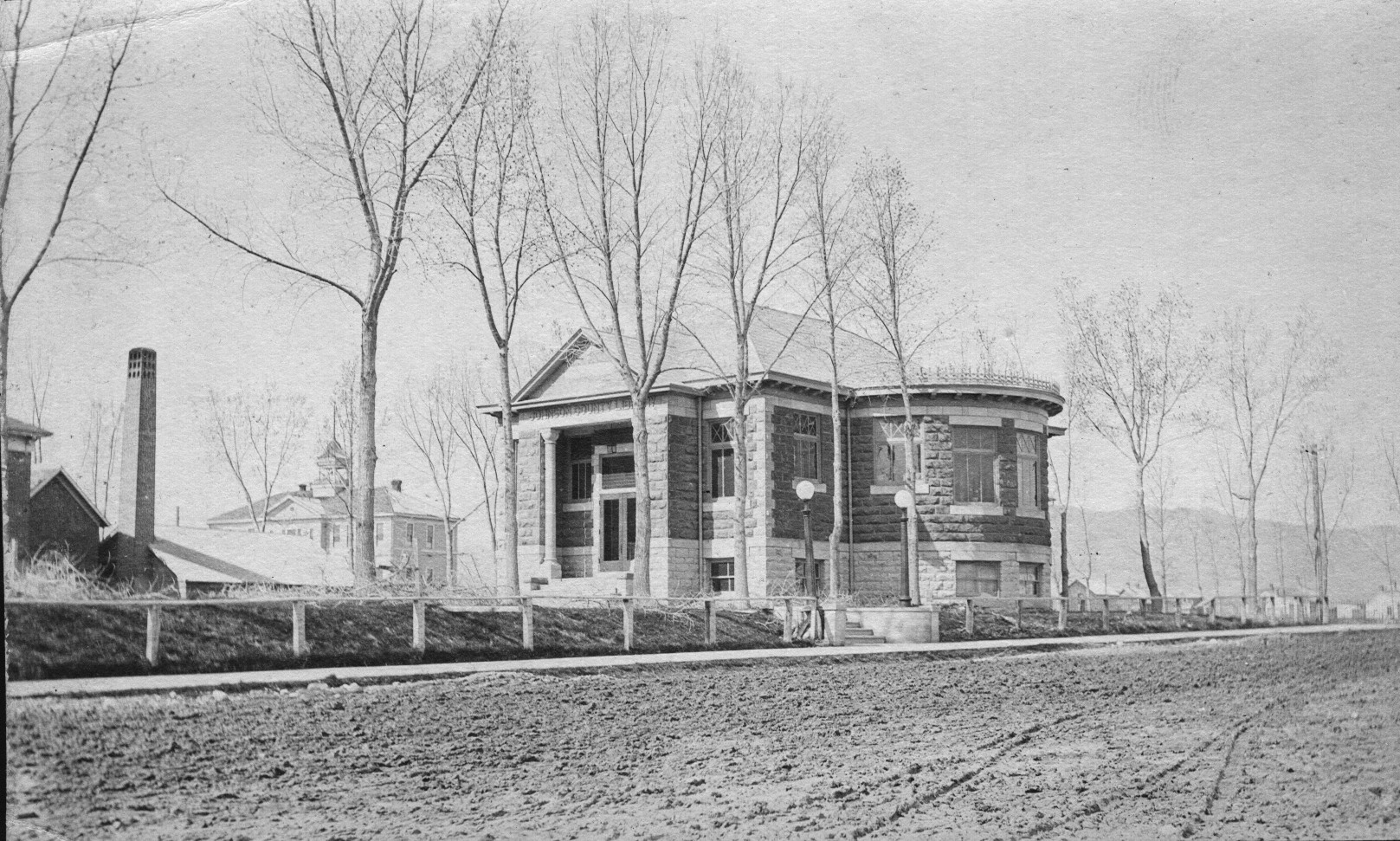
Original Building, photo courtesy of Jim Gatchell Memorial Museum, used by permission.
Sylvia Bruner, director of the museum talked about some research she did about the building for an article in the museum’s quarterly publication, Sentry,’ in the Fall 2023, when they began restorations.
This was from The Buffalo Bulletin, January 28, 1909 – Judge C. H. Parmelee of the Fourth judicial district, who is a member of the committee having in charge of arrangements for the erection of a Carnegie library at Buffalo, is visiting other Wyoming towns which have Carnegie libraries, for the purpose of securing pointers on plans by utilization of which Buffalo may secure the best library building that can be erected within the limit of Carnegie’s donation. He inspected the Laramie Carnegie library yesterday.
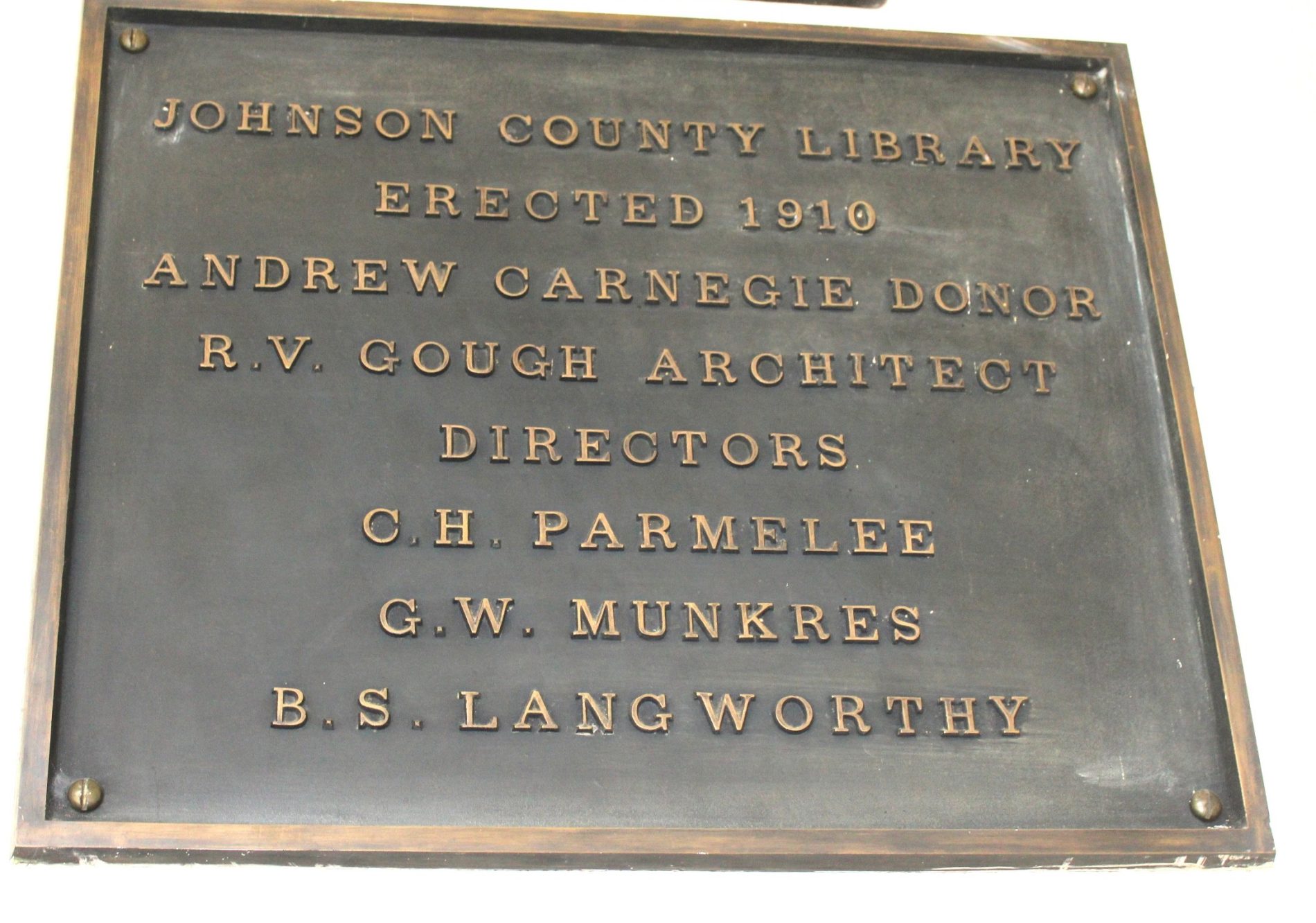
The Buffalo Bulletin, July 1, 1909 – Builders began to excavate today for the Carnegie library, plans for which were recently accepted by Mr. Carnegie. The board in charge of the construction of the library building has been submitting plans to Mr. Carnegie at intervals for the past several years. They have been obliged to spend something like $3,OOO more than the original contribution of Mr. Carnegie, but are well pleased with the thought that they have pleased him at last.
The Buffalo Bulletin, October 14, 1909 – The ladies of the History and Art Club raised the sum of $225 last Saturday with their tags, which sum will be devoted by them to the purchasing of new books for the Carnegie Library. The ladies of this club are entitled to a good deal of credit for their enterprise, and it is an assured fact that the money will be used to good advantage.
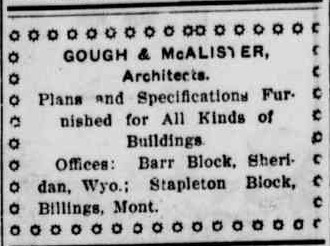
The Sheridan Post, March 7, 1911
This story in the Sheridan Post, March 7, 1911, talked about the firm. Form Partnership: Architects Gough and McAlister Will Work Together – In order to more promptly and easily handle their constantly increasing business, co-partnership has just been formed by and between R. V. Gough, the well-known architect of Sheridan, and G. McAlister of Billings, under the firm name of Gough & McAlister.
Offices will be established and maintained both at Sheridan and Billings, and neither of the partners will change his place of resi- dence. Together, these two noted architects will make firm the superior of which cannot be found in the west. Many splendid buildings in both Wyoming and Montana are standing monuments to their ability, and wherever their services have been sought the result has been highly satisfactory to the builder. As their reputations have grown the demand for their services has increased, until all their time ls fully occupied. By forming partnership they hope to systematize their business in such shape as to greatly facilitate their work. Orders for plans from all the Montana business can be handled at Billings, while orders from the south will receive attention at Sheridan.
Patrons of the firm will also be the gainers by the new arrangement, for in all architectural work the patron will have the benefit of the experience and ability of both members of the firm.
Bruner added that when they did some restoration on the building, they added some office space upstairs. The space where Bruner’s office is used to be the library reading room, and she pointed out some names that had been carved into the wood on the side of the window.
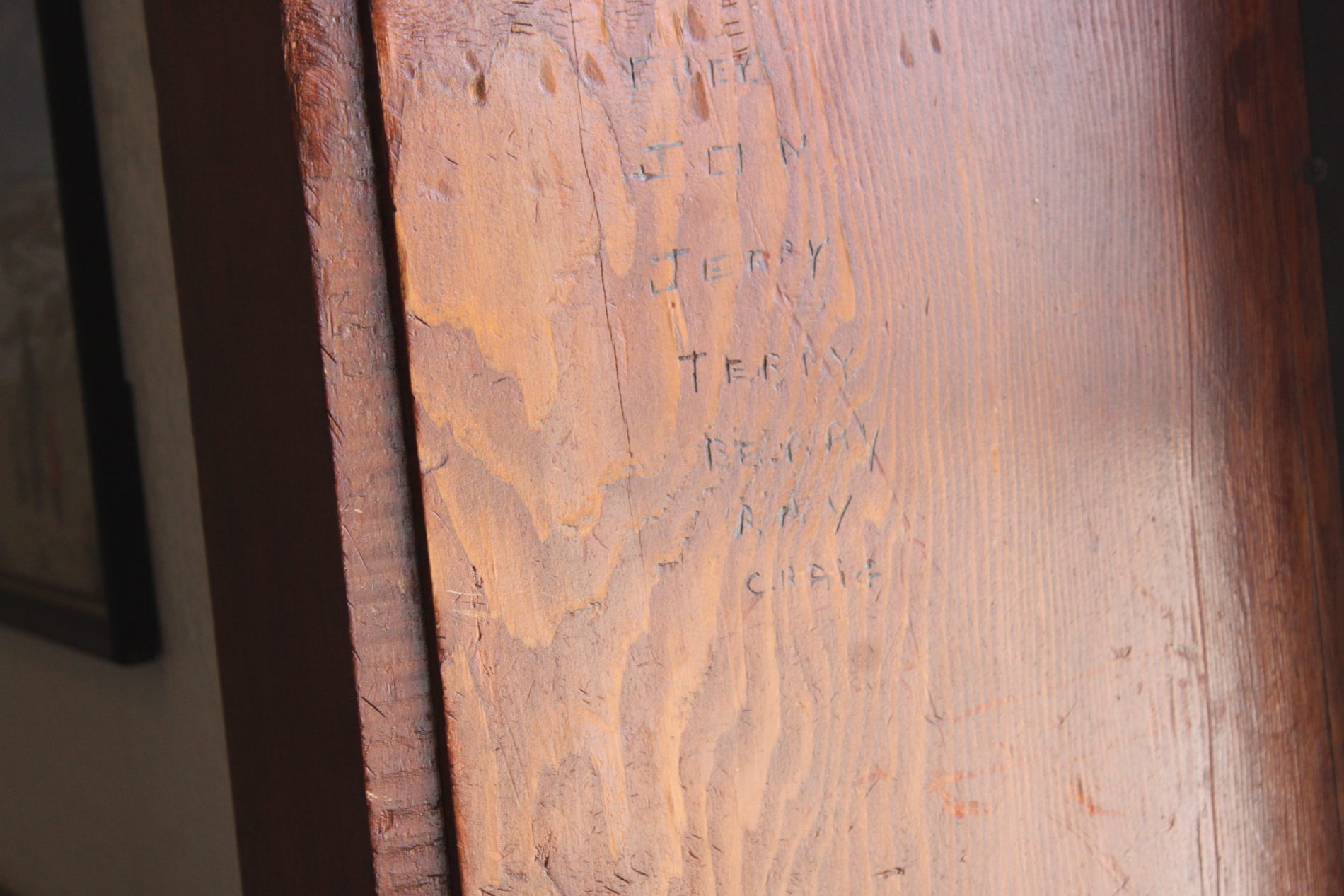
“My office used to be in a storage space in basement,” she added with a laugh. She said they tried to make the walls and doors as authentic to the building to maintain the character of the building. She wasn’t sure when the double windows were put in but it had to be several years ago. Along one window there are several names carved.
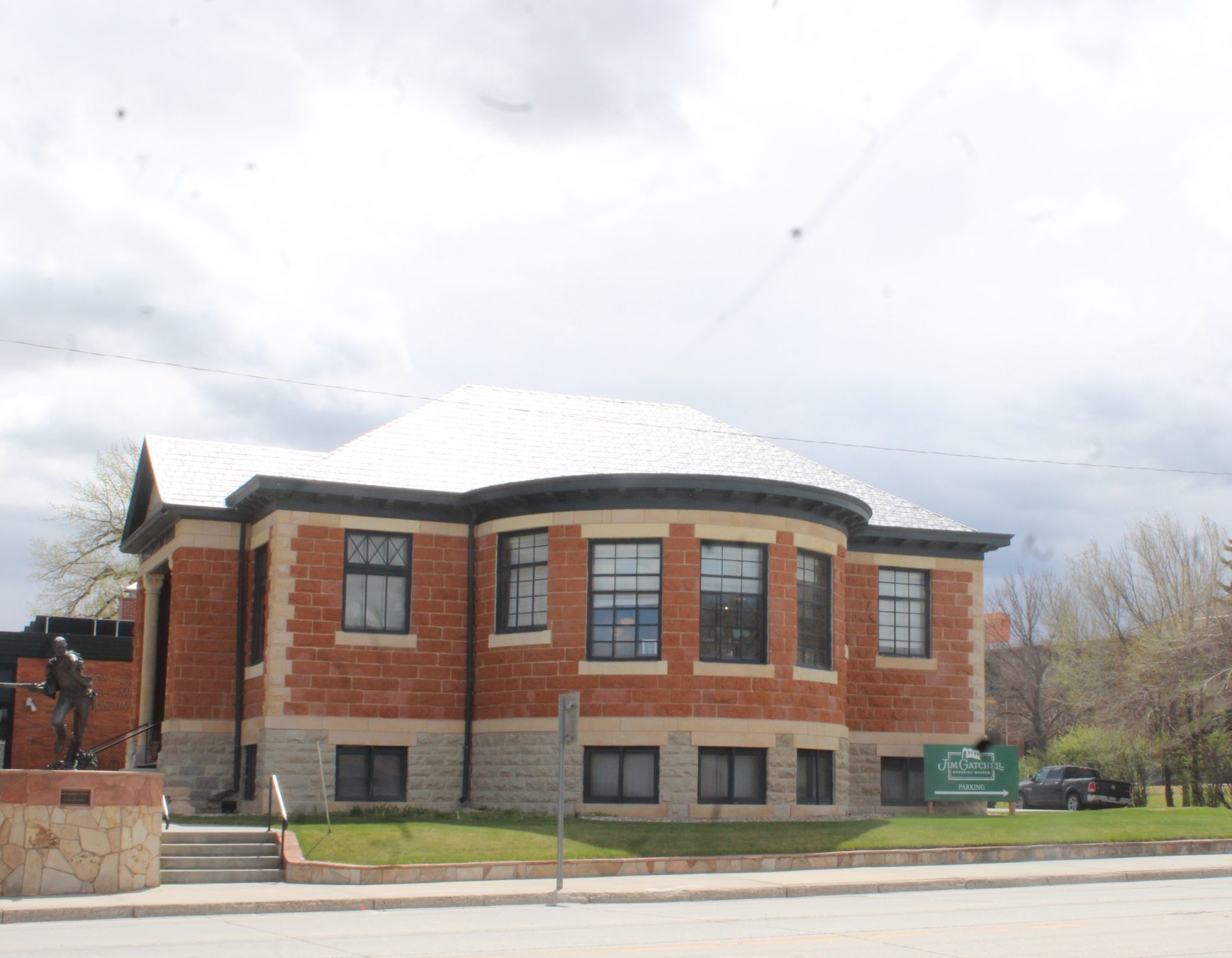
The library moved out in 1986, into a more modern building where it is today. But the Carnegie building continues to be a landmark in Buffalo.
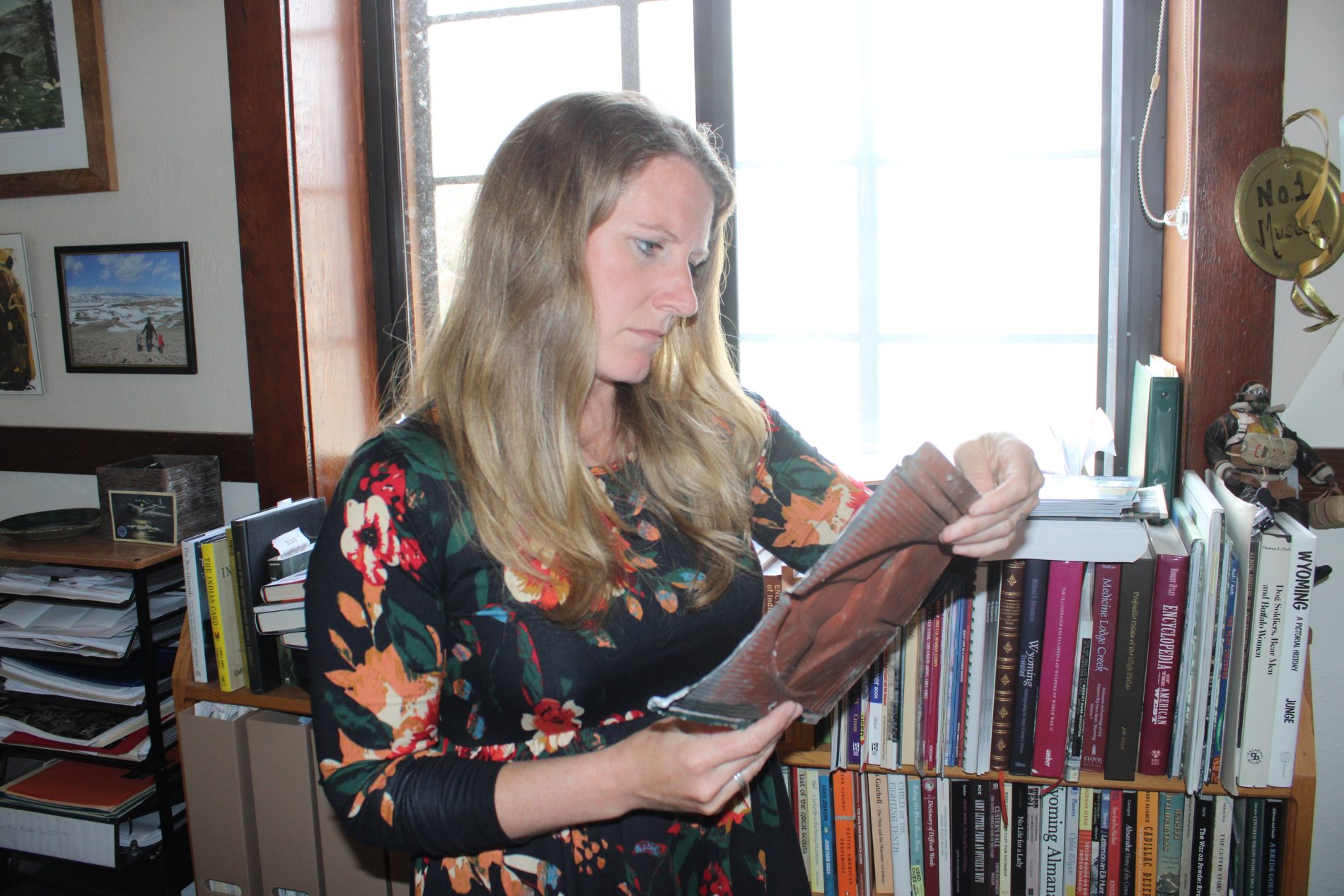
When they hooked the library building on to the museum building, they made it handicapped accessible as well.
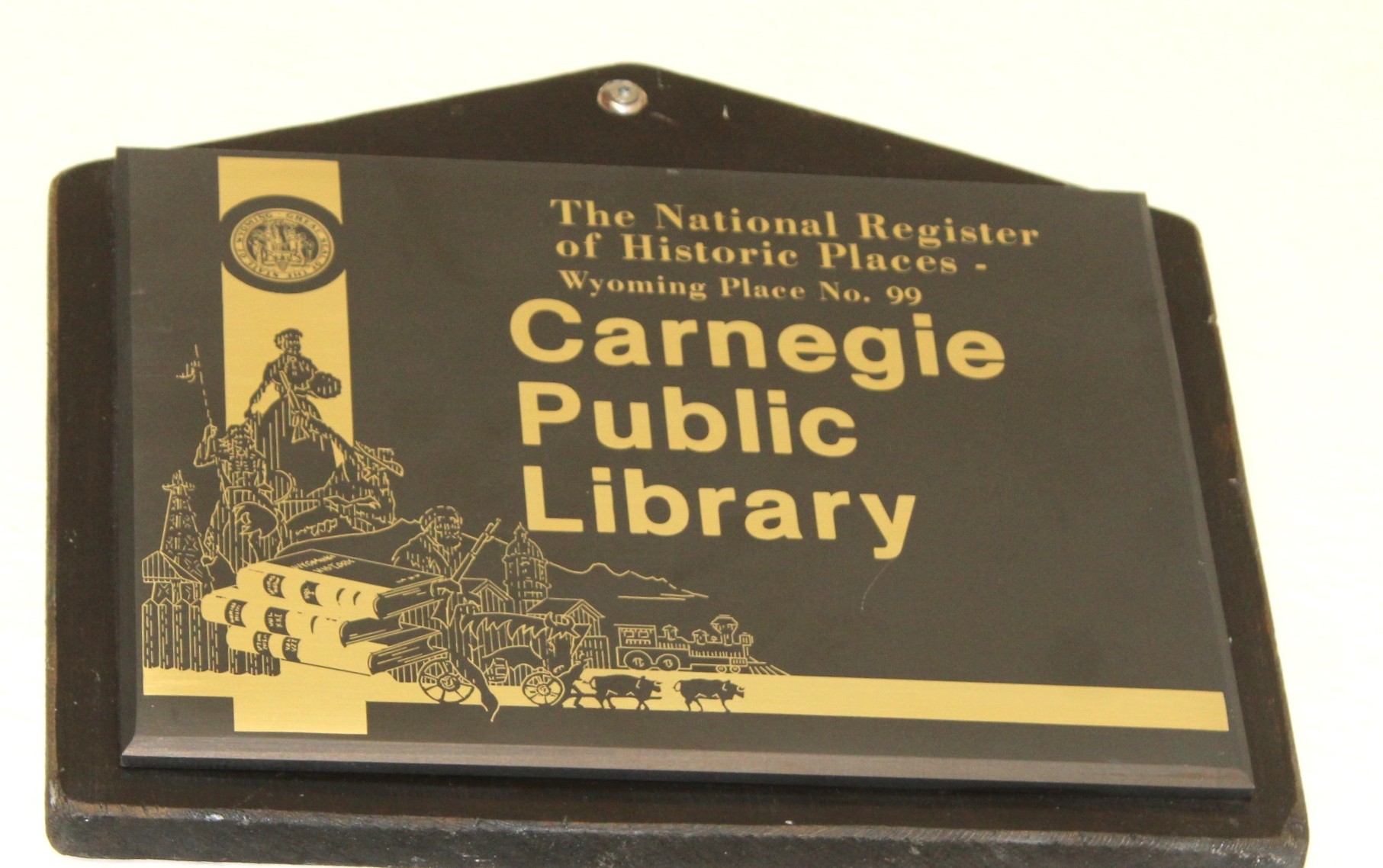
The building was added to the National Register Of Historic Places in 1976, for it’s part in Wyoming’s and the Nation’s history.