News
Program on President Lincoln held at Brinton

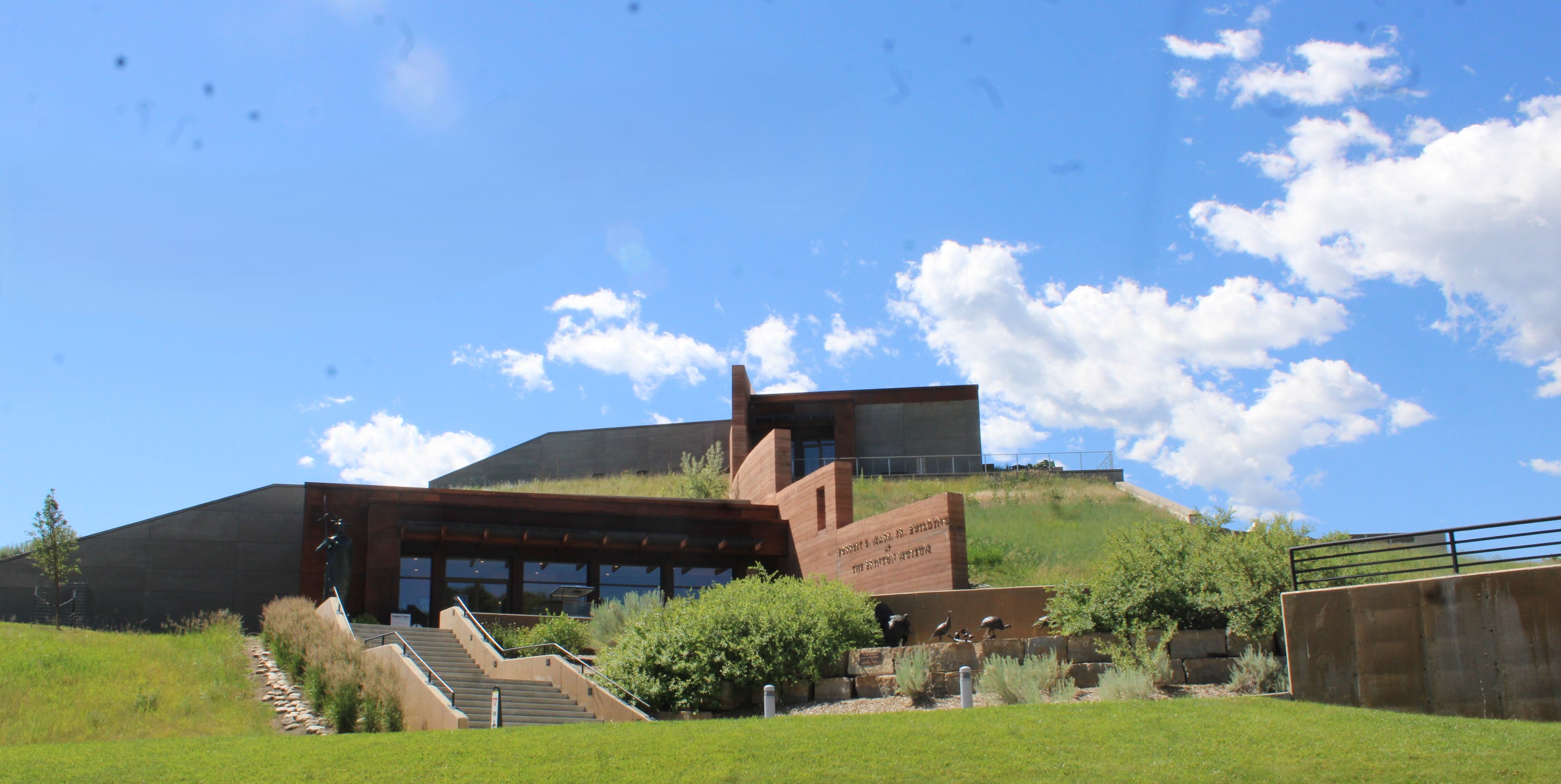
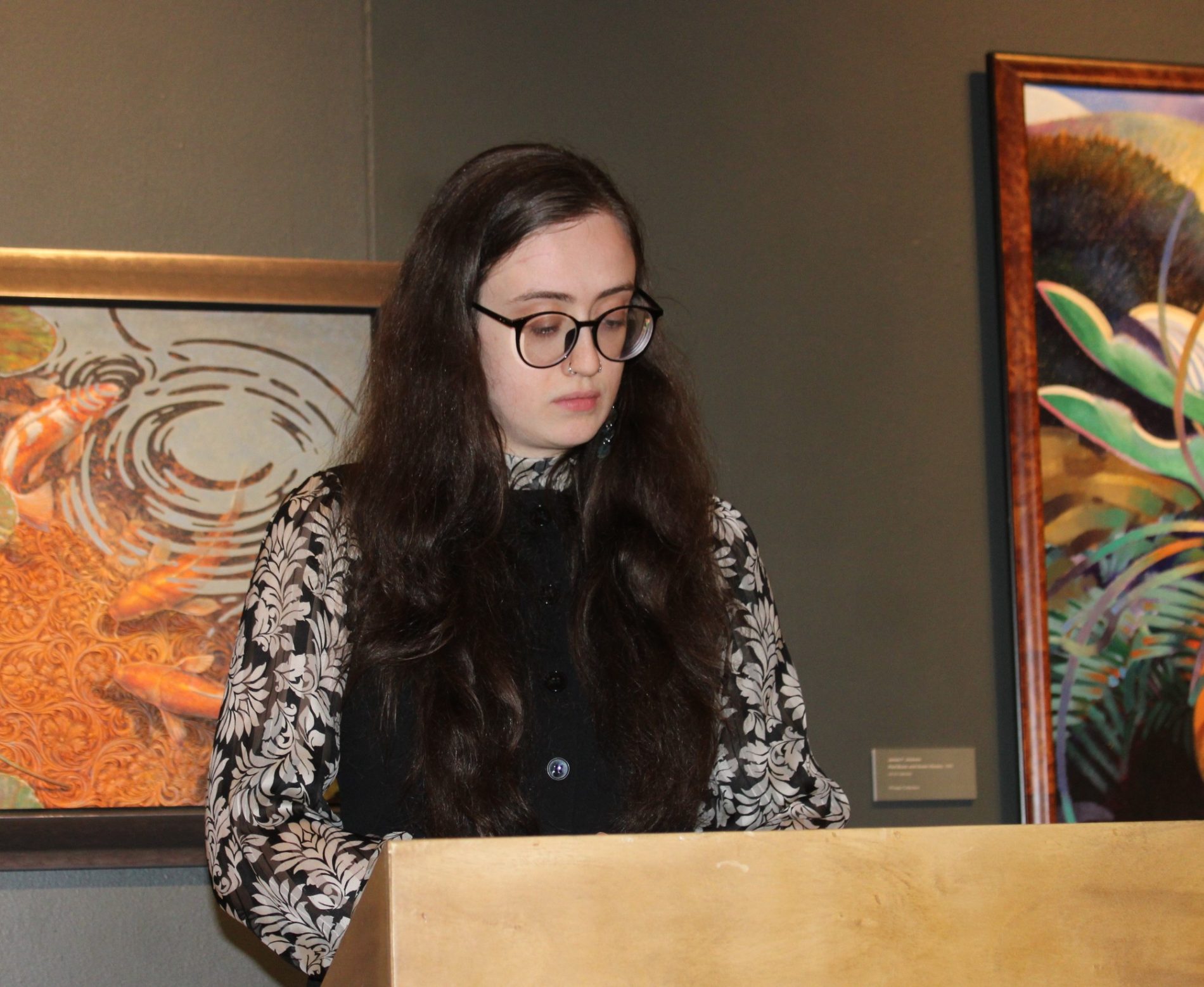
Anna K. Sensel, Learning & Engagement Coordinator at Brinton Museum, in celebration of the 250 Anniversary of the U.S., on July 4, gave talk about Abraham Lincoln.
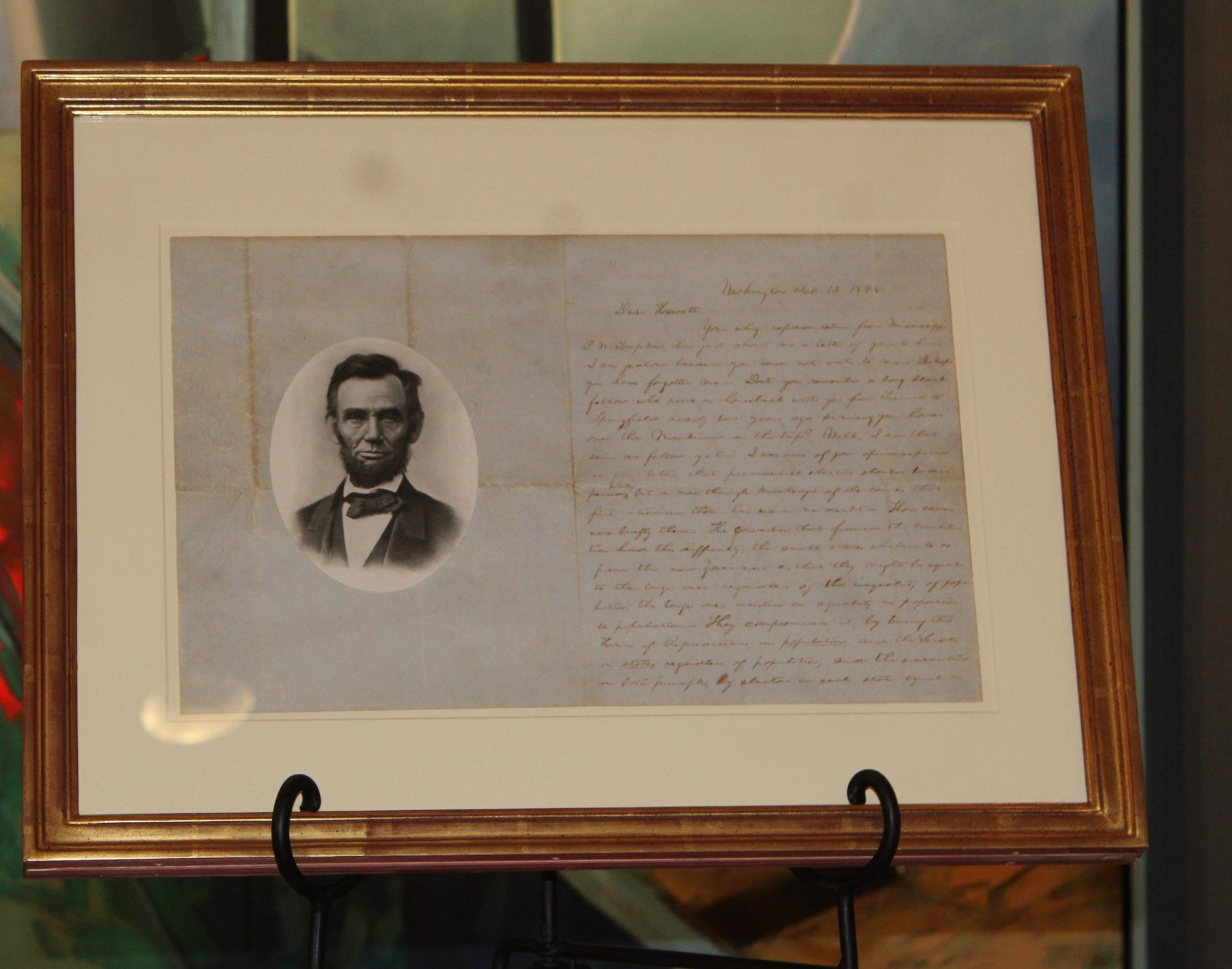
She focused on some facets of Lincoln’s life that many people don’t know. She first referred to a framed letter with a portrait of Lincoln.
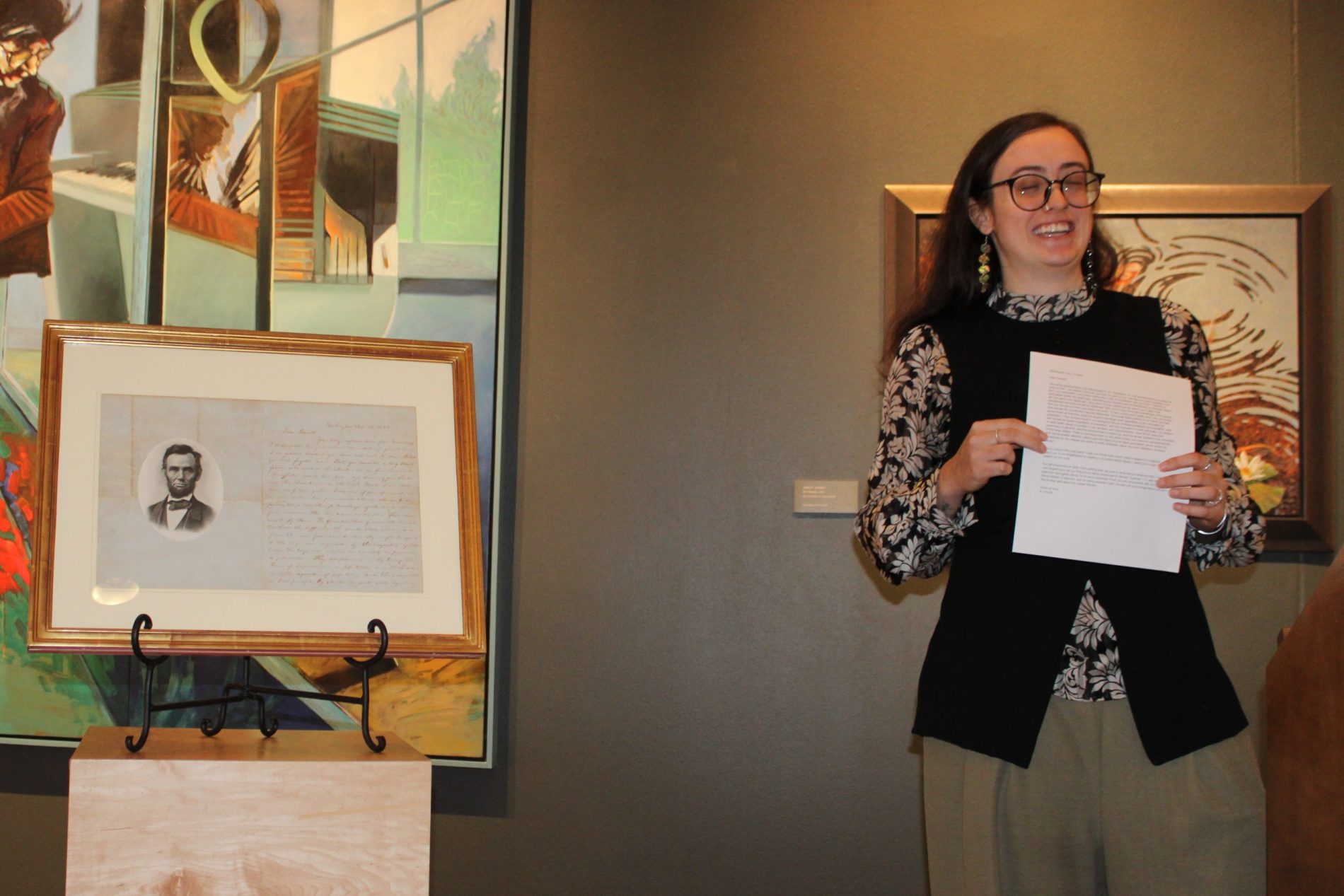
She welcomed the crowd, and then asked if Lincoln’s Emaciation Proclamation ended slavery in the United States. She said while the answer is essentially yes, it was a little more complicated than that. She started with a look at Lincoln’s early life.
Both Lincoln’s parents were anti slavery, and even attended an anti-slavery Baptist church.
The Lincoln family’s farm could not compete economically with the industrialized-like plantations in Kentucky, so they moved to Indiana in 1816, when Abe was seven years old.
That was the same year that Indiana had officially banned slavery in their constitution. Lincoln worked on the farm until he took a job on a ferry boat when he was 17.
“His fellow volunteers elected him as a temporary captain of the company, and off they marched,” she said. As a soldier, he saw no action in the Blackhawk war.
Returning from the war, Lincoln again tried to get elected, but lost the election. He studied law on his own, and passed the bar exam in 1837. He regularly participated in Whig party politician functions.
When campaigning, he shook hands, told jokes visited nearly every family in the county. He ran again and won in 1836, 1838 and 1840.
He generally voted along Whig party lines. In 1837, the took a controversial a position, to oppose a resolution that condemned the abolition of slavery.
Sensel talked about Lincolns political career leading up to his running for president. In 1843, Lincoln sought the Whig nomination for Illinois’s 7th district seat in the U.S. House of Representatives.
Lincoln spoke against the Mexican–American War (1846–1848), challenging President James K. Polk’s assertion that the Mexicans had attacked Americans on American soil, instead it was on territory that was contested by both countries.
In 1856, he joined the new Republican party. This new party opposed slavery. They took a firm stand against slavery and opposed the expansion of slavery westward.
Lincoln also campaigned aggressively for John C. Fremont as president, but Buchanan won the presidency.
After Fremont’s defeat, Lincoln won his parties nomination for the US senate.
In these debates, Lincoln felt that slavery violated the assertion of the Declaration of Independence that all men are created equal, and that slavery should be extinguished from the nation.
Douglas pointed out that several of the founding fathers actually owned slaves, and he felt that the slavery issue should be left to the states instead to the federal government.
Douglas accused Lincoln of being an abolitionist at heart, and dangerous fanatic whose policies would result in racial equality.
Lincoln felt the negro should be entitled to all the natural rights in the Declaration of Independence.
He did not believe that slavery would end in his lifetime.
On November 6, 1860, Lincoln was elected as the first Republican president. During his presidency the United States became embroiled in a civil war, which went on for five years.
After the Union victory at Antietam, on September 22, 1862, Lincoln issued the preliminary Emancipation Proclamation, which proclaimed that all slaves within any state still in rebellion against the Union, would be freed.
On January 1, 1863, he issued the final Emancipation Proclamation, which also freed the slaves in the states not then under Union control.
On April 9, 1865, Lee surrendered to Grant at Appomattox, and the war ended.
Five days later, Lincoln was assassinated in Ford’s theater, while attending the play, Our American Cousin on the evening of April 14.
Sensel’s program was well attended, and there was a great deal of information about our 16th President. Sensel is a 19th Century American Historian, specializing the slavery, black history, and abolitionism.