News
History: Fort Bridger Treaty

The United States has made several treaties with various Indian tribes during the Plains Indian Wars in the 1860s and 1870s, which pretty well ending shortly after the famous Battle of the Little Bighorn, where, although the Native Americans had a great victory, they pretty well lost the war against the encroaching settlers and gold seekers.
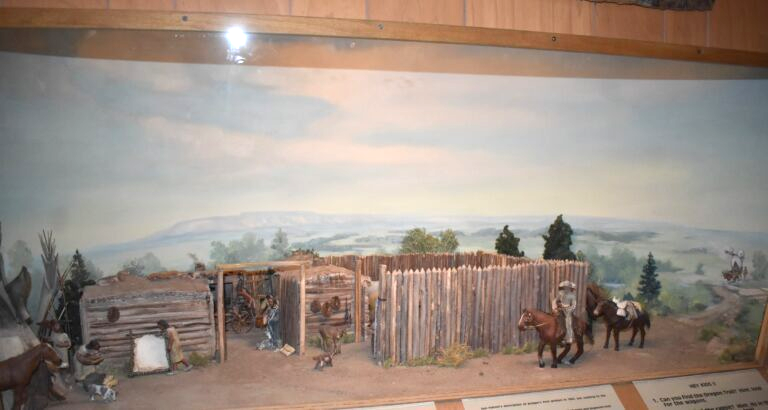
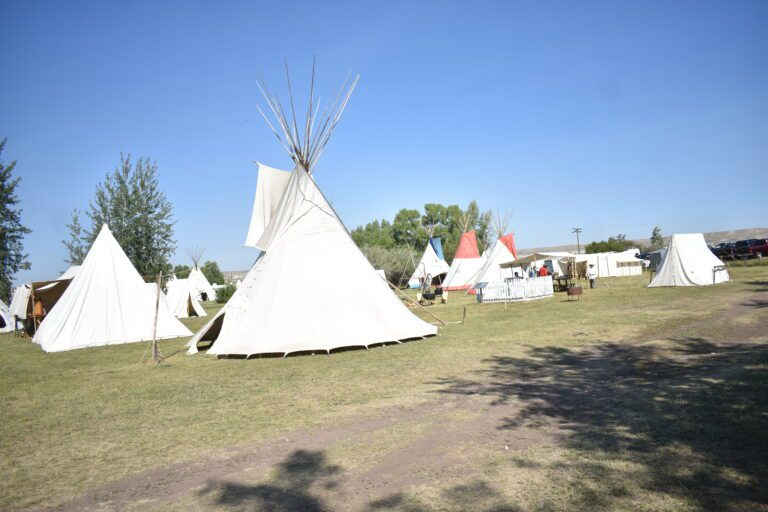
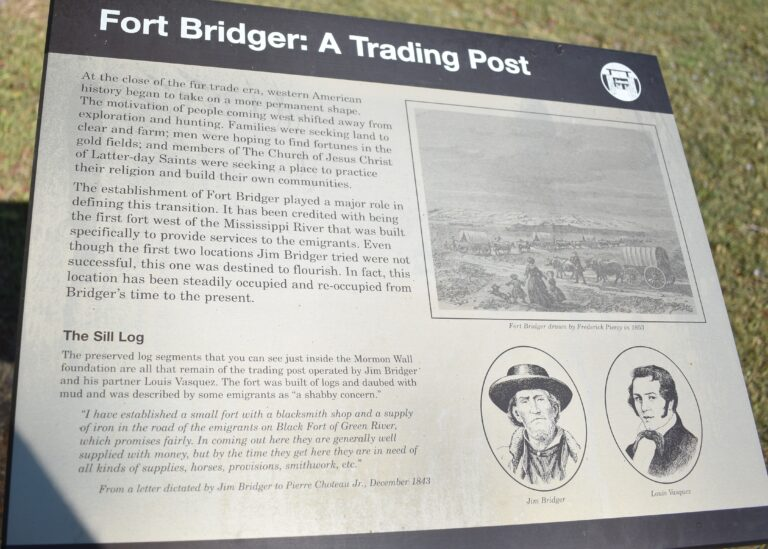
One of those treaties was between the Shoshone and Bannock tribes and the U.S. Army in 1868 at Fort Bridger. Fort Bridger started a trading post started by frontier hero Jim Bridger and later became a fort for the U.S. Army. This story talked about Bridger, the treaty and the Fort which bears his name.
The Cheyenne Leader, July 22, 1868 – General James Bridger, the most celebrated and oldest of the few surviving old mountaineers, who, like the once formidable mountains and impassable deserts, those dread barriers between the longers after wealth on the shores of the Atlantic, and the gold fields of the Pacific, are rapidly disappearing before the aggressive march of civilization, left here this morning for the east.
General Bridger was called to be present on behalf of the government at the council which was held with the Bannocks and Snakes (Shoshone) at Fort Bridger, in Utah Territory, which fort was originally built by the old hero in the spring of 1832, at which time he was in the prime of life; and to-day he is as straight as an arrow, as rugged looking as a mountain cedar, with a keen and steady eye. Kit Carson, Jim Beckwourth and General Bridger are names which must always occupy an important portion in the history of the Great West of America.
“There is probably not a tribe of Indians west of the Missouri, from the south to the most northern extremity of the United States and beyond it, that is not familiar with one or all of them. The present site of Fort Bridger was the rendezvous of those old trappers and traders years before the fort was built. It was held by General Bridger until the arrival of the Mormons, who destroyed it; but it was rebuilt by him and subsequently passed into the possession of the United Slates, by whom it is still held as a garrison. General Bridger contemplates remaining in the east till spring, when he will return to the scene of his exploits as a mountaineer.
Chief Washakie was a noted chief of the Shoshone people. He has always been considered as a friend to the white men, and in 1851, at the urging of mountain man Jim Bridger, Washakie led a band of Shoshones to the council meetings of the Treaty of Fort Laramie. Bridger and Washakie were fast friends, and in 1850, Bridger took one of Washakie’s daughters as his third wife.
In this story, from the Wyoming Tribune (Cheyenne), March 26, 1870, it describes the reservation that was a part of the Fort Bridger treaty.
By the treaty of July 3rd, 1868, the Shoshone and Bannock tribes were assigned the country commencing at the month of Owl creek and running to the crest of the divide between the Sweetwater and Po-po-Agie rivers. Then along the crest of said divide and the summit of the Wind River mountains to the longitude of North Fork of Wind River; then due north to the month of the said North Fork, and up its channel to a point twenty miles above its mouth; thence in a straight line to the head waters of Owl creek to place of beginning.” This, though not a very large portion of country, yet in dangerously proximate to the Sweetwater mining region; but fortunately, neither the Shoshone or Bannock are hostile.
The Shoshones, being friendly to the whitemen, were often enlisted as scouts for the frontier army, as we see in this story.
Laramie Daily Sentinel, July 15, 1874 —Our old friend Dr. James Irvln, agent for the Shoshone and Bannock Indians, sends us the following copy of his official report ofthe Indian fight, near Camp Brown, July 4th: (Shoshone and Bannock Agency,) Wyoming Tribune, July 6,1874. Hon. Edward P. Smith, Com. Indian Affairs, Washington, D.C. Sir: I have the honor to report that two Shoshone scouts came into the Agency on the evening of June 3O, and reported a camp of hostile Indians on the western slope of the Powder River Mountain. Generals Sheridan and Ord had arrived the same day at Camp Brown, and knowing that a camp could be no other than the Arapahoes and Cheyennes, that have been fighting with the people in this county and the Sweetwater mines for a number of years, and from which raiding parties were already organized, stealing horses and menacing the citizens of Big Popoagie.
On the evening of July 1st, Captain Bates, with Company B Second cavalry, Lieutenant Young, with twenty enlisted Shoshone scouts, and about two hundred Shoshones took up a line of march for the enemies camp, traveling at night The command drew up in rear of the village, numbering 115 lodges, in the gray of the morning of July 4th, and a battle commenced which lasted from three to four hours. “
The Arapahoe’s were evidently surprised and the number killed cannot be determined—not less than fifty, and perhaps one hundred. Two soldiers were killed and two wounded. Lieut. Young, while leading his scouts and fighting at short range, was severely though not dangerously wounded.
Two Shoshones were killed and three wounded. From one hundred and fifty to two hundred horses were captured. A great many Arapahos were wounded. Orders were issued not to kill women and children, but no doubt a number were accidentally killed.
I have received most of my information from Washakie, chief of the Shoshones. Your obedient servant James Irvin, U.S. Indian Agent.
Crook had around 225 Shoshone Scouts before the battle of the Rosebud, and they played a role in that battle.
Here in the Cheyenne Weekly Leader, July 1, 1876 about the scouts during the Battle of the Rosebud. – It was one of the most desperate battles known in the annals of Indian warfare. Our command numbered but about eight hundred men, while there were fully fifteen hundred Sioux engaged, with a large force in reserve and only a few miles distant from the field, this fact having been discovered by our Crow and Shoshone allies, whose conduct throughout was most gallant.
Today, the Shoshone live on the Wind River Reservation, which is a part of their ancestral hunting grounds around the towns of Thermopolis, Riverton and Shoshoni. One of the treaties between the Shoshone tribe and the United States happened this month in 1868.
Feature photo, diorama of old Fort Bridger at Fort Bridger Museum.