
News
Wyoming Game and Fish reminds motorists to slow down for wildlife during drought conditions

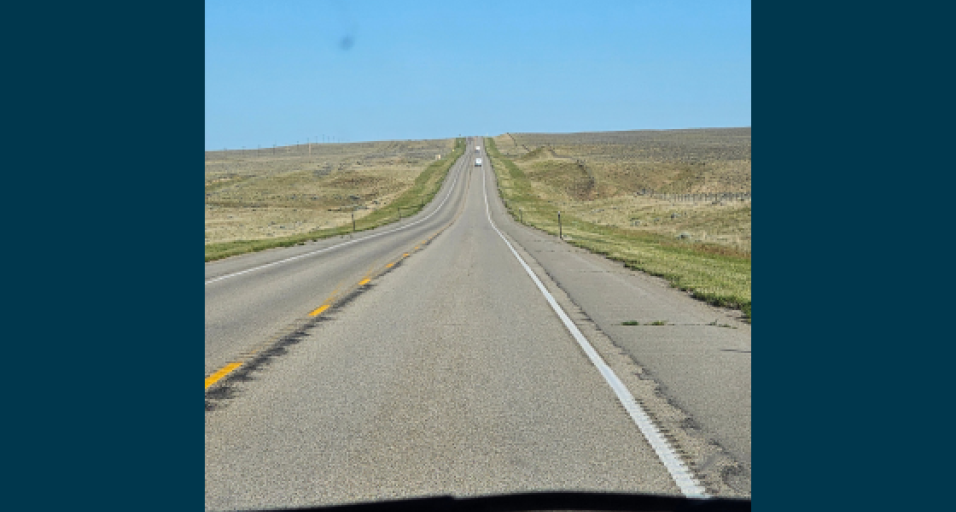
The Wyoming Game and Fish Department has issued a safety reminder for motorists as prolonged drought conditions across the Cowboy State create an unintended green highway system.
According to the Game and Fish, wildlife biologists are reporting a surge in big game animals clustering along highways and rights-of-way, driven by a search for food and water.
The dangerous lure of roadside ditches
When the prairie and mountain forage browns out, the asphalt infrastructure of Wyoming roadways creates an unintended oasis. Roadsides and barrow pits are engineered to drain water away from highways. Game and Fish report that due to this, the borrow pits hold onto critical moisture much longer than the surrounding arid landscape. This creates a stark contrast as vegetation on the open range is dry and curing out, tempting green vegetation grows directly adjacent to high-speed traffic. In addition, the roadway edges require mowing, stimulating the regrowth of grasses and the emergence of other plants, such as sweet clover, that are sought after by wildlife.
Not all wildlife have crossings
Wyoming is nationally recognized for its pioneering Wildlife Crossing Initiative, utilizing highly successful overpasses, underpasses, and game-proof fencing to safely guide migrating herds across major highways such as US Highways 191 and 30 and Interstate 25.
However, during an intense drought, traditional movement patterns may change. Animals wander outside their usual territories in search of water and food. Not all wildlife is lucky enough to find a designated crossing structure along their route, leaving them to cross unprotected stretches of high-speed roadways.
When drought dries up the local creeks and springs, wildlife will travel in search of these resources. This may result in them showing up on roads and highways where they normally wouldn’t venture, catching drivers off guard and causing wildlife/vehicle collisions. Dangerous to both people and wildlife.
How motorists can help
Slow down and scan: Lower your speeds, particularly when traveling through rural or open-range country. Actively scan the green ditches or area between the roadway and the right-of-way fence where animals are often actively feeding.
Expect a crowd: If you see one pronghorn or deer cross the road, immediately slow down, and assume there are several more to follow.
Use caution during dusk and dawn: Big game animals are most active during the cooler hours of early morning and late evening. Drive with increased awareness during these low-visibility windows.
A shared effort for Wyoming’s heritage
“Our field personnel are seeing a higher volume of wildlife utilizing highway rights-of-way than in a typical summer,” Casper-based Game and Fish Wildlife Biologist Kylie Sinclair said. “By slowing down and giving them space, Wyoming drivers can directly protect themselves and our state’s wildlife resources.”
Wyoming Department of Transportation Public Information Specialist Jeff Goetz said in 2025, there were more than 1,630 reported vehicle collisions with big game in Wyoming. He said on average, WYDOT sees around 2,500 each year.
Game and Fish are also reminding the public that in Wyoming, the wildlife conservation license plate, which proudly features the iconic pronghorn, is designed to directly fund projects that reduce dangerous wildlife/vehicle collisions across the state. All proceeds from the plates benefit wildlife crossings projects, such as underpasses and overpasses, installing highway game fencing to guide animals safely, and improving structures and road signage along crucial migration routes.
To get one, you can easily request the plate in person through your local County Treasurer’s office during vehicle registration or renewal, or mail a completed application to the Wyoming Department of Transportation.

Bill Sam
July 26, 2026 at 4:07 pm
I live in Wyoming have the cops give out more speeding tickets!