News
Raising the Crow Tipi at Fort Phil Kearny

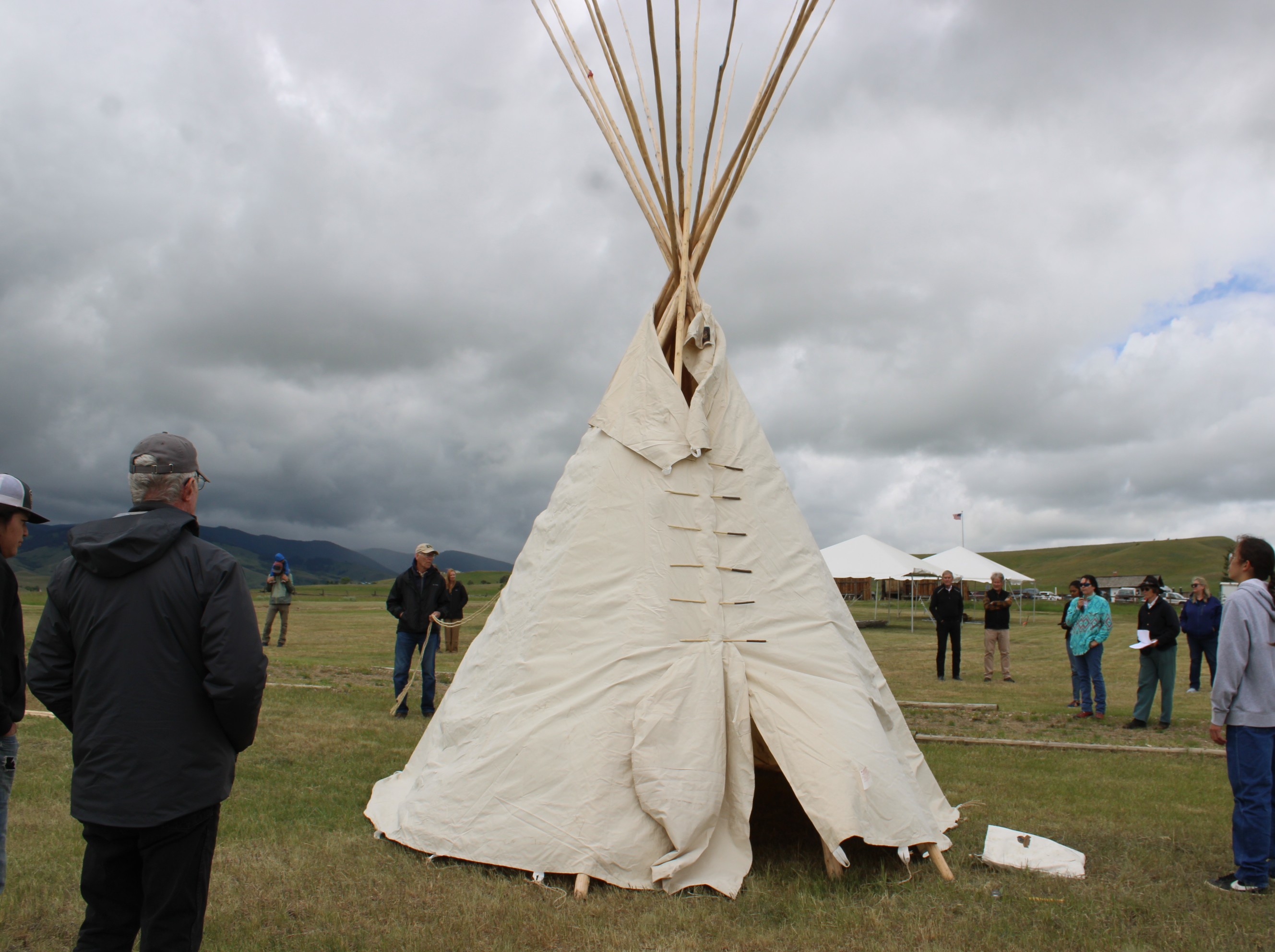
One might think that all tribe’s tipis are the same. All use long, straight lodgepole pine poles, peeled and dried as the frame, and all are covered by the traditional buckskin buffalo hide or canvas.
But there are several differences between the tipis of different tribes. On June 12, at the Brinton Musuem, a member of the Northern Cheyenne tribe, Wallace Bearchum, gave a demonstration and a talk about the raising a Cheyenne tipi, which uses three-poles lashed together as the foundation, and more poles are added to that. This story appeared on Sheridan Media on June 13.
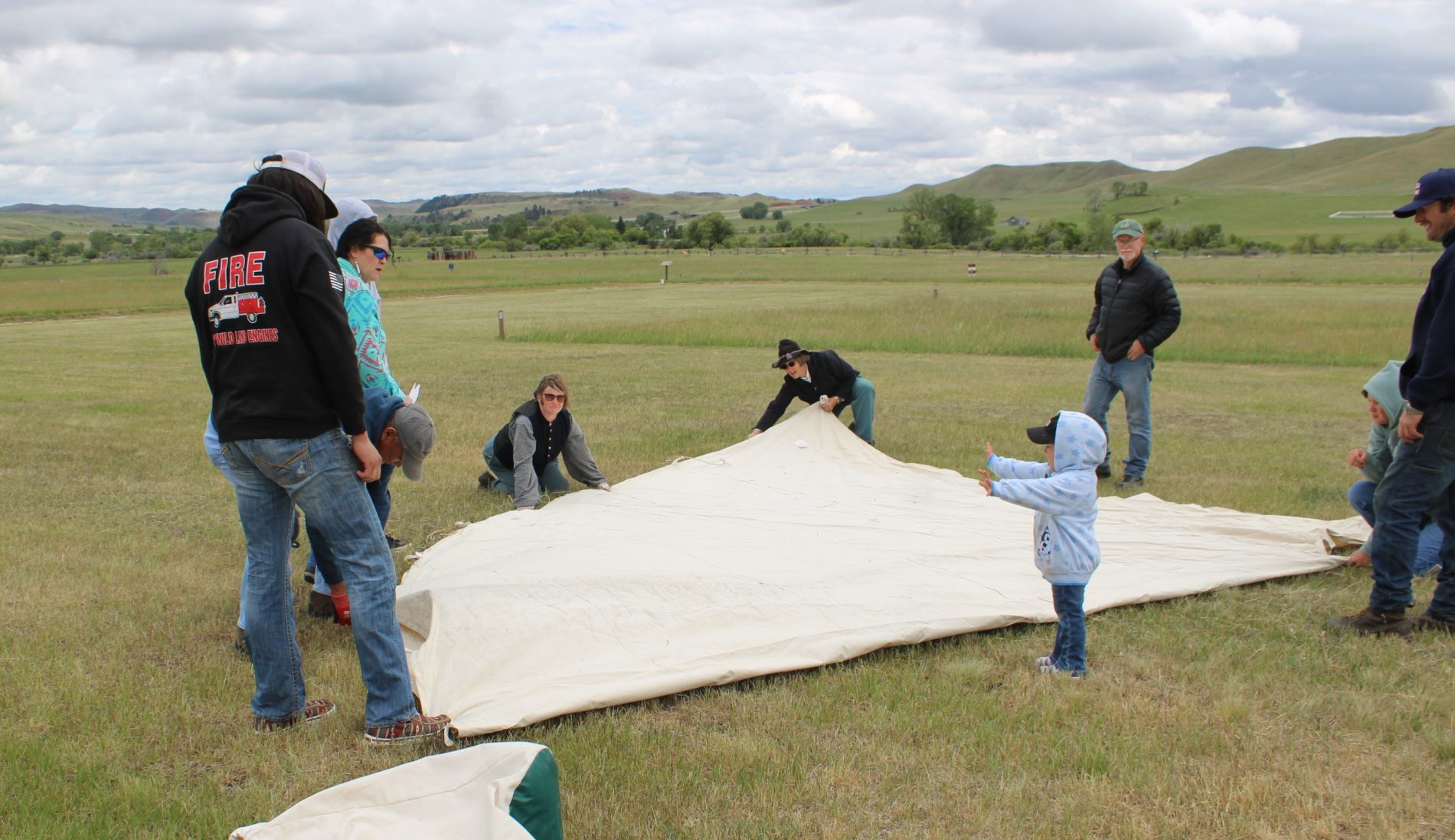
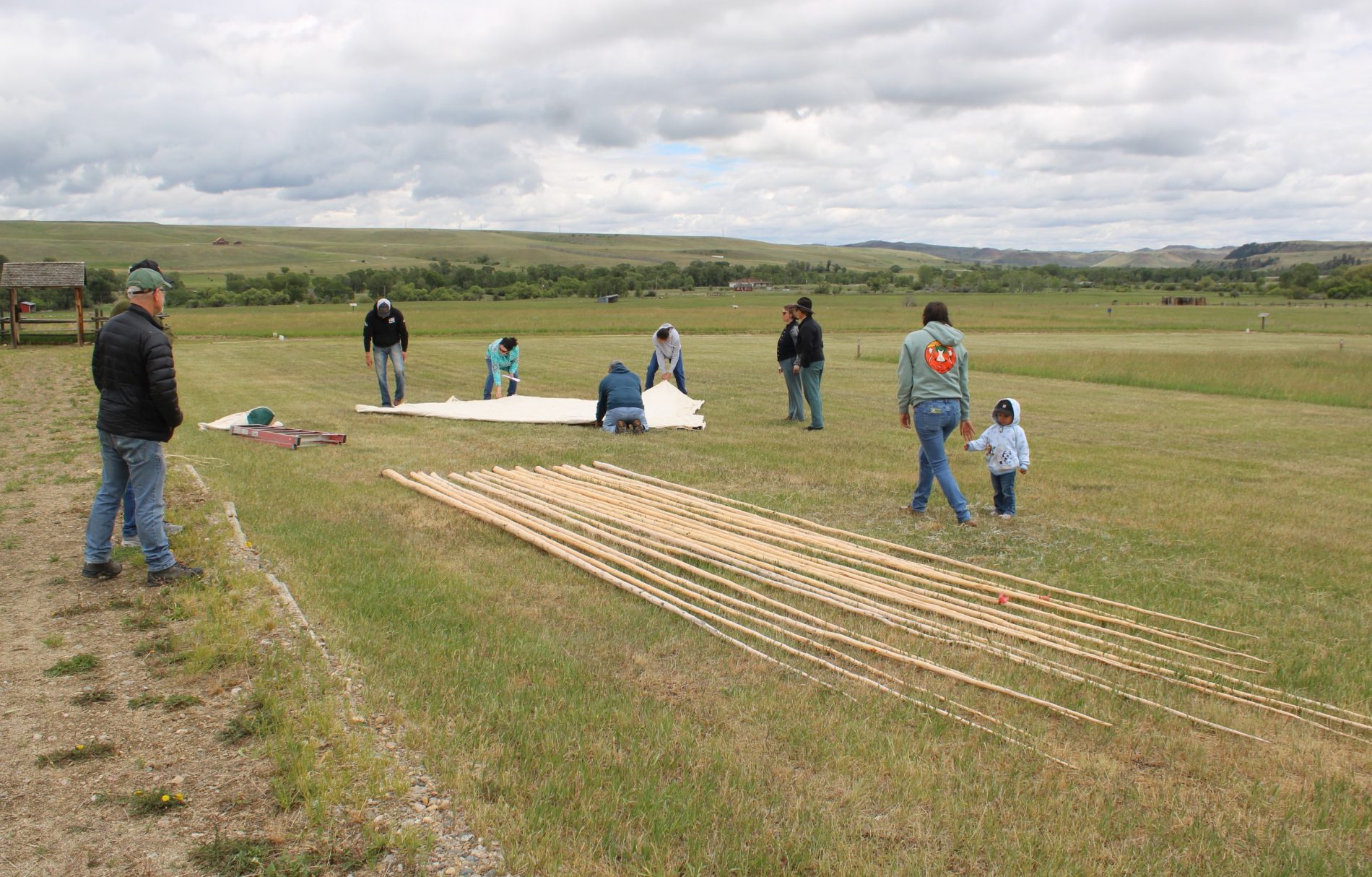
On June 13, in conjunction with Bozeman Trail Day, a traditional Crow tipi was raised at Fort Phil Kearny. Vanessa Bird-in-Ground, explained about how the Absaloka tipi is raised.

She mentioned some of the differences between the Crow tipi and the Cheyenne and Sioux tipi.
Once the four foundation poles are erected, the other poles are added. These are the helper poles, Vanessa said. “The north pole is the mountain lion, and the south pole is the grizzly bear. They are also sentries, and watch for anything bad coming into the tipi. The two base poles on the south represent good fortune and wealth. The two on the north side are for well-being and health.” Vanessa said.

One similarity between nearly all tribes, is that the door of the lodge always faces east toward the rising sun.
While some tribes paint colorful symbols or war deeds on their tipis, Vanessa explained why the Crow lodge is white.

Shortly after the tipi was gifted to the Crow, they were given the gift of using stakes to hold the tipi down. Some tribes weighted the tipi’s down with rocks, and it some places tipi rings of stones can still be seen, a reminder of those who once lived and hunted on the land.
The tipi will remain standing on the Fort Phil Kearny grounds throughout the summer.