News
SCLT Discovery Session: Cheyenne Uses of Native Plants

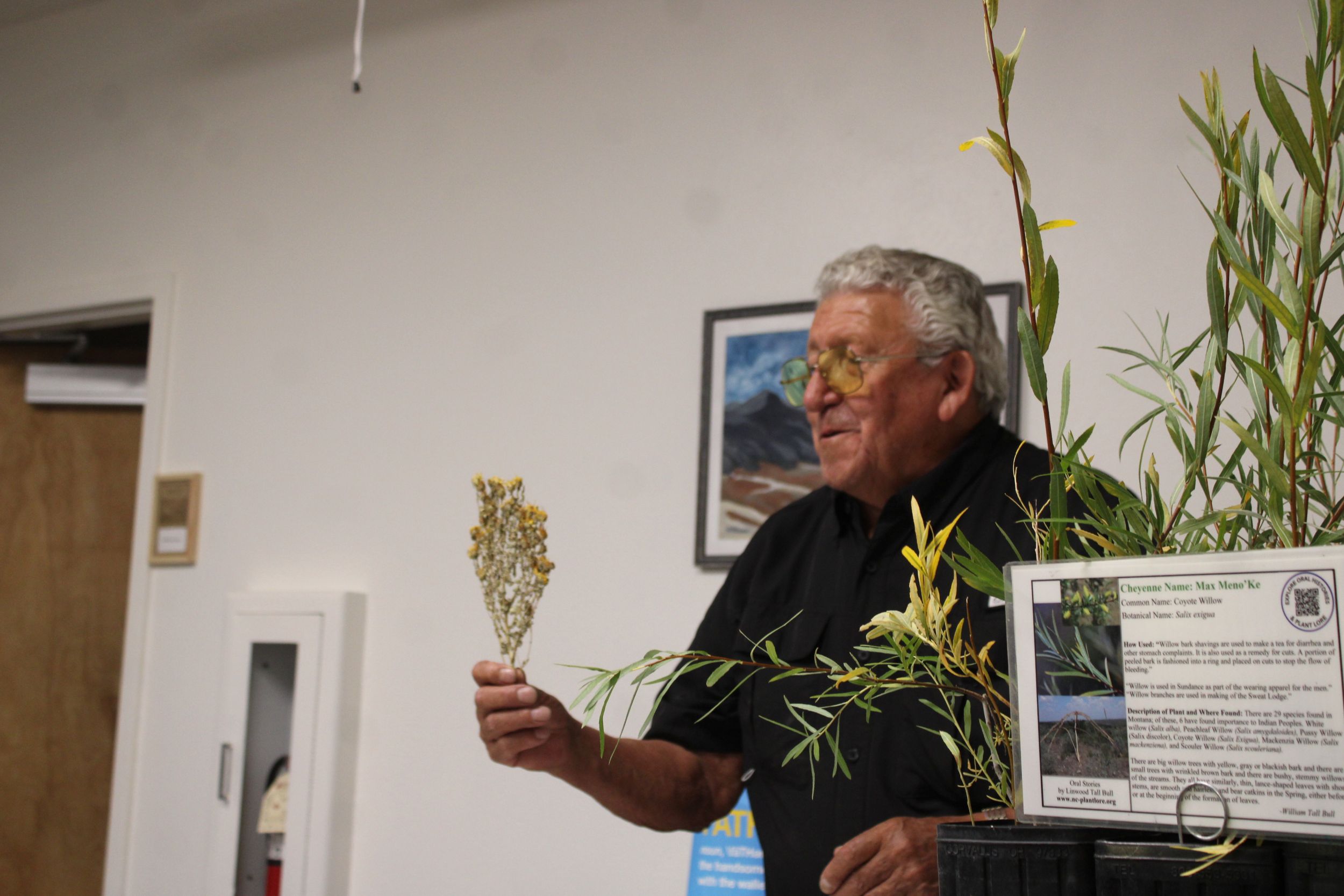
Ethnobotanists Linwood and Randall Tall Bull of the Cheyenne tribe shared their knowledge of native plants and traditional tools on Sept. 29 at the Sheridan Community Land Trust Discovery Session. This will be a two-part story.
Partnering with Piney Island Native Plants and the Bighorn Native Plant Society, this Discovery Session explored traditional knowledge of native plants and the connections between people and the land.
Alison Dooley, president of the Big Horn Native plants society, introduced the speakers, beginning with Linwood Tall Bull.
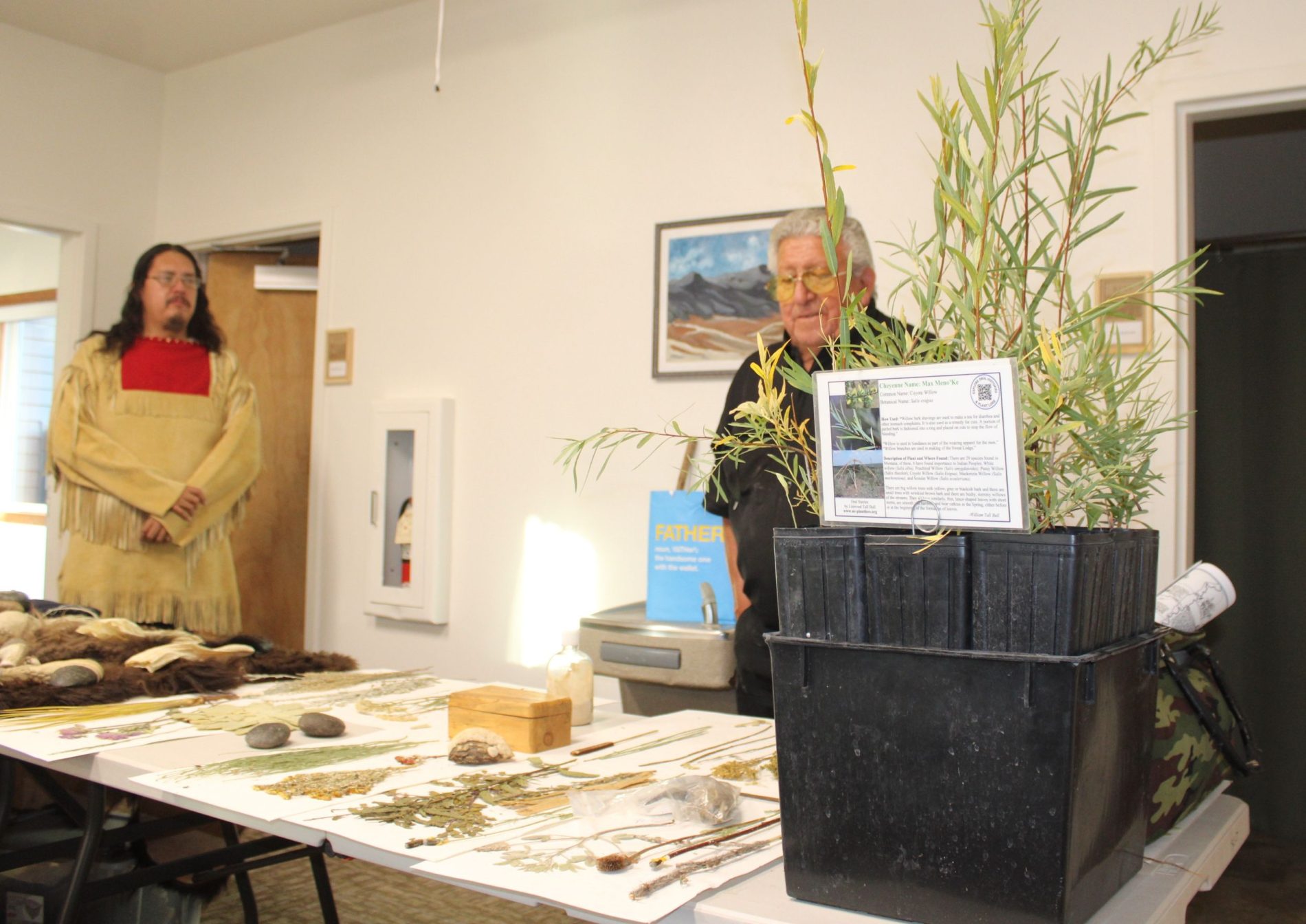
Linwood started by talking about how the Cheyenne look at plants, and a little history of the Cheyenne tribe.
Linwood added that many of their stories and legends are very similar to the stories in the Christian Bible, including the worldwide flood, the dividing of the waters, and the feeding of the multitudes.
He talked about many of the plants that were used for medicine, such as native yarrow, which is used for respiratory aliments and healing wounds; curlycup gumweed was used to protect from snow blindness as well as being made into a tea for stomach problems. Native cone flower, or blackroot, was used for toothaches and children’s teething pain, saying it also predicts the winter snow depth, as it will always grow above the snow.
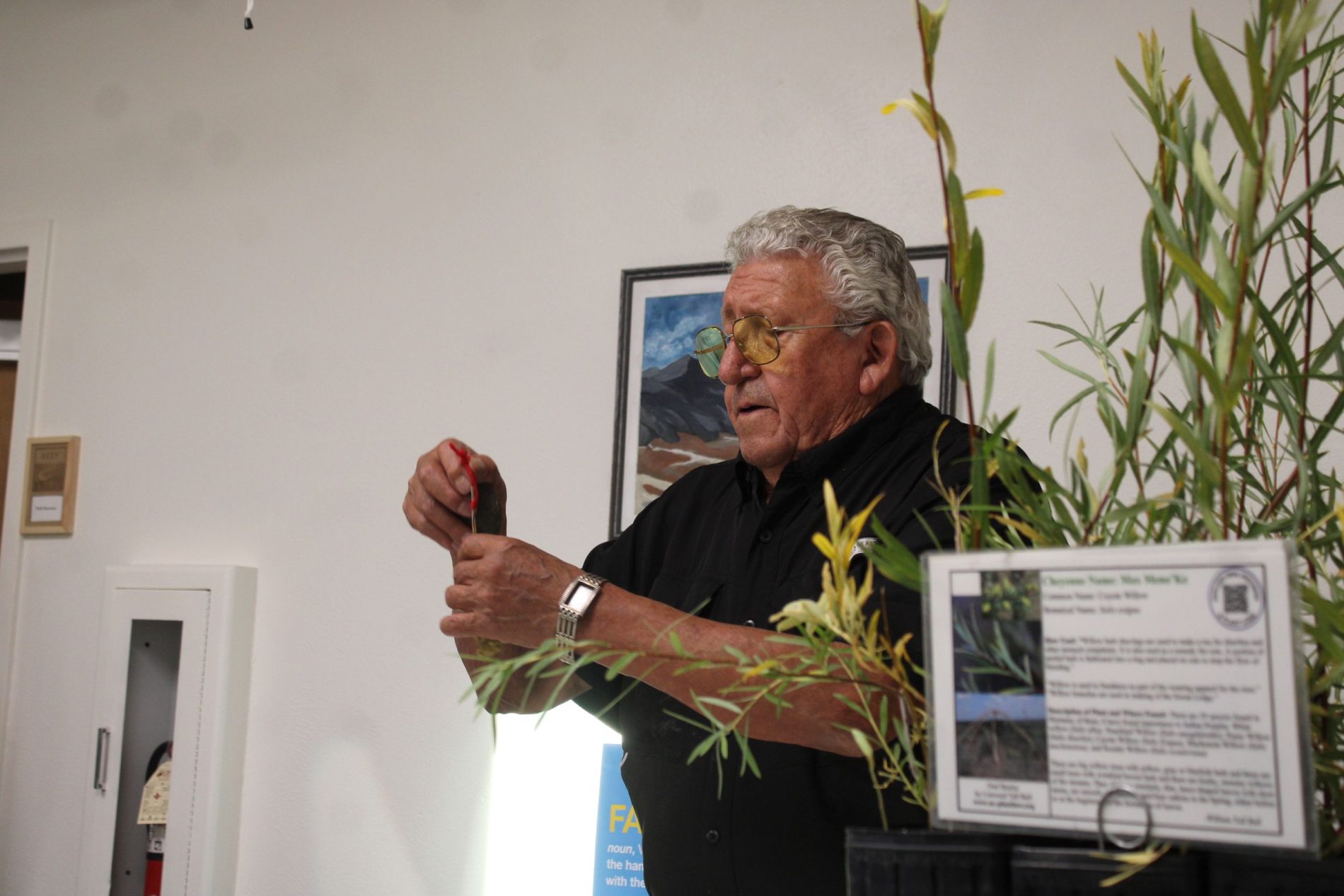
He said when gathering medicine plants, the believed that you should cut the plant and not pull it up by the roots, and one should talk to the plant as well. Rattlesnake brush could be hung near the door of the lodge so that no bad spirit or bad thing would come into the home.
He added that they believe that everything, even stones have life. Every Cheyenne home had a river rock like the one he had on display, the reason being that nothing bad would ever come to those who lived or entered the lodge. “Stones live forever,” he said and added, “We are very superstitious people.”
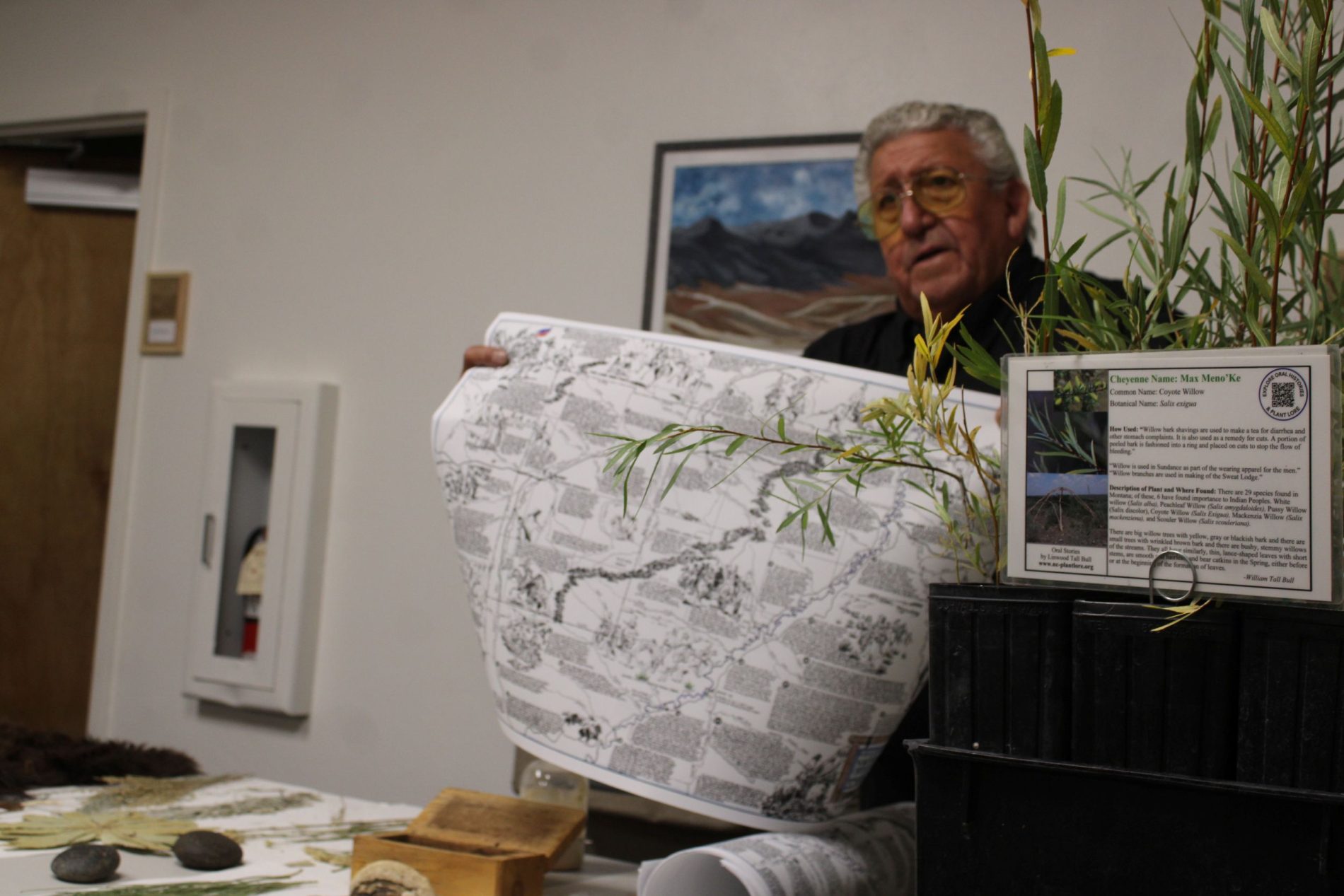
Linwood also brought a poster about Cheyenne history and gave one to anyone who wanted to take one home.
After Linwood’s presentation, his son, Randall, who is a fourth generation Ethobonoist as well as a maker of traditional tools. Randall talked about the buffalo, and how the Cheyenne used every part of it for tools, utensils and even water bags, and that will be the topic of part two.
A good crowd attended the program, which was held in the SCLT Welcome Center at the Big Goose Natural Area.