
News
History: Native Americans Talk of Custer Fight

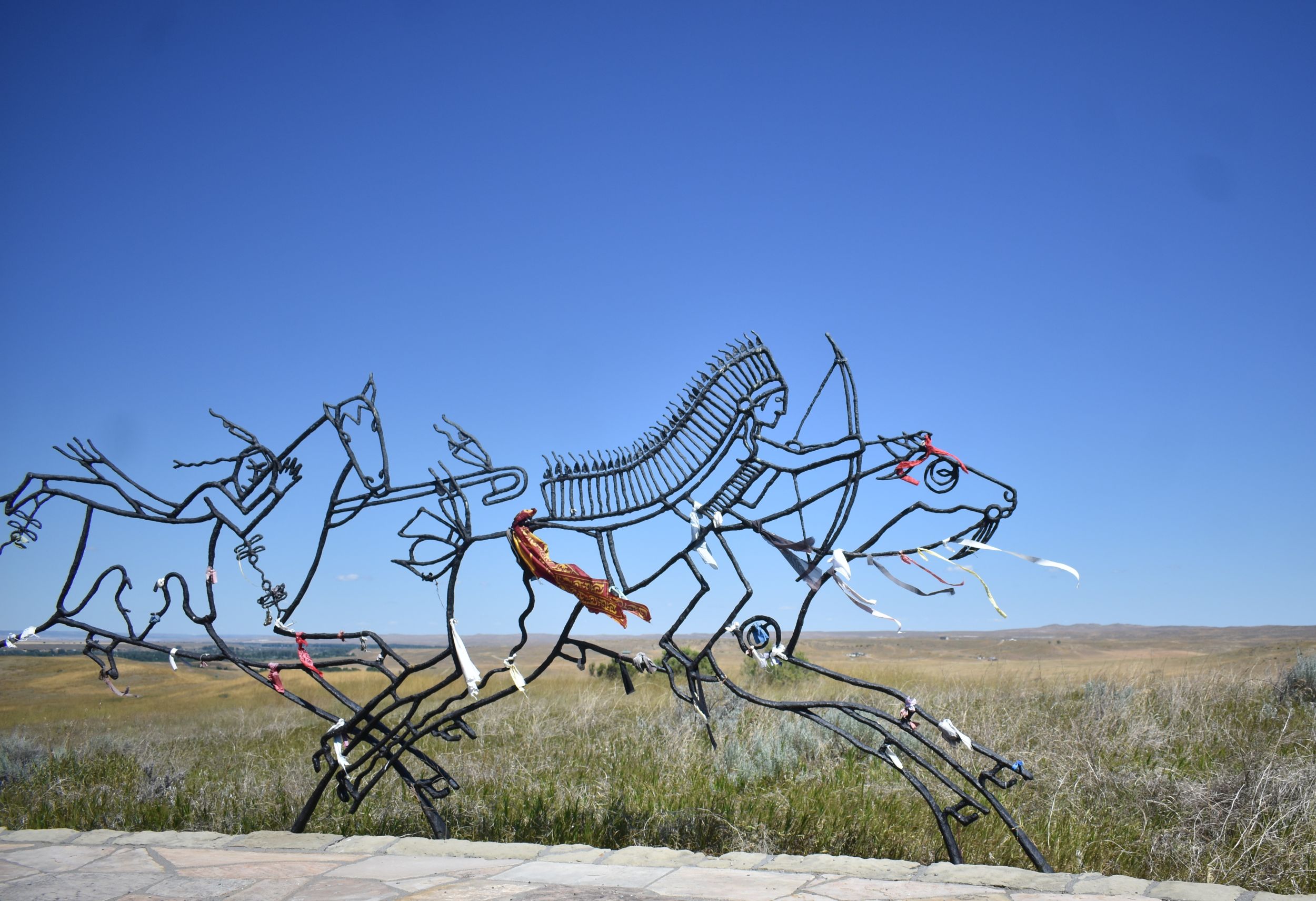
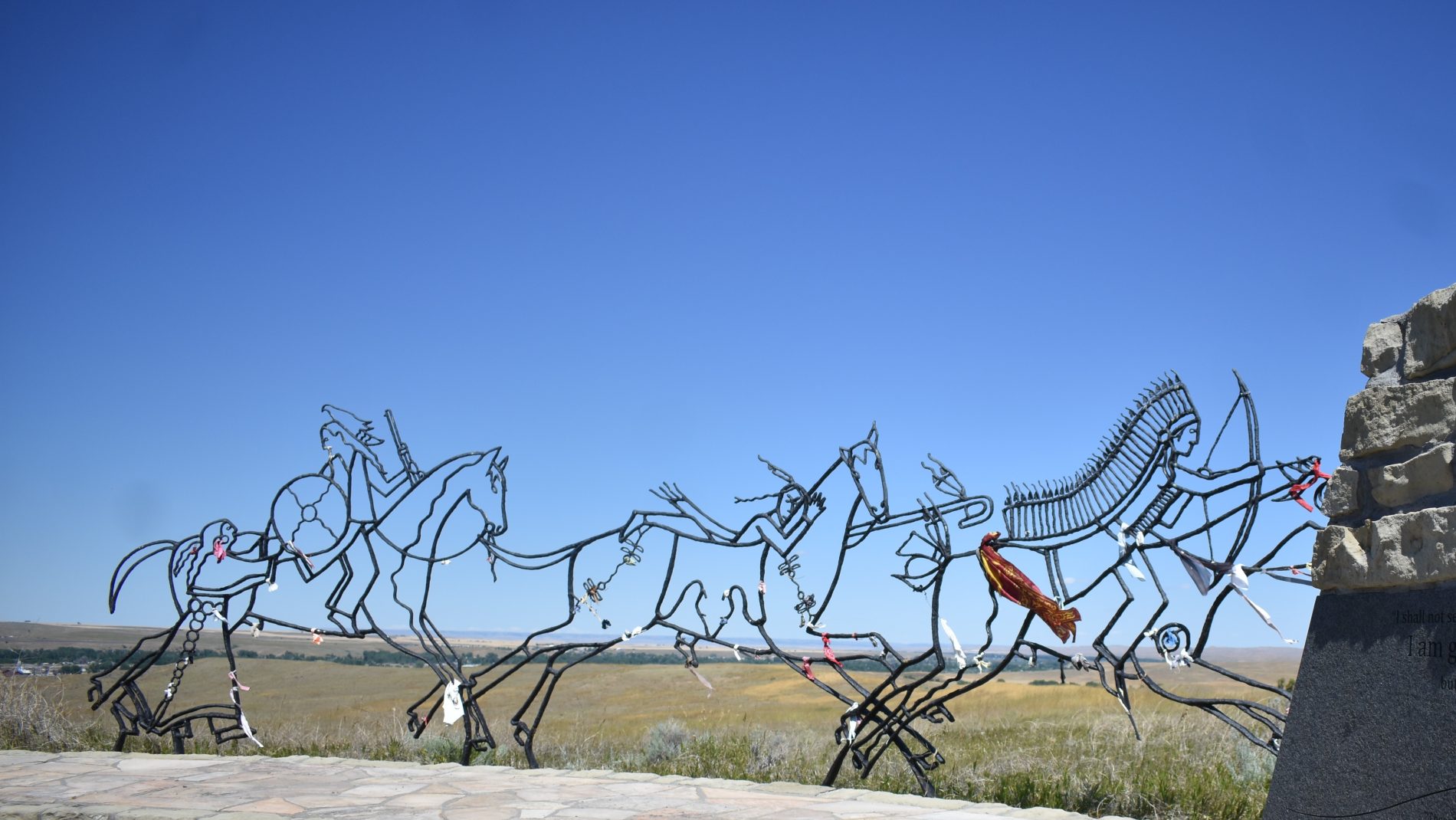
This year, 2026, is the 150 anniversary of The Custer Battle, or Battle of the Greasy Grass. Much has been written about the famous battle, from both points of view. In this column we will look at a few of the old newspaper stories about the battle from the viewpoints of the Sioux and Cheyenne tribal members.
There were a lot of events that lead into the battle, and many of them have been addressed in previous columns.
This small item in the Sundance Gazette could be one reason why the chief was a part of the Custer fight.
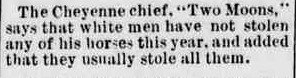
The Sundance Gazette, March 20, 1886
Not long after the battle, reporters began to talk to the Sioux and Cheyenne survivors of the fight.
Cheyenne Weekly Leader, April 18, 1878 – Sitting Bull’s Camp. A well-known Bismarcker has returned from a scout in Sitting Bull’s territory, he reports that he was a guest of Sitting Bull, and that the old man treated him as such, giving him his confidence on the Custer fight, and his personal dread of assassination.
Sitting Bull doesn’t fear a Brutus from within, but fancies the whole world on the outside so hates him that some white fanatic may find the gates ajar and break the golden bowl before he has a chance for self-defense.
Over a cup of very black coffee Gibson and Sitting Bull discussed the Custer fight. Sitting Bull said he was forced to fight Custer or lose his camp. He did not recognize the American Murat or any other chief in his command.
The last men killed were two officers and a first sergeant. The sergeant is described as a man with a large scar on his neck, and as a hero that commanded the admiration of the chiefs. He fought so desperately that the chiefs yelled to the young men to take him alive.
He killed five Indians, and was then killed himself. Sitting Bull said he was too brave to kill, but they couldn’t help it. They had to destroy him to save themselves. Sitting Bull did no shooting. He was present, but Long Dog, War Eagle and Little Knife commanded. After the Custer massacre they were attacked by more soldiers, and they fought them until their ammunition was short.
They lost more men in the second, or Reno fight, than in the one with Custer. Sitting Bull denies that he is a chief. He is willing to return home, but wants some such guarantees as are written in the Declaration of Independence.
The Nez Perces also talk of returning. They want to see Miles, who, in their mind, was sent into the county to settle all Indian difficulties.
Bill Barlow’s Budget, Fetterman, Wyoming, Wednesday, June 30, 1886 – (Fetterman, Wyoming, after Fort Fetterman, later became Douglas, and the Budget moved to the new town.)
Special to the Pioneer- From from the Custer battlefield, Montana, describes the celebration of the tenth anniversary of the battle by a few of its survivors. The great Sioux Chief, Gall went over the field and described the manner in which Custer’s command was destroyed. Gall is a fine looking Indian, 45 years old, and weighing over 200 pounds. His account of the affray does not differ materially from those already published. He says the “boys in blue,” when surrounded, never broke but were shot down in line.
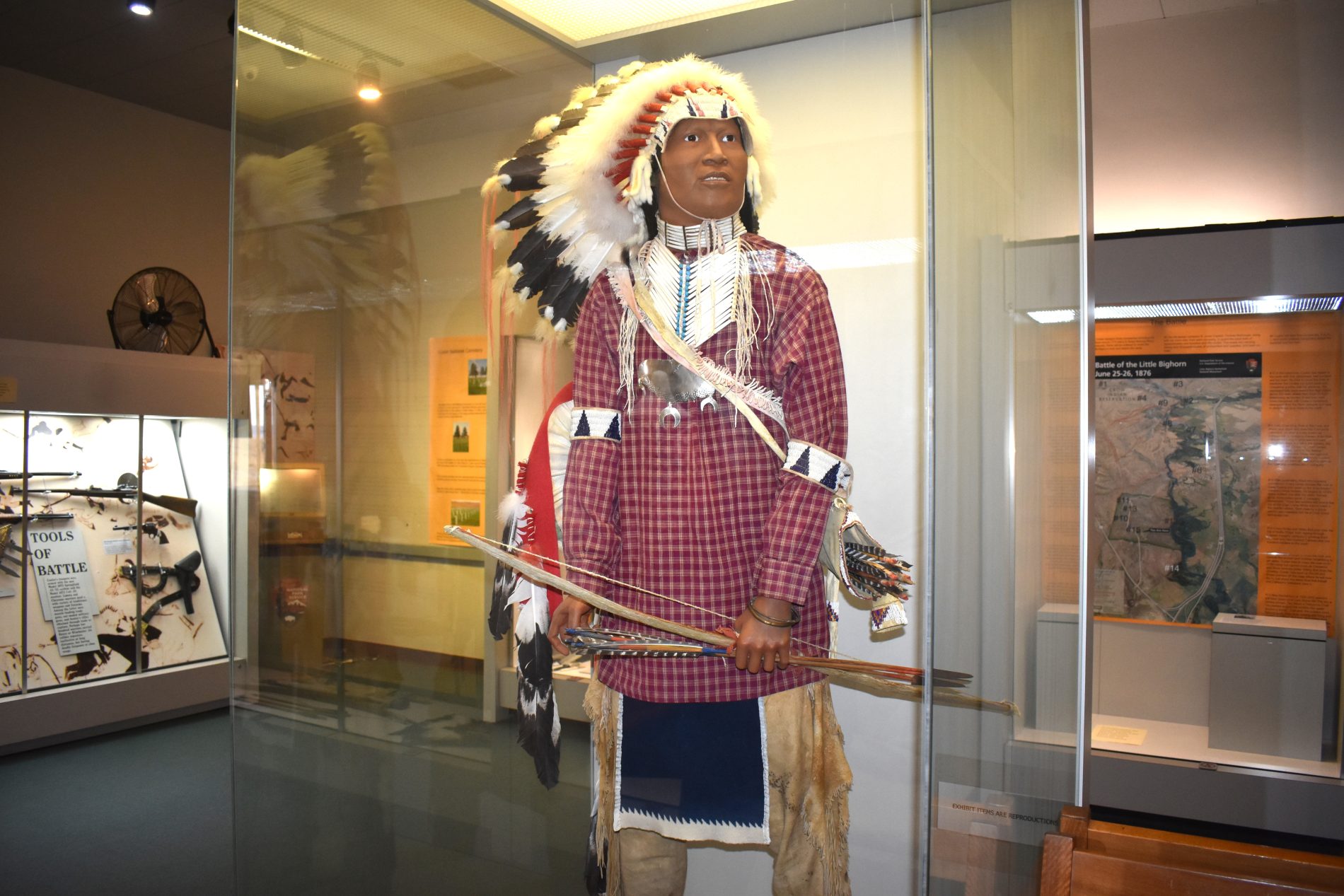
Indian warrior at Custer Battlefield Museum
Rain-in-the-Face took part in the battle, but there is controversy about whether or not he killed Custer. There are several different accounts, and this is his.
The Sheridan Post, October 6, 1905 – Rain-in-the-Face, an Indian who has always been looked upon as a dangerous character, died recently. Commenting upon his death the Chicago Inter-Ocean has the following to say of Rain-in-the-Face’s claim that he was the Indian who slew General Custer: Rain-in-the-Face’s theory of the battle was that he had aroused the Indians under Sitting Bull to give battle because of his hatred of the Custer’s.
Tom Custer, it was said, had captured Rain-in-the-Face and sent him to prison. On his escape, the story goes, Rain-in-the-Face swore vengeance on Tom Custer and General Custer. In the battle of the Little Big Horn, he urged the Indians on to kill every American soldier and he himself led the last charge and in the melee shot General Custer and his brother. So much for Rain-in-the Face’s story.
The stories told by Sitting Bull, Crazy Horse, Chief Gall and other Indian leaders, do not support the story told by Rain-in-the-Face. Gall, who was most active in the battle, declared that when the Indians were attacked no one knew that Custer was in command and that up to the last not one of the Indians recognized Custer, because his hair was short and not as it had been in previous campaigns.
Chief Gall, in describing the battle, said the Indians closed in on the cavalry men and in twenty or thirty minutes killed all. No one offered to surrender and no one was asked to surrender. Chief Gall insisted that he was in command of the detachment that fired the last shots and that he did not know Custer was present. On one point all the Indians agreed — the battle was a melee not lasting more than twenty or thirty minutes, the Indians acting under the general order to surround the soldiers and kill them.
There were several great war chiefs on the field and all were conspicuous in the fight. Of all these, Rain-in-the Face is the only one that spoke bitterly against Custer. All except Rain-in the-Face spoke reluctantly of the part they took in the battle and said the Indians, being on the war path, entered the fight to win. It is certain that Rain-in-the-Face was one of the most desperate of his tribe’s fighters. His boast that he killed Custer may have had a basis in fact.
At all events his story was accepted by many after the death of Sitting Bull, Crazy Horse and Chief Gall.
The Custer Battle, or Battle of the Greasy Grass, still lives on in memory of both the white men invaded the hunting grounds of the native tribes and the Native American’s whose ancestors fought to keep their free, nomadic way of life.

Tammy Anthony
June 14, 2026 at 2:53 pm
Very interesting as usual. Thank you!