News
Game and Fish Monitoring Seasonal EHD Outbreak in Casper Region White-tailed deer and Pronghorn

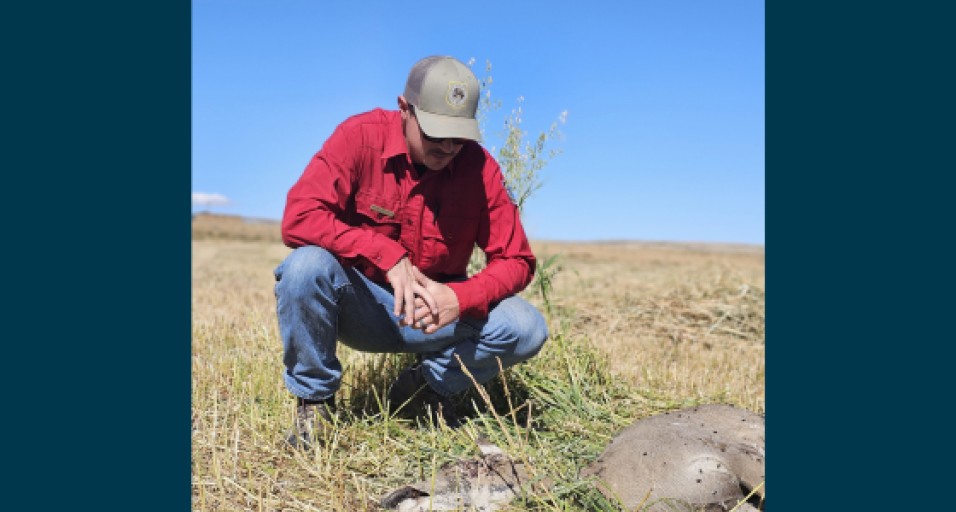
The Wyoming Game and Fish Department has announced that personnel are actively monitoring an increase in epizootic hemorrhagic disease (EHD) and bluetongue virus cases among wildlife in central Wyoming, particularly around Casper and Glenrock.
Game and Fish regional wildlife managers want agricultural landowners, hunters, and river recreationists to be aware of the localized outbreak. White-tailed deer are currently thought to be the most impacted species in the region, though wildlife biologists have also observed fewer, isolated cases in local pronghorn populations.
According to the department, EHD and bluetongue are seasonal viral diseases transmitted to ungulates by biting midges, commonly known as “no-see-ums” or gnats. These insects breed in moist, exposed mud along drying stock ponds, reservoirs, and riverbanks.
Because high fever is a primary symptom, infected animals instinctively seek water to cool themselves. As a result, people are likely to notice deer lingering near the water’s edge or carcasses along shorelines.
Infected animals may appear lethargic, show excessive salivation or facial swelling, suffer from respiratory distress, or demonstrate a lack of fear toward humans. The Game and Fish note that many animals may appear healthy with this virus and show no symptoms. The progression of EHD is rapid, often resulting in mortality within 24 to 36 hours of acute onset.
Game and Fish reminds the public that neither EHD nor bluetongue virus can infect humans, nor can they be transmitted to domestic pets such as dogs or cats.
Department officials expect the virus to run its natural course until central Wyoming experiences its first hard frost, which effectively reduces the biting midge population and halts further transmission for the season.
For more information on EHD and bluetongue and current distribution maps, visit the Game and Fish wildlife health webpage.