alt
Program Held on Standing Bear Muslin Paintings

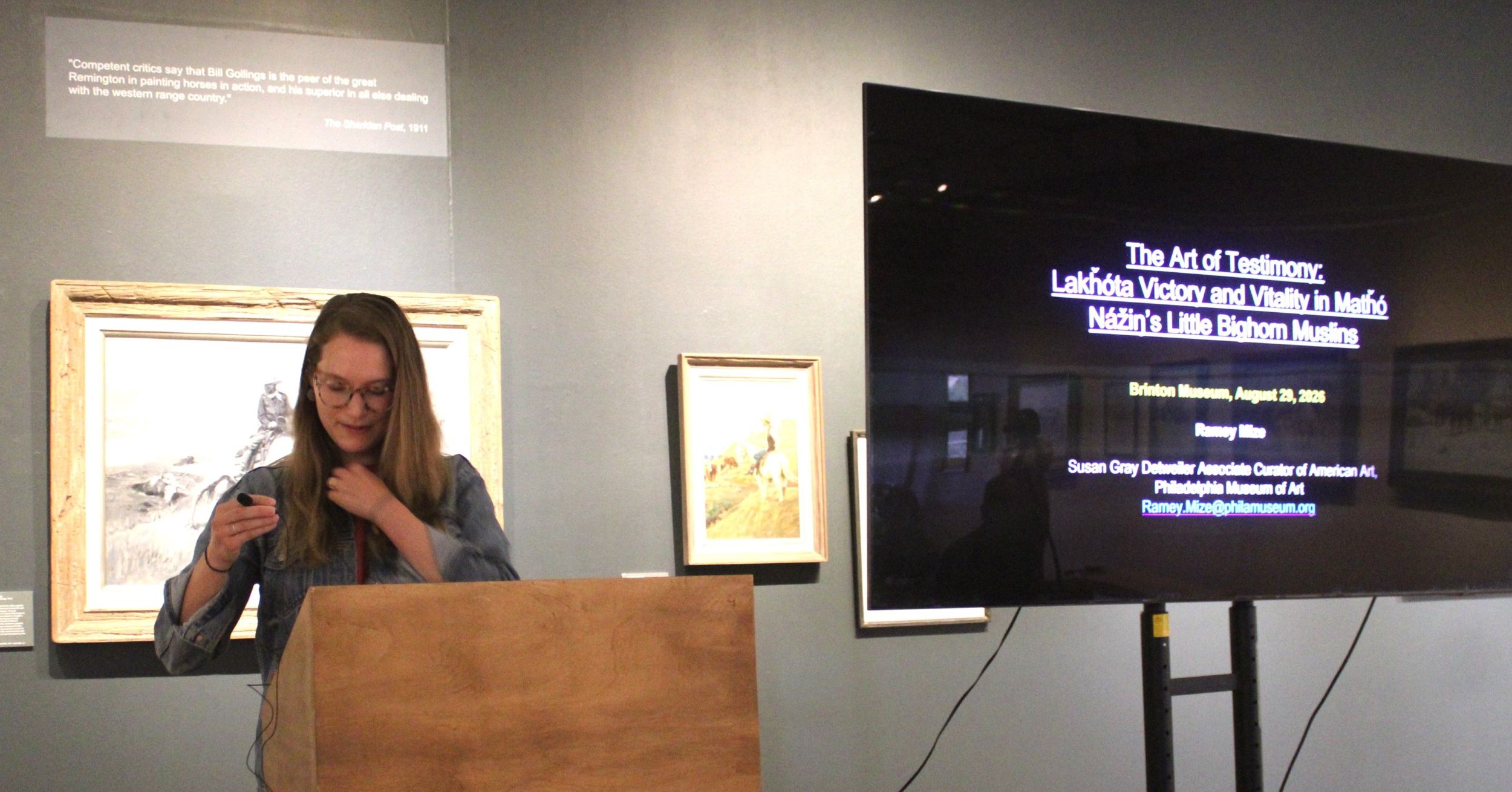
On Saturday, August 29, The Brinton Museum presented the first program in their Fall into Art series, presented in conjunction with The Unfinished War: The Battle of the Little Bighorn in Native American Art.
Jochen Wierich, Curatorial Director at the Brinton introduced art historian Ramey Mize, PhD, Susan G. Detweiler Associate Curator at the Philadelphia Museum of Art.
Wierich added it was hard to believe that this was already the first fall program of the year.
He said that Mize had a fellowship at the Metropolitan Museum of Art, where she worked on Stephen Stand Bears muslin paintings related to the Battle of the Greasy Grass.
He said that she generously shared her research with him and he was thrilled that she agreed to visit the Brinton from Philadelphia and give her lecture.
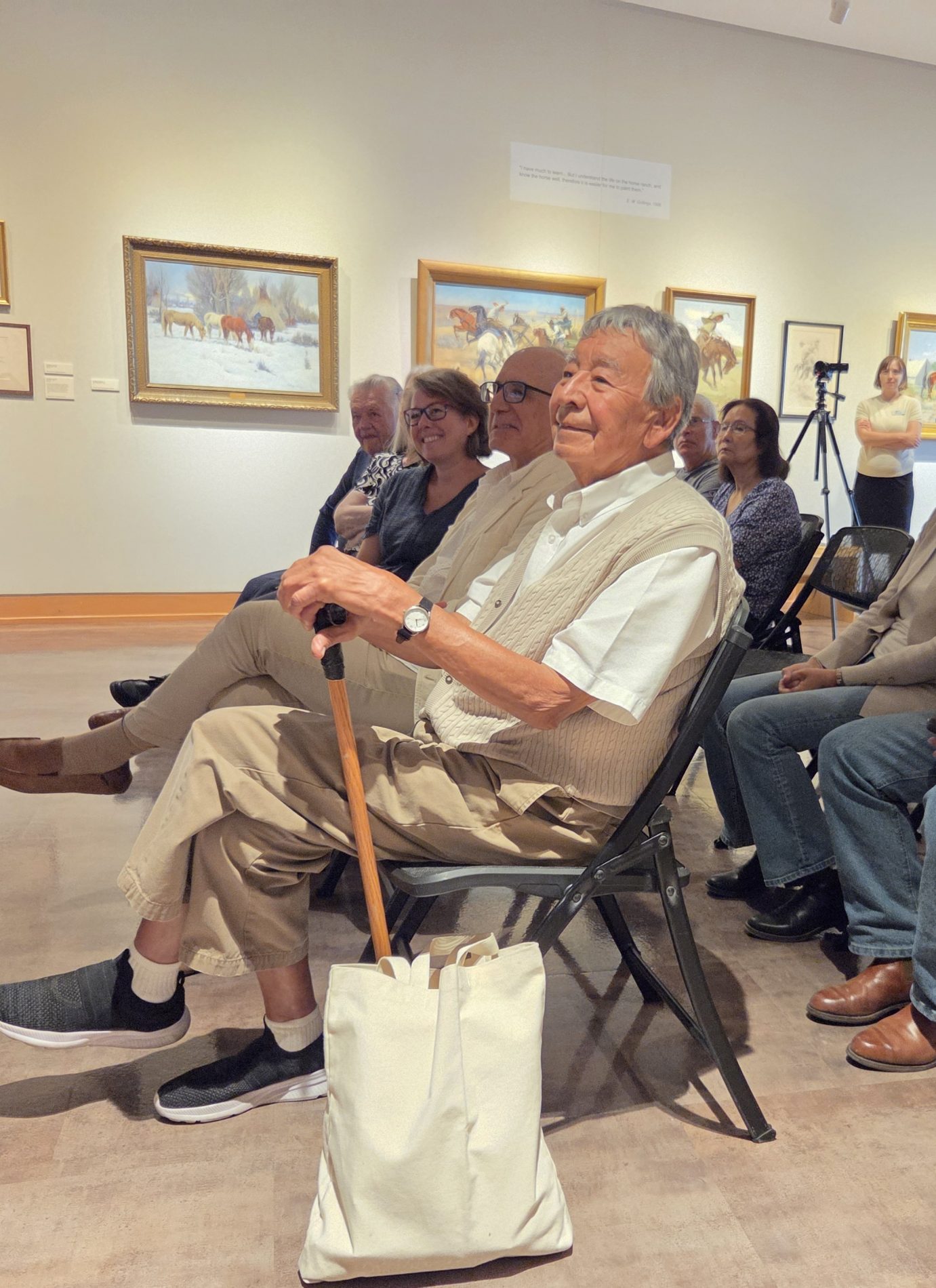
He introduced a few other special guest who came to hear the talk. One was Authur Amiotte, the great-grandson of Steven Standing Bear, and an artist in his own right.
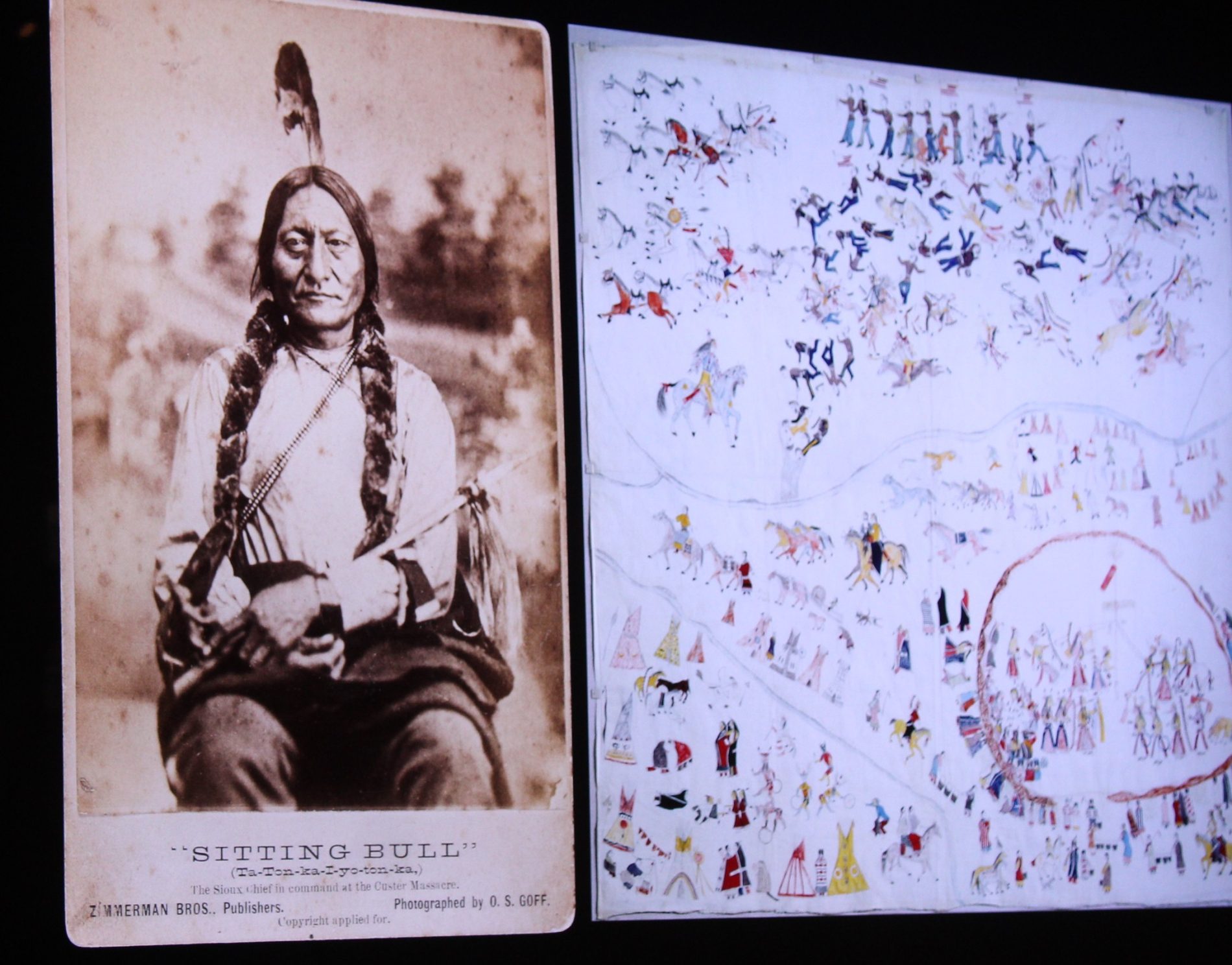
Then Ramey Mize took the podium. Her lecture explored the work of Mnikhówožu Lakȟóta leader Matȟó Nážiŋ (Stephen Standing Bear) and the Little Bighorn muslins he created around the turn of the twentieth century.
She said that being a non-native scholar, she approached the research with deep humility learning and gratitude.
She said that Standing Bear testified to his experience at the battle in both word and image.
She showed a map with the ancestral homeland of Standing Bear, and the seven tribes that once hunted and lived in the vast area.
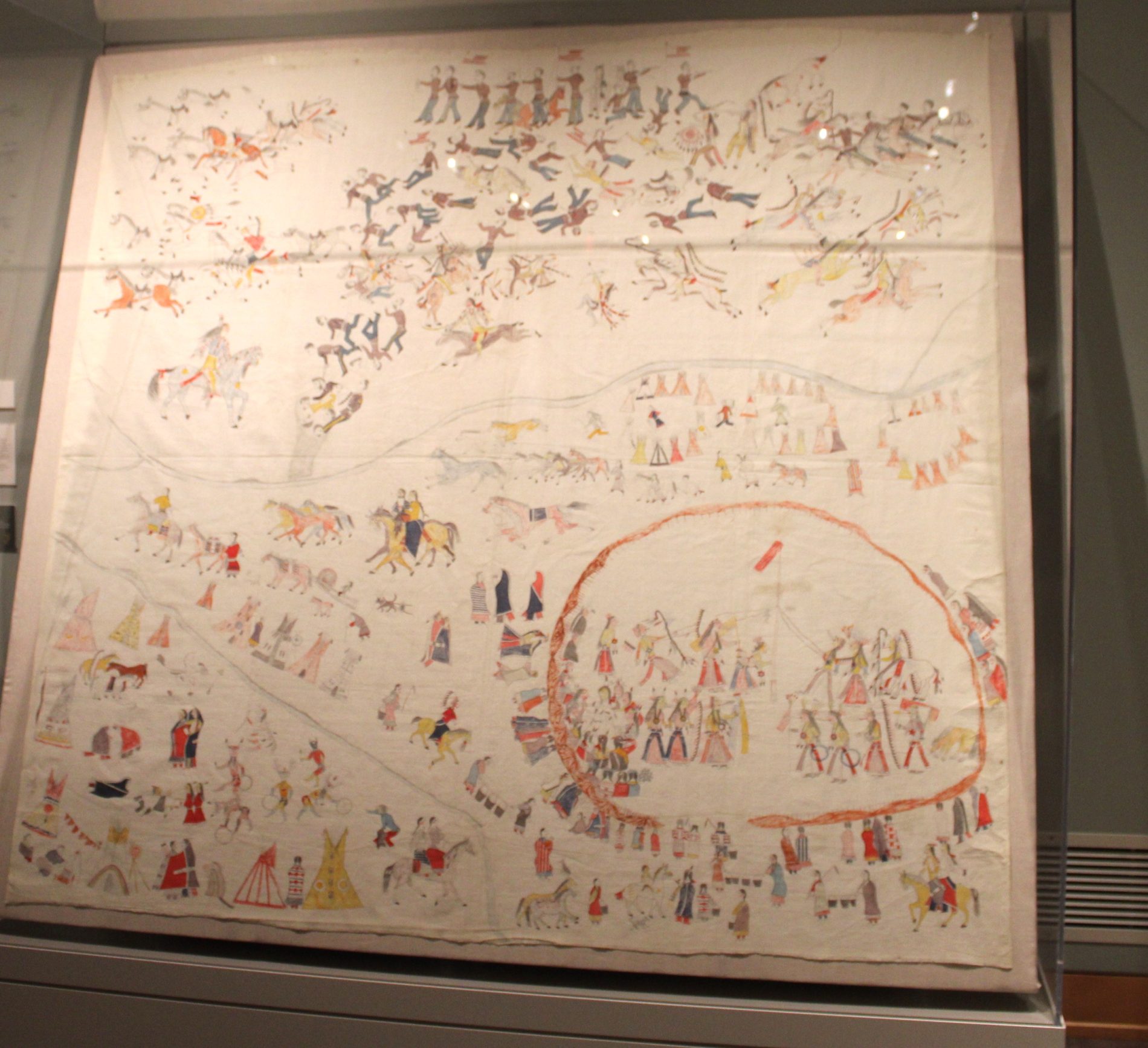
She talked about the paintings that were done on animal hide, paper or fabric and how they were used with storytelling to pass on the tribal history to the next generation. These were sometimes attached to the inside wall of a house or a tipi as a decoration or to illustrate the stories and the history. The painting often used to help seal out winter drafts as well.
Standing Bear’s painting illustrates how the battle happened from his viewpoint.
Although there were no eyewitness accounts of the battle from the U.S. Army, as there were no white survivors, the battle was often reported in the news at the time as the Native America’s being the aggressors. In many illustrations in the papers, the cavalry was depicted as heroically standing their grounds. However, Ramey said,
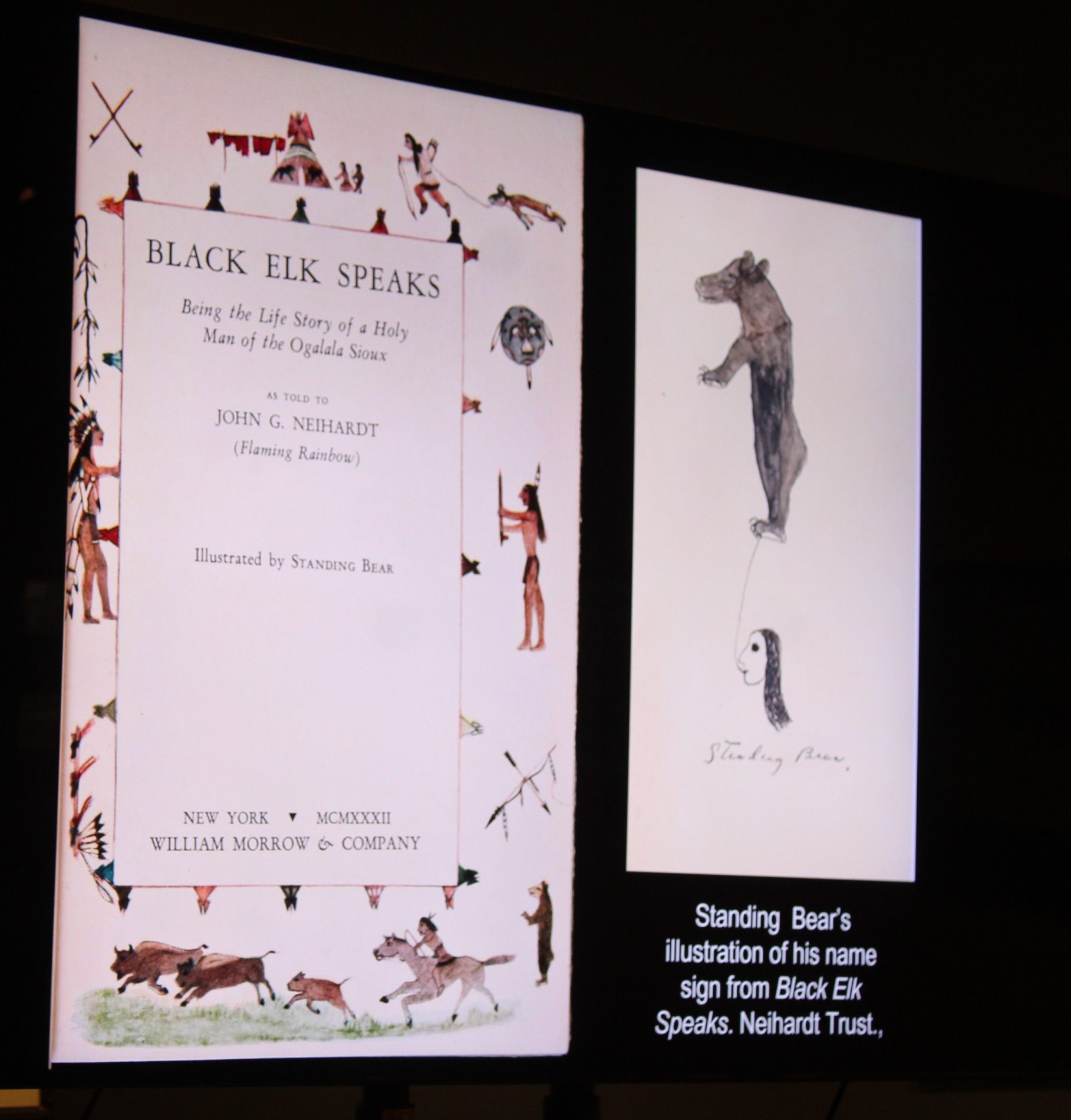
After Mize’s talk, Arthur Amiotte talked about finding one muslin that has been on display in various museums in a traveling exhibit.
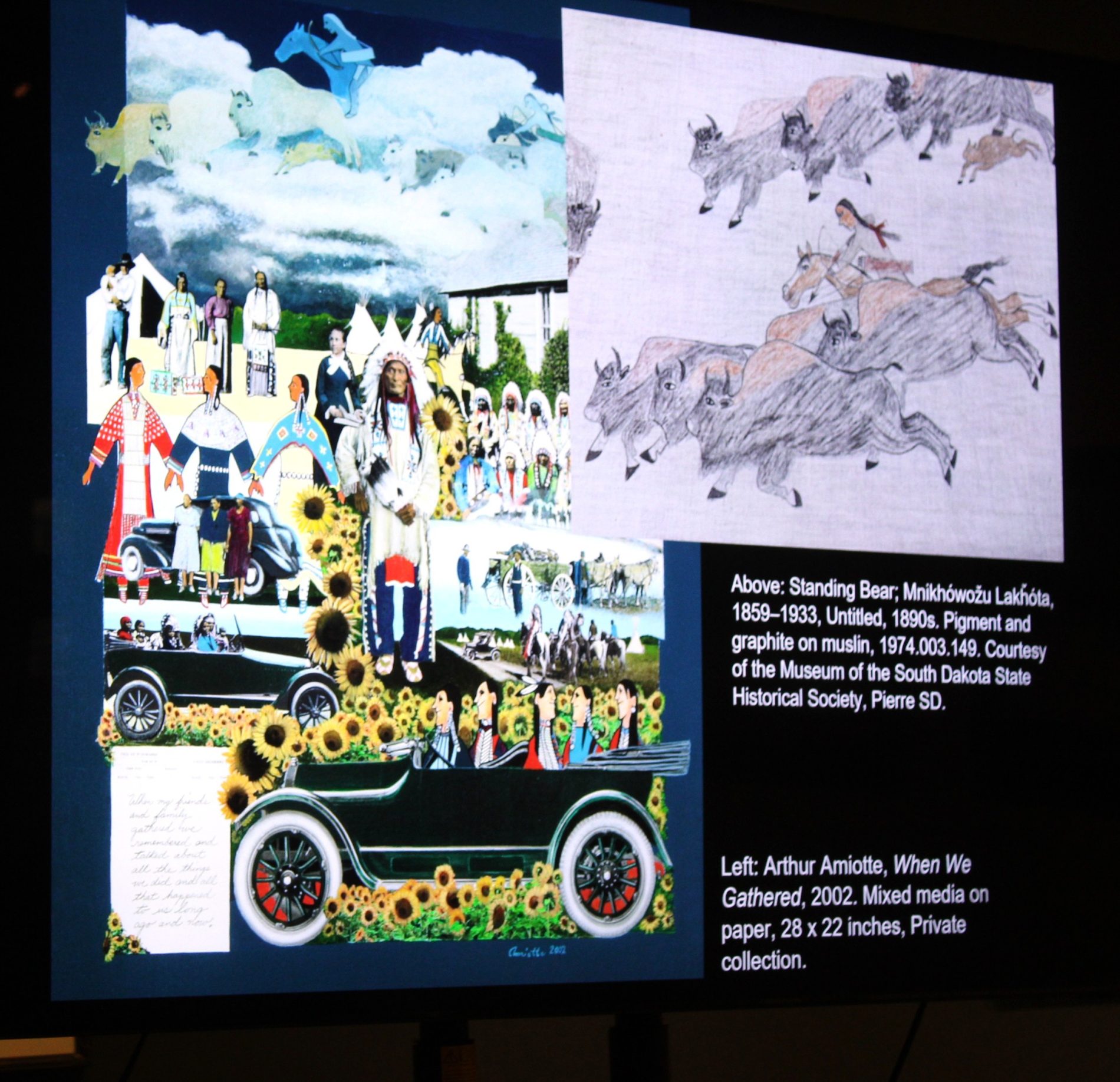
Painting by Arthur Amiotte, notice he incorporated Standing Bear’s painting in his art.
Standing Bears muslin painting is currently featured in The Unfinished War, offering visitors the opportunity to experience the work firsthand and deepen their understanding of its historical, artistic, and cultural significance. The exhibit will be on display through September 14.