News
History: First Movie Ever Filmed in Wyoming

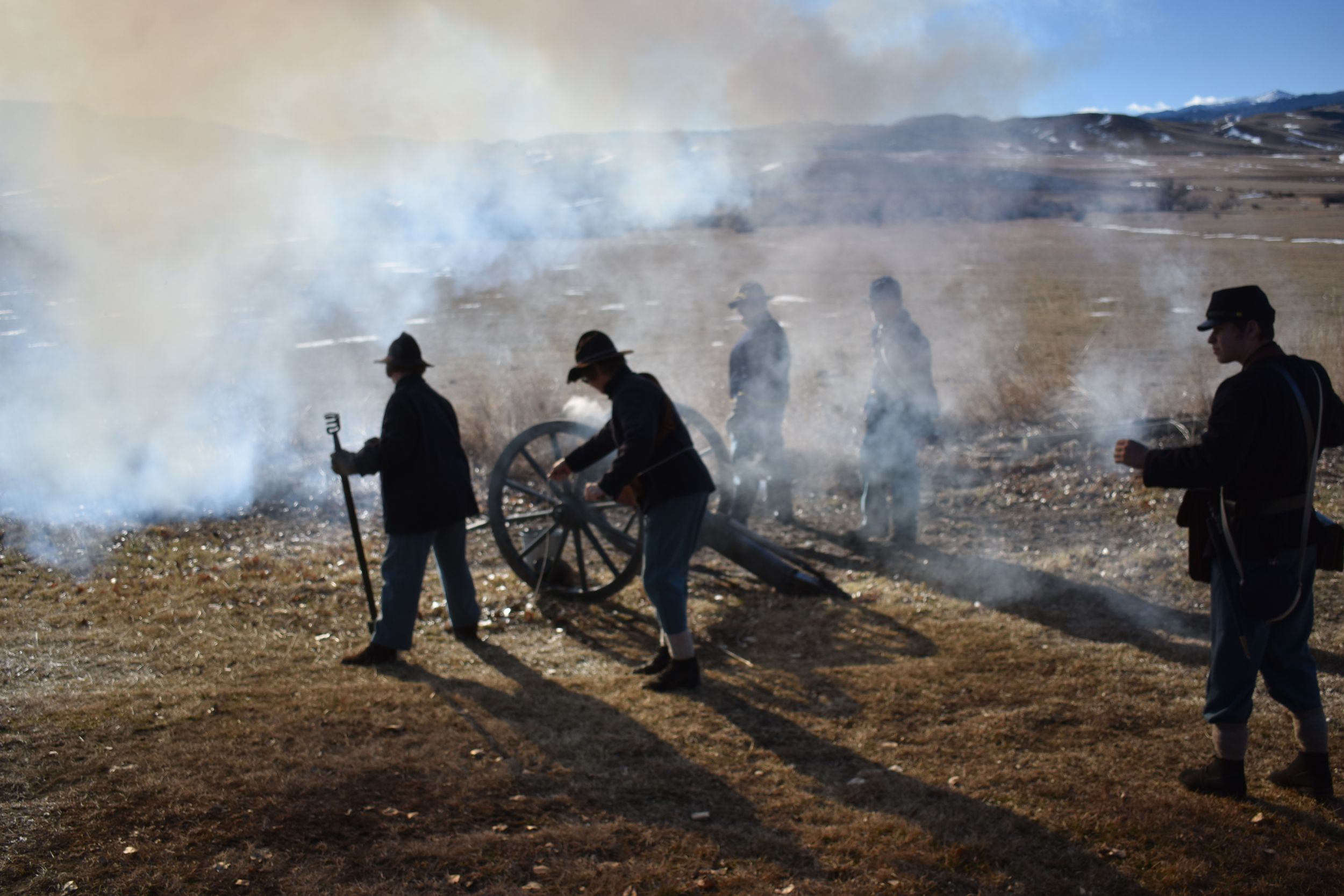
On 25 October 1854, during the Battle Balaklava in the Crimean War, the British Light Cavalry Brigade, which was led by Lord Cardigan, mounted a cavalry charge against a well-entrenched Russian artillery battery. Most of the 600 British who participated in the charge never returned.
The event inspired Alfred, Lord Tennyson’s poem “The Charge of the Light Brigade,” which at one time nearly every student learned in school.
But Crimean is a long way from Wyoming, and in 1854, Wyoming wasn’t even a territory. So, what does this have to do with Wyoming history?
Inspired by the bravery of the soldiers, and Tennyson’s famous poem, in 1912, The Edison Moving Picture company decided to film their silent movie, “Charge of the Light Brigade” near Cheyenne, and using Wyoming soldiers to be a part of the movie’s famous charge.
This film is believed to be the first movie ever made in Wyoming.
Cheyenne State Leader, July 31, 1912 – A moving picture, “The Charge of the Light Brigade,” the scenario of which is being written in Cheyenne, and to be manufactured at a cost of over $30,000, is to be produced on the government reservation at Fort D. A. Russell.
J. Searle Dawley, head producer and manager of the No. 1 company, of the Thomas A. Edison Moving Picture Company, Ins., with the members of the troupe, is at the Plains hotel. This morning the first rehearsal for the picture will be held on the reservation.
“This will be one of the best pictures ever done by the company,” said Mr. Dawley, when seen in his apartments at the hotel yesterday afternoon. He was seated at a large desk before a large painting of “The Charge of the Light Brigade,” working out the details of the scenario.
“When we left New York for Cheyenne, the heads of the company instructed me to spare no expense in making the picture the best ever manufactured by them.” “The best actors and actresses from the various Edison companies have been cast for this production.
Tomorrow a shipment of five hundred uniforms, manufactured at a cost of several thousand dollars, expressly for this purpose, will arrive. The uniforms, to the minute detail, are exact to those worn by Napoleon’s crack regiment when the Duke of Wellington directed the most destructive defeat ever administrated against the greatest general the world has ever known. This you know was the result of Napoleon’s surrender and is considered on this account one of the greatest battles fought in the history of the world.
On account of this event being such as important one in the world’s history of battles, and because one of the most beautiful poems ever written resulted from it, the company has resolved to reproduce it in moving pictures.
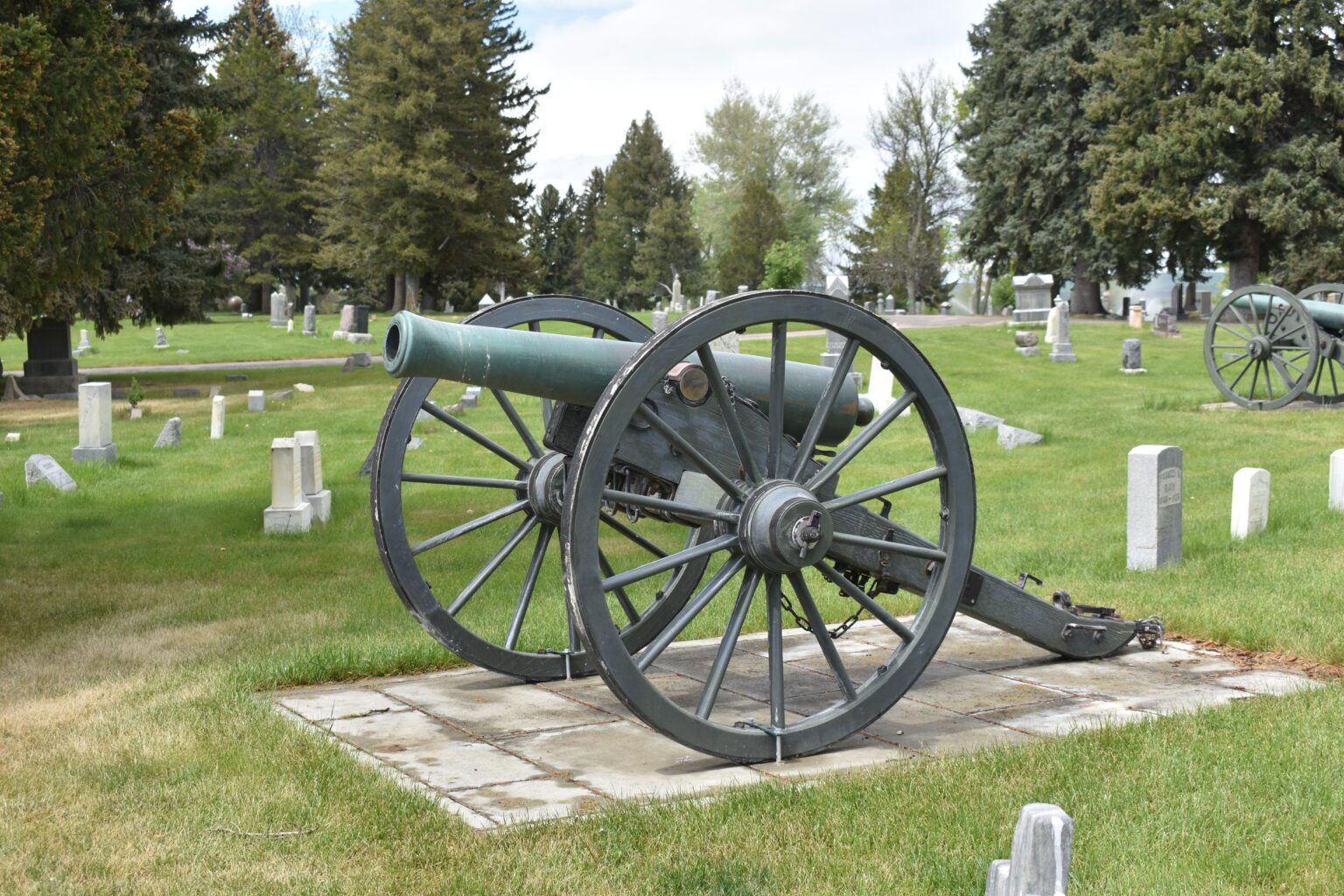
The Edison company in the past several years has produced, in cooperation with the government, several wonderful productions, portraying true army and naval life. The company in producing these pictures have done them more than justice, and their merit has been deeply appreciated by the government.
The war department will again co-operate with the company in producing this picture. The troops to be used in manufacturing “The Change of the Light Brigade” will be trained by many rehearsals, which will be directed By Mr. Dawley. The exact date for the taking of the picture, as yet, has not been designated by Mr. Dawley.
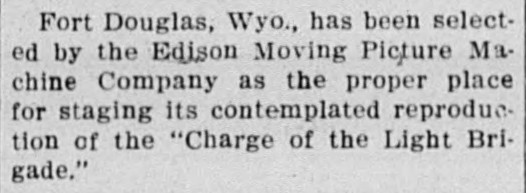
The Wyoming Times, August 15, 1912
Like filming movies today, where sometimes stunt men and actors get injured, so it was in 1912.
Cheyenne State Leader, August 6, 1912 – Soldier Hurt in Mimic Battle.– After being dragged over rough ground and struck by the ‘hoofs of a galloping horse, Emil Busch, of the Signal Corps, was picked up unconscious after the charge at Pole Mountain in front of the camera of the Edison Motion Picture, company.
The charge was enacted as a part of the film, “The Charge of the Light Brigade,” and to add realism to the scene, several bombs were exploded in the midst of the group of men and horses. The horses became- unmanageable, and many threw their riders, Busch was one of the unfortunate ones, falling beneath the hoofs of one of his friend’s horses.
He is suffering from contusions about the head and shoulders.
However, it probably did add a little authenticity to the film.
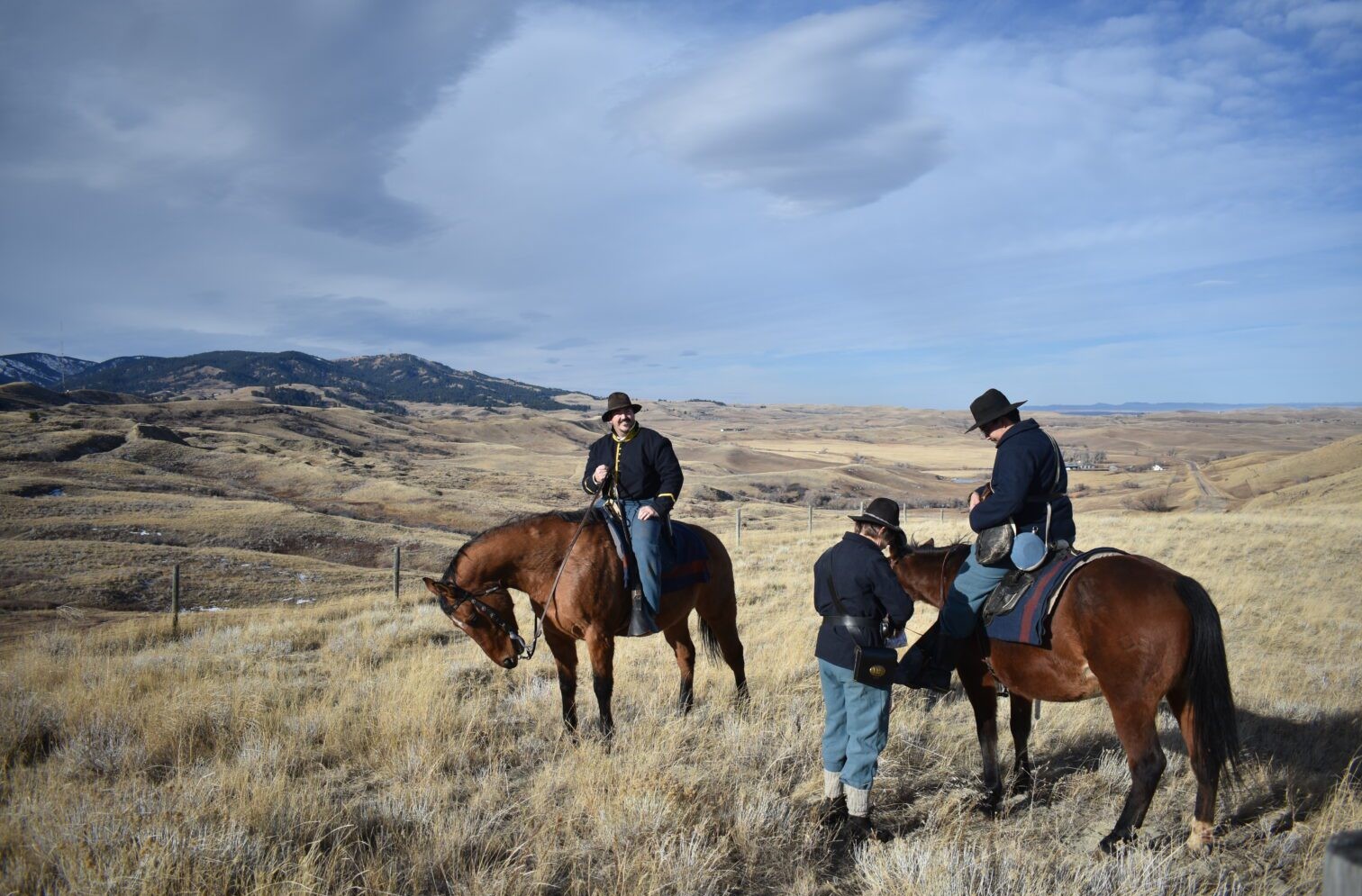
Then, when the filming was complete, the movie came to Cheyenne and was shown in the Atlas Theater.
Cheyenne State Leader, October 15, 1912 – Photoplay of Light Brigade; Atlas Feature The Charge of the Light Brigade,” a magnificent photoplay produced on the Fort D. A. Russell reservation ‘by the Edison Moving Picture company several weeks ago, is the feature of a well-balanced bill at the Atlas this week.
Nothing but praise can be said of the Edison company for the wonderful results obtained by them in producing the picture. Several hundred soldiers from the post participated in the picture. The film must be seen to be appreciated. The photoplay, however, is only a part of the show. The three vaudeville acts which follow it are of the high class kind and the bill as a whole is one of the best secured by Manager Heaney in months.
The Somboras offer “Fun In a Hat Shop.” The two who take part in the act are clever and, aided by about 500 hats, please the audience,. The Bernards are clever In a singing, talking and dancing specialty. They offer many pleasing numbers. The Bells are the one big comedy act on the bill. Bell’s impersonation of a small child singing a song was well received.
The orchestra and the other moving pictures round out a good bill. A curious coincidence of “The Charge of the Light Brigade” was that last night was the anniversary of the preparation of the famous charge.
In 1914, there was a story in the Wyoming Semi-Weekly Tribune, Cheyenne, on April 10, about the survivors of the battle. At the time, 59 years after the event, 12 survivors remained. Here is a short excerpt. A remarkable fact, showing the terrible fire to which the Brigade was exposed, is that of the above-mentioned troopers, only three returned to the lines mounted on their own horses. Indeed, out of 110 men in the llth Hussars, only 25 mounted troopers returned, while of the (blank) in the 17th Lancers who went into action, only 28 answered to their names at the subsequent roll cull. It is a curious reflection that the last survivor of the Lancers should have escaped without a weapon to defend himself, for his sword was carried away by a shot in the middle of the fighting.
The 1912 film was re-released in 1916, and an 11-minute print of that movie can be viewed on YouTube.
So, the very first film in Wyoming was about a historic event several countries and thousands of miles away.