News
Learning ‘Hand Talk’ at Fort Phil Kearny

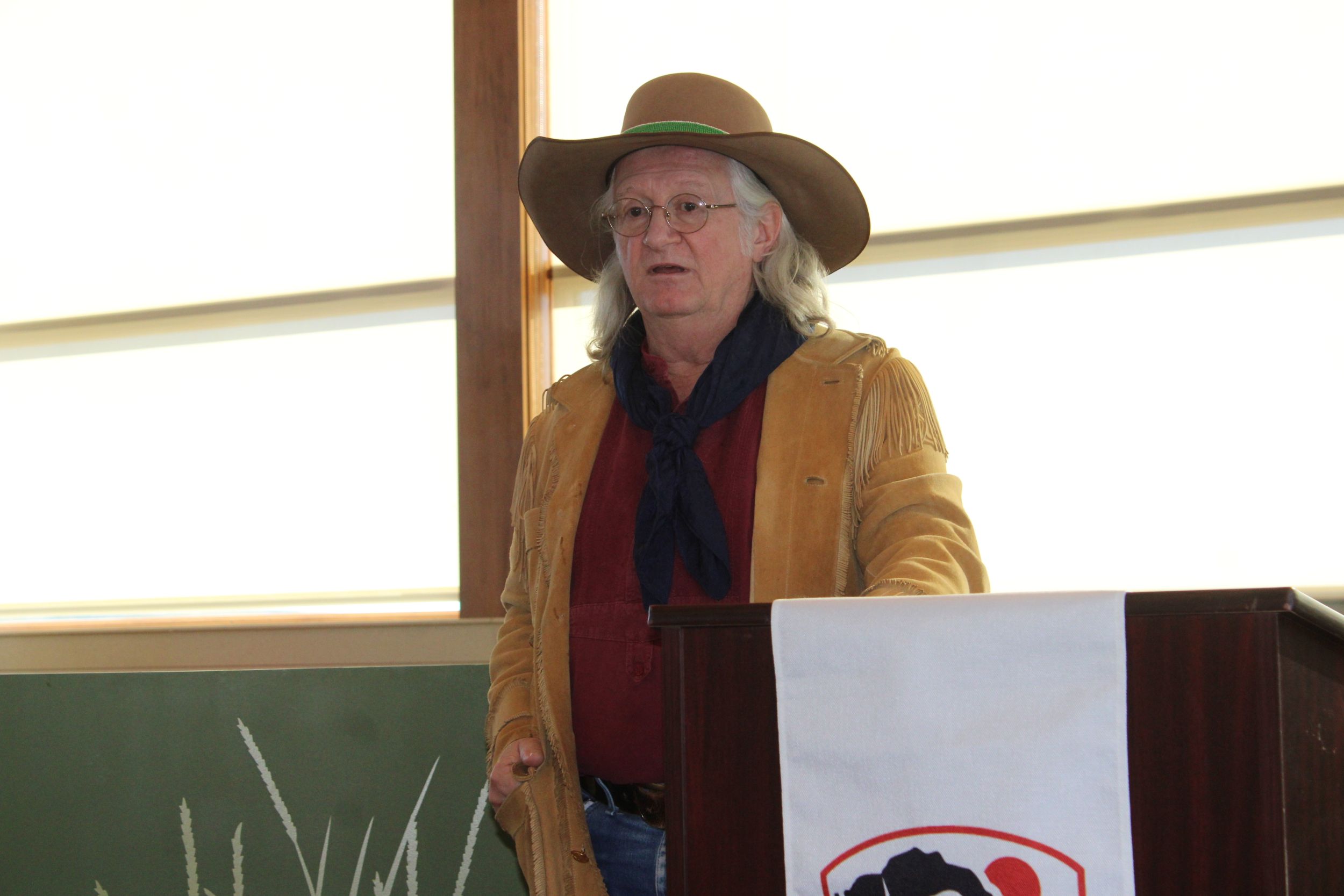
On October 17, Ron Garritson, who is fluent in Native American Sign Language, presented an interactive program on the ancient language at Fort Phil Kearny.
Site Superintendent Shari Shada introduced the speaker, saying he was a park ranger at Pompeii Pillar for 11 years and taught at Montana State University in the Native American studies department.
Garritson said he was born in Billings and is a fifth-generation Montanan. One of his ancestors came across the Bozeman Trail with John Bozeman in 1864, before the fort was built. It was the first wagon train to make it all the way to Virginia City, Montana.
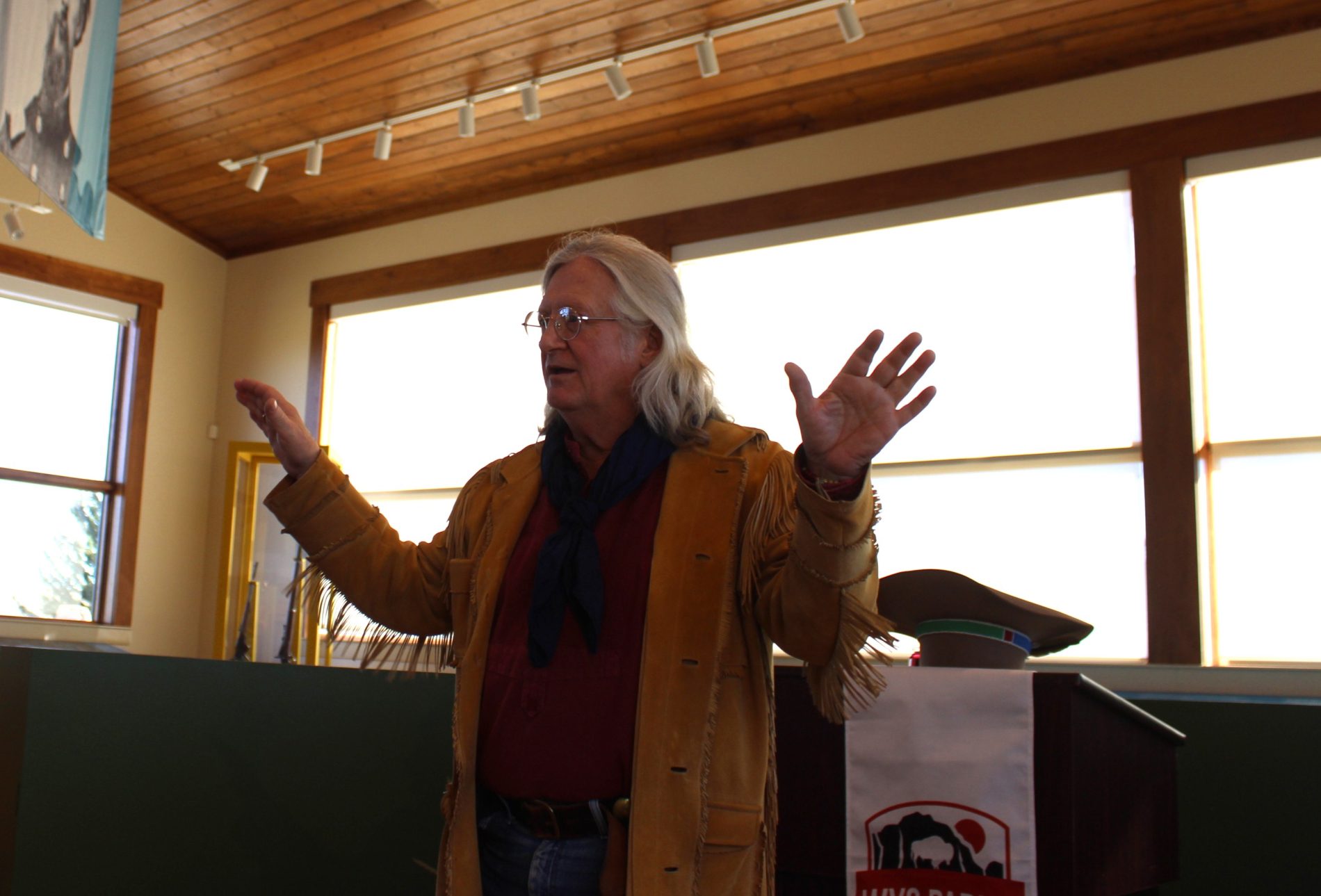
He said he planned to give a presentation of at least 500 signs. He said he has learned over 1700 signs, and has done presentations in many museum and schools. After seeing one of his presentations, he was offered the job of teaching at Montana State University.
He explained how he came to learn sign language.
He said he found books on sign language and found some films as well that he studied as well. He talked about his time as a park ranger at Pompey’s Pillar. He said he taught about medicinal plants and presented programs on Native American sign language.
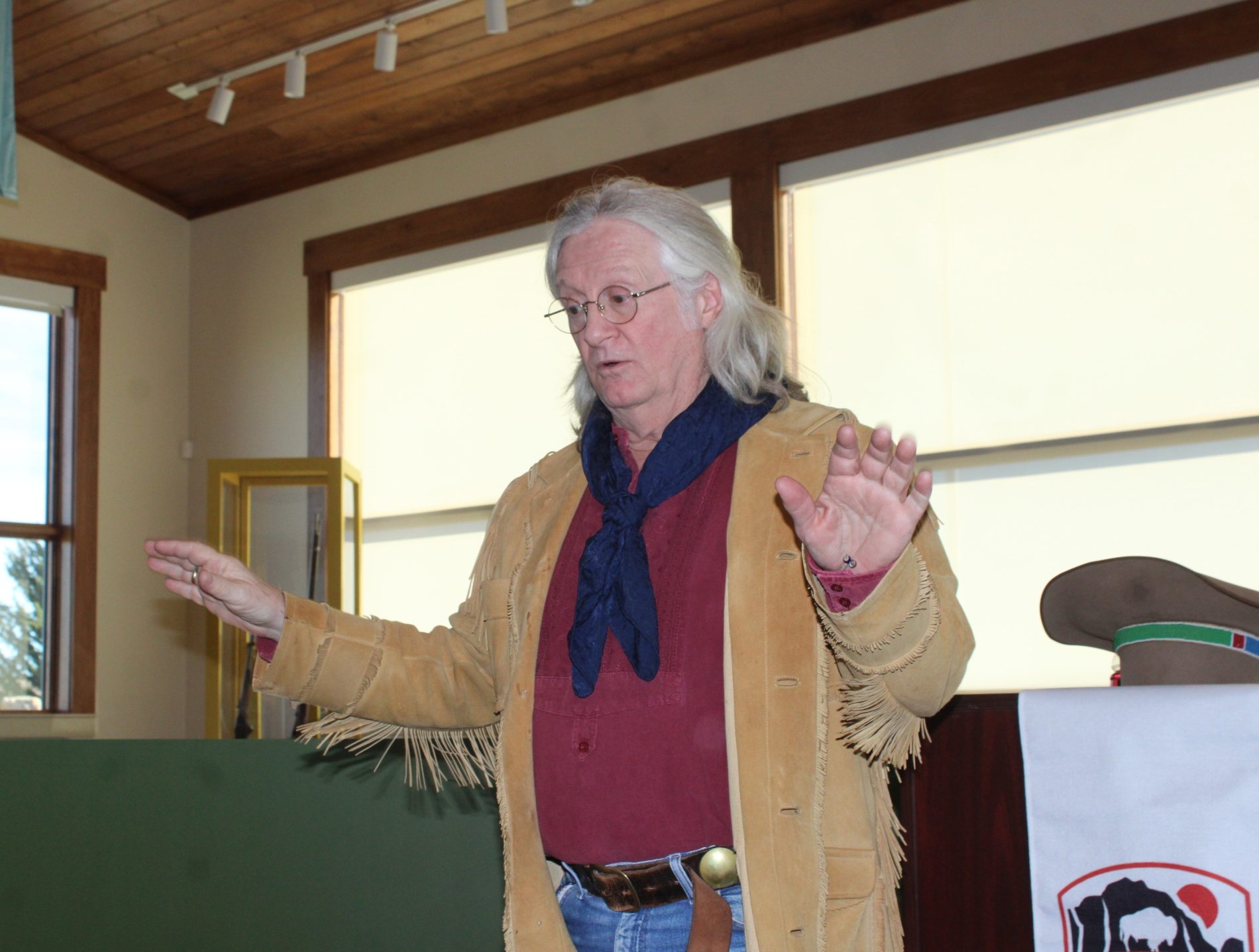
In 2010, he said they had a sign language conference in Busby, Montana on the Cheyenne reservation. He said that one Cheyenne elder there was Barney Old Coyote, who Garritson knew slightly. He was in a wheelchair, nearly deaf, and his English wasn’t that good, so he depended on Garritson to help him translate the questions from the crowd.
Garritson added that helping him was an honor. Old Coyote was a highly respected man and a WWII veteran.
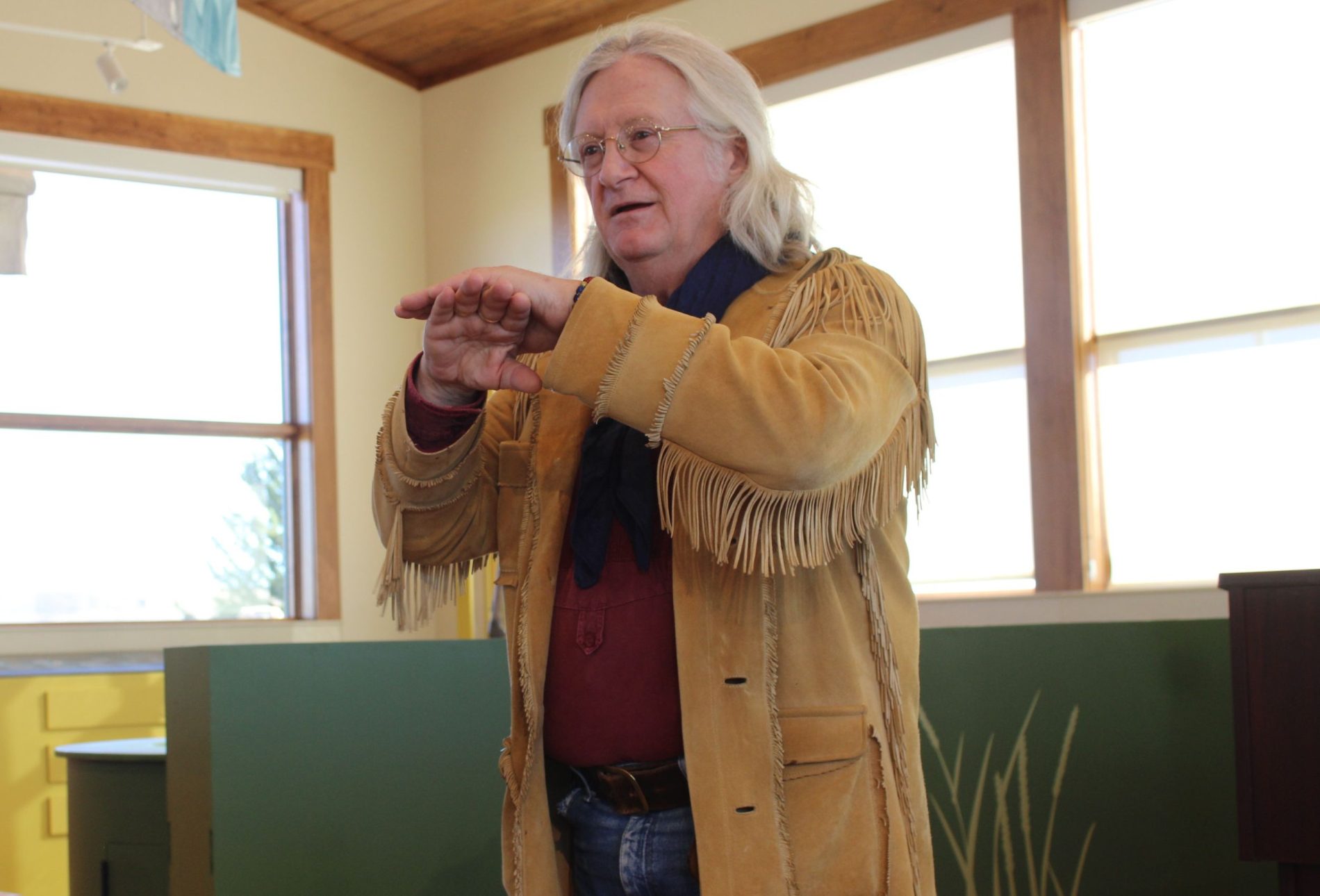
He said every culture uses sign language in one form or another. He said his mom was half Italian, and Italian’s use their hands when they talk. But the hand talk of the great plains is the most detailed and widely understood sign language, especially among Native American tribes.
There were many different tribes on the Western plains long before the coming of the Europeans during the 19th Century. These tribe all spoke a different language, so to communicate with other tribes, the Native American’s developed sign language.
Coronado, in the 1540s when he came north from Mexico looking for the cities of gold, he met with the Comanche and wrote in his journals that the Comanches made themselves so easily understood using hand talk there was almost no need for an interpreter.
When Lewis and Clark came out to explore the Louisiana Purchase, they hired sign talkers to interpret the various tribes they encountered. Later, the mountain men and trappers learned sign talk as well.
When the Native Americans came into the trading posts, they used sign language when they brought goods into trade. Many of the signs were the same, but sometimes different regions had a little different ‘dialect’ but the signs were very similar.
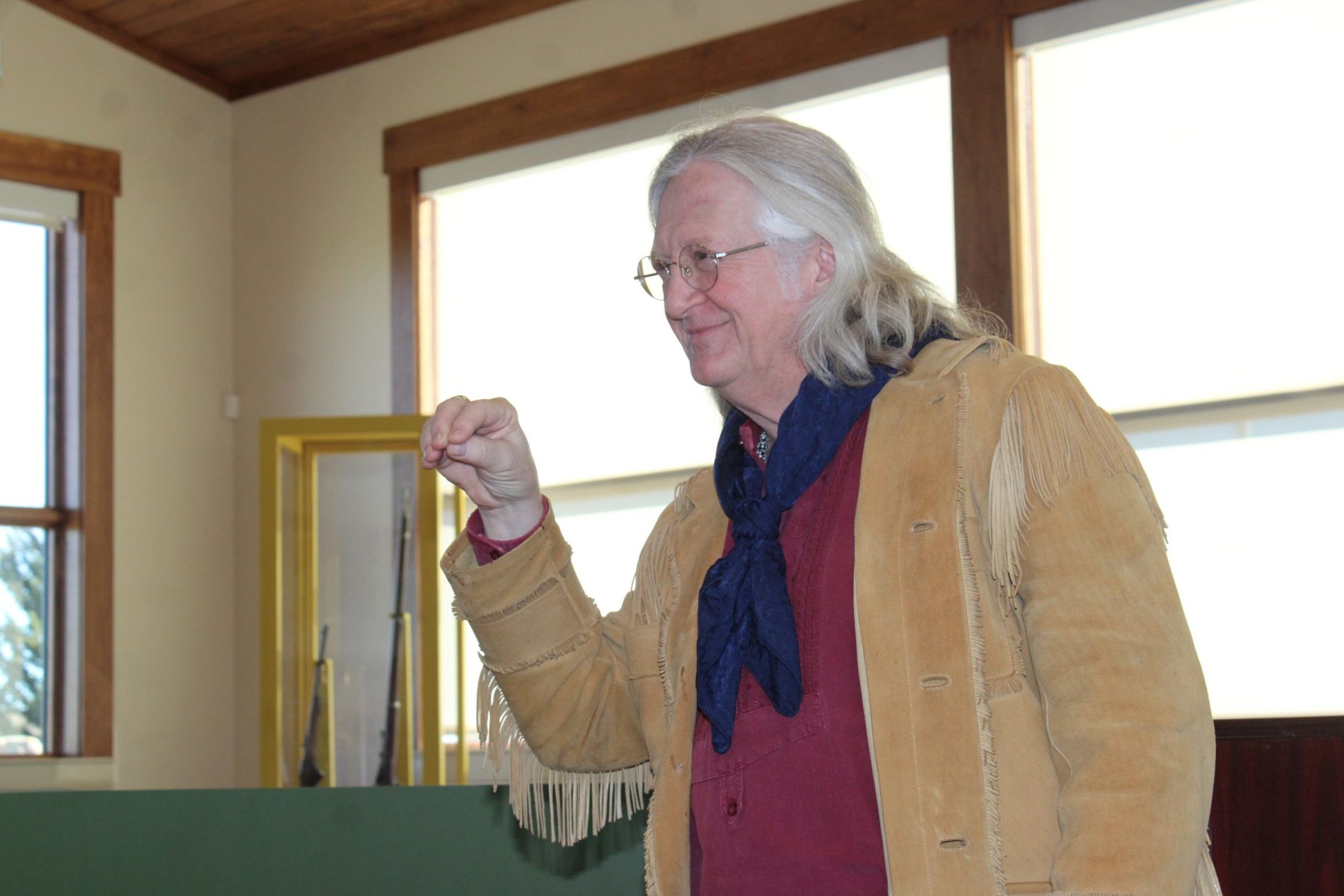
Garritson showed the audience many of the signs, including the signs for various animals that were on the plains. He talked about duplicating the movements of the various animals with the hand.
The sign for horse was one hand with the other hand portraying a rider on the horse, the sign for dog was like pulling a travois as the Indians used dogs for travois before the coming of the horse.
Garritson said that when the Indians were sent to reservations, the young children were sent to boarding schools, and the government wanted to repress all the tribal ways. The Indians were forbidden to speak their language, forbidden to use hand talk, and forbidden to practice their spiritual rituals.
It was a real sad, dark history, he said, and the languages and hand talk was being lost. Several white men such as Clark and Tomkins had the foresight to see that it would be lost, and they preserved it.
Today, Native American Hand Talk is considered an endangered language. There are two books that can still be found about sign language, one by William Tomkins and one by William Philo Clark.
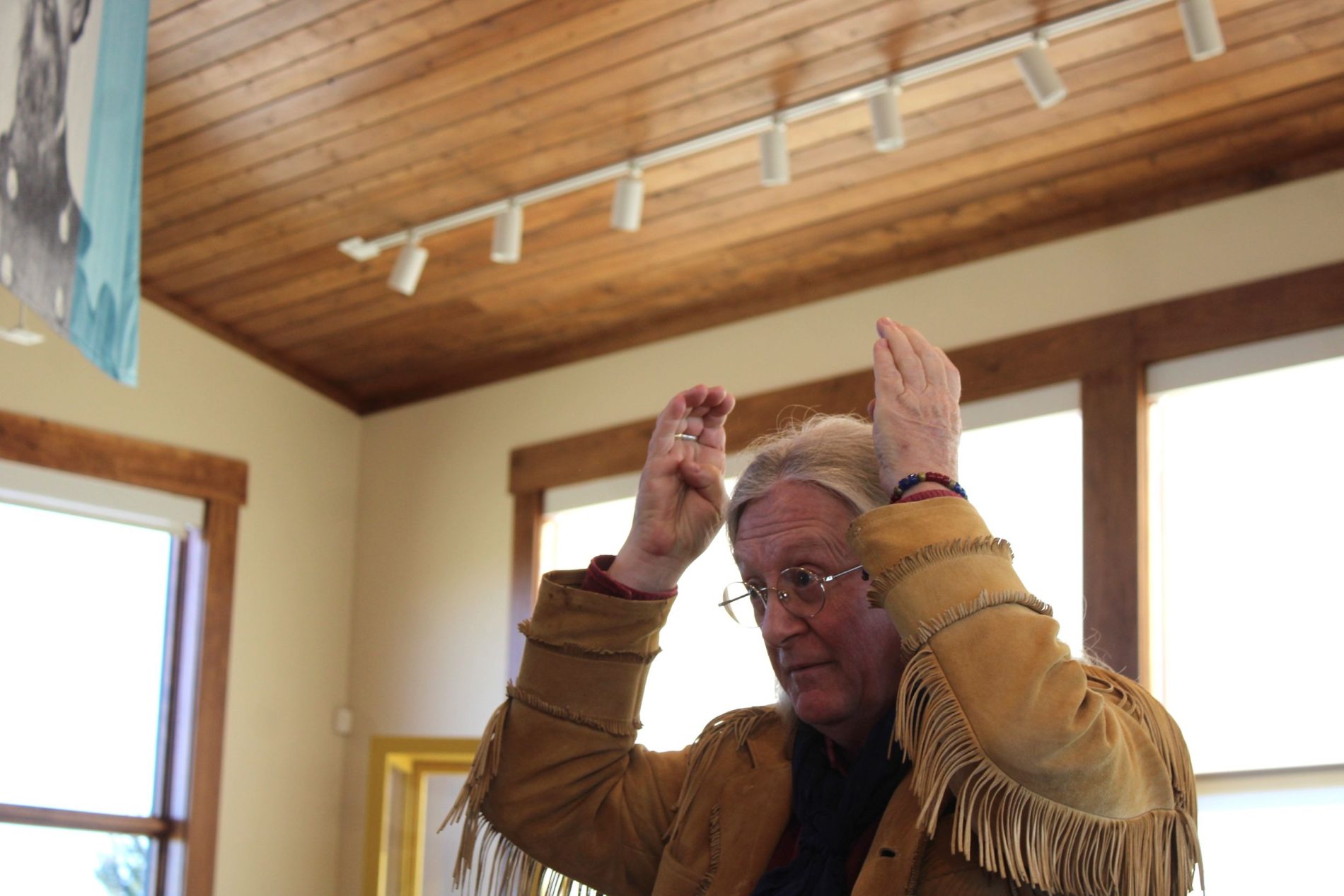
At the end of the presentation, Garritson signed a prayer for all those who attended.
Garritson added that he has a Facebook page called Silent Language of the Plains, where one can find instruction to learn the language.