News
Explore History: Coal Camps of Sheridan County

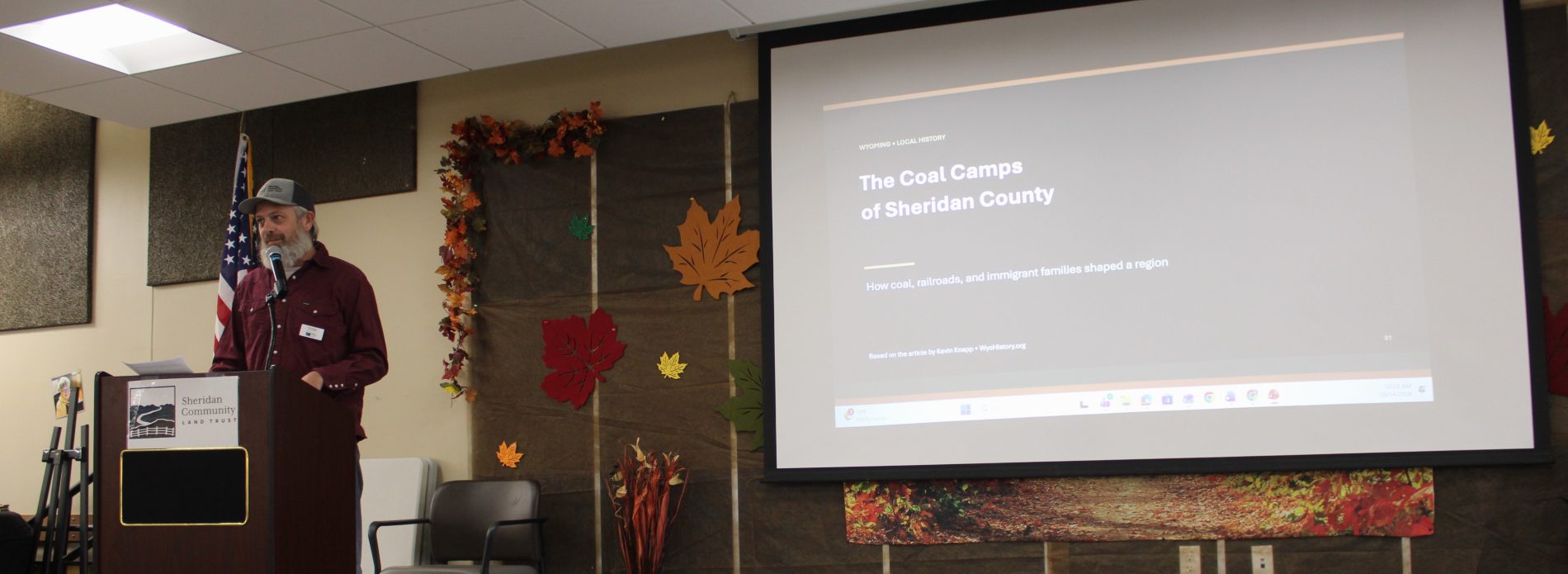
On Wednesday, October 14, the Sheridan Community Land Trust (SCLT) Explore History program explored the history of the coal camps in Sheridan County. History Program Manager Kevin Knapp presented the talk and a power point presentation that he based on an article he wrote several years ago about the coal camps.
Most of the workers at the coal mines were immigrants from Central and Eastern Europe. Many were Polish, German, Swiss, Italian and Japanese. He said that many of the immigrants came to the West to take jobs because they had the opportunity to homestead on the open land.
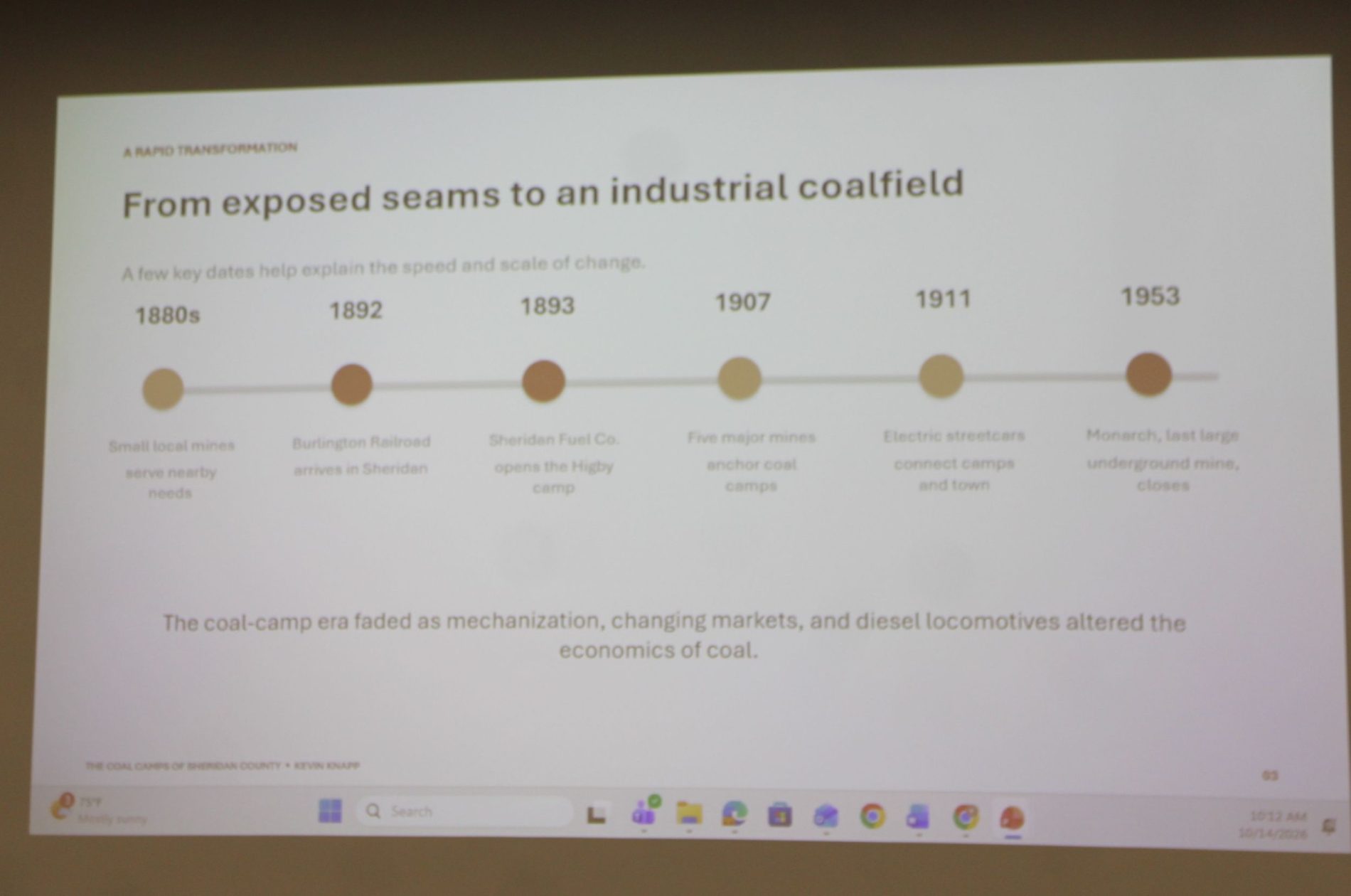
Knapp showed a timeline of the coal industry in Sheridan County.
He talked about the small, privately owned ‘wagon mines’ and buyers could come out and purchase coal from the private individuals who had coal on their land. You would pull the wagon up and load the coal for your winter use.
The boom years of the coal industry in Sheridan lasted until after the first World War, and it led to a population explosion. In 1880, before Sheridan was founded, there were over 100 people living along Goose Creek, Soldier Creek and Tongue River, and Sheridan was described as a ‘struggling village’ with only 281 people
When the railroads came west, their routes followed the fuel, and at that time the trains were run by coal. Wyoming coal mines inspectors 1909 said that Sheridan County produced more tons of coal than any area in the United States west of the Mississippi River.
The output of Sheridan County mines in 1909 was over a billion tons.
By 1907 there were five major mines in the area. They needed housing and supplies and entertainment for the miners and their families, and coal towns grew. Even after various mines were closed down, miners and their families continued to live in the established towns and commuted to the other mines in the area to work.
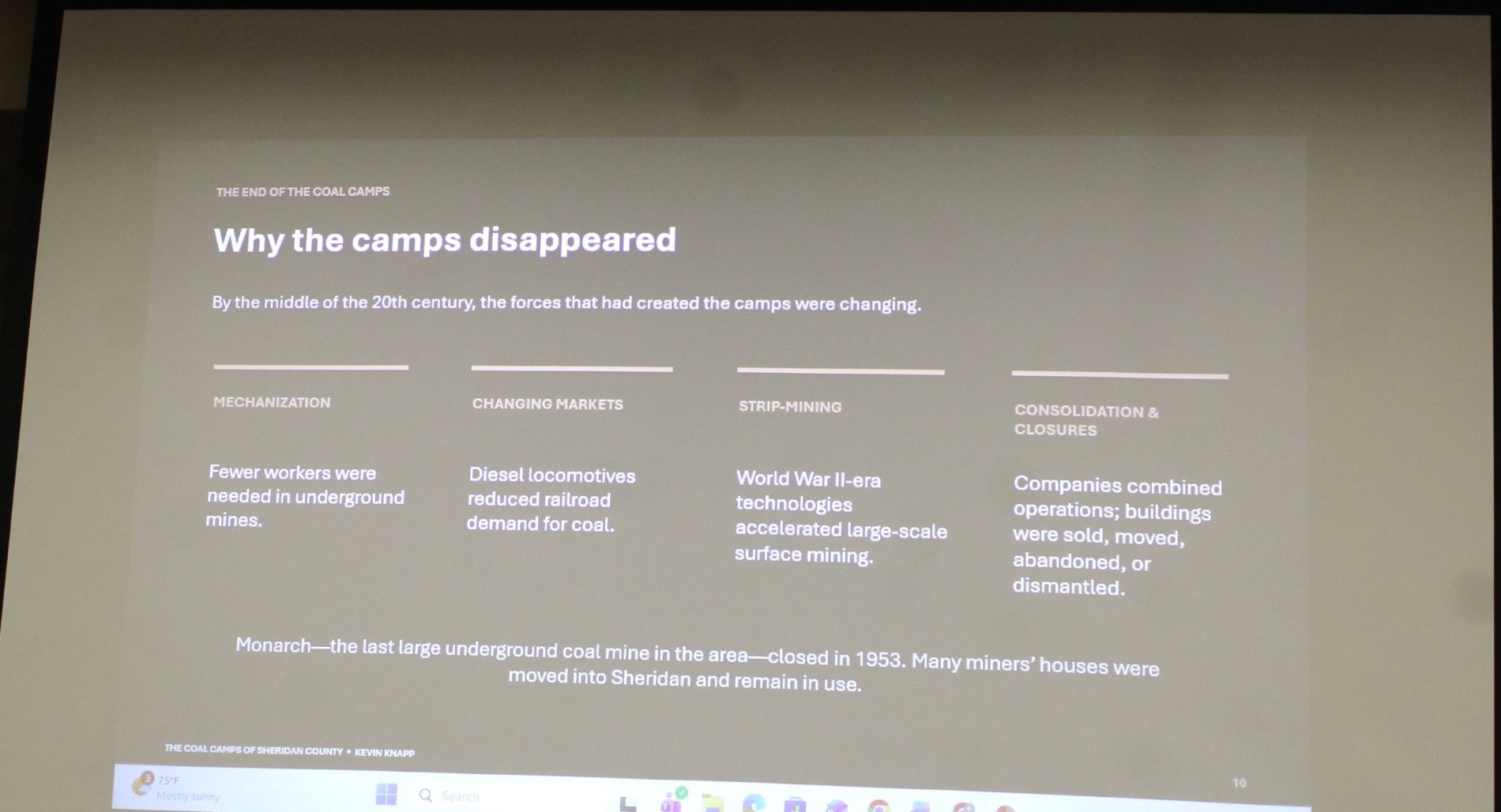
By 1920, many of the smaller mines were incorporated under the name Sheridan Coal Company. During World War Two there was a second boom for the coal industry, at the end of WWII, the need for coal declined.
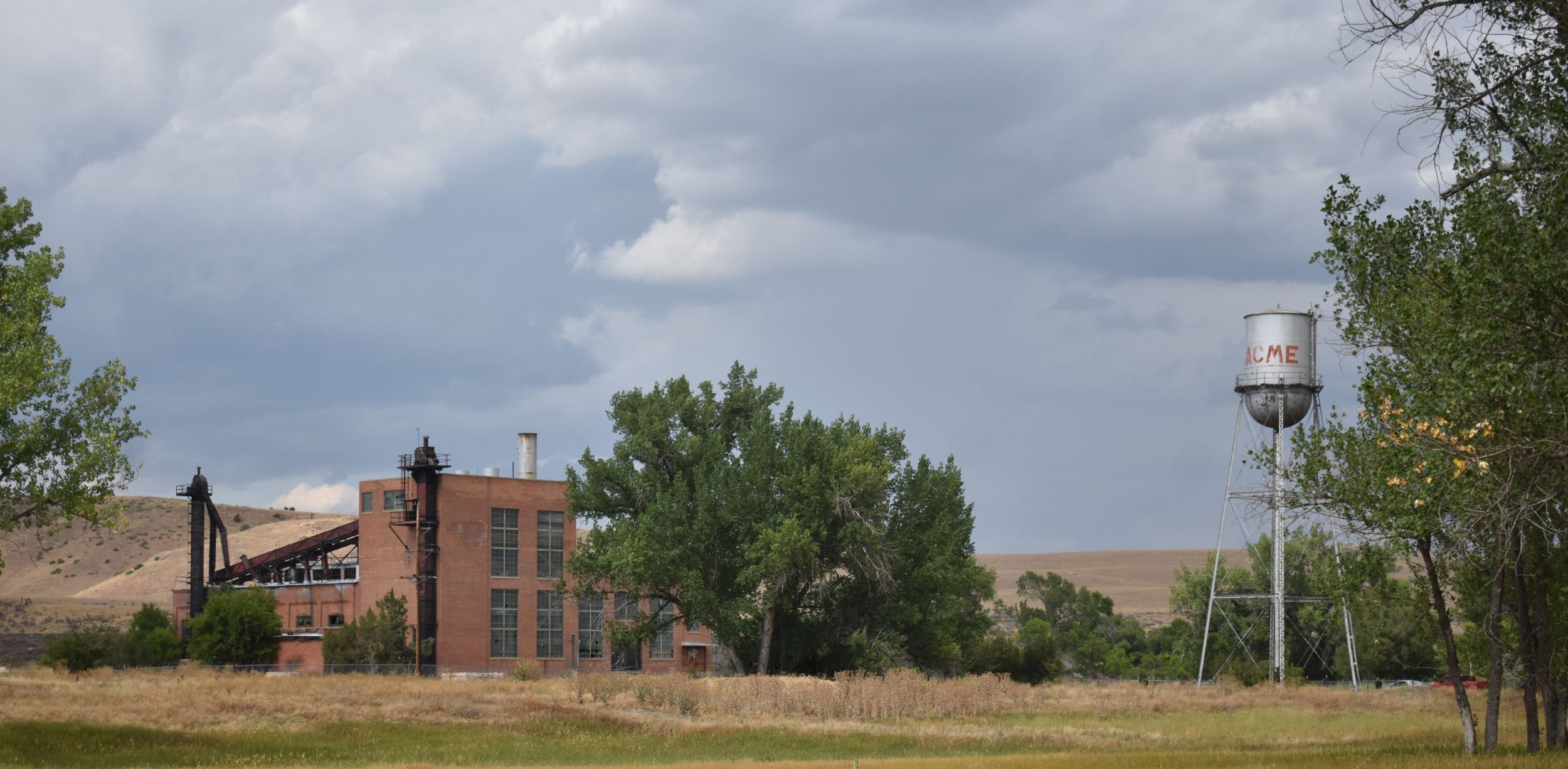
Today, there are few remnants of the coal towns remaining. Two water towers, one at the old Acme town-site and one above the Monarch town-site, still stand.
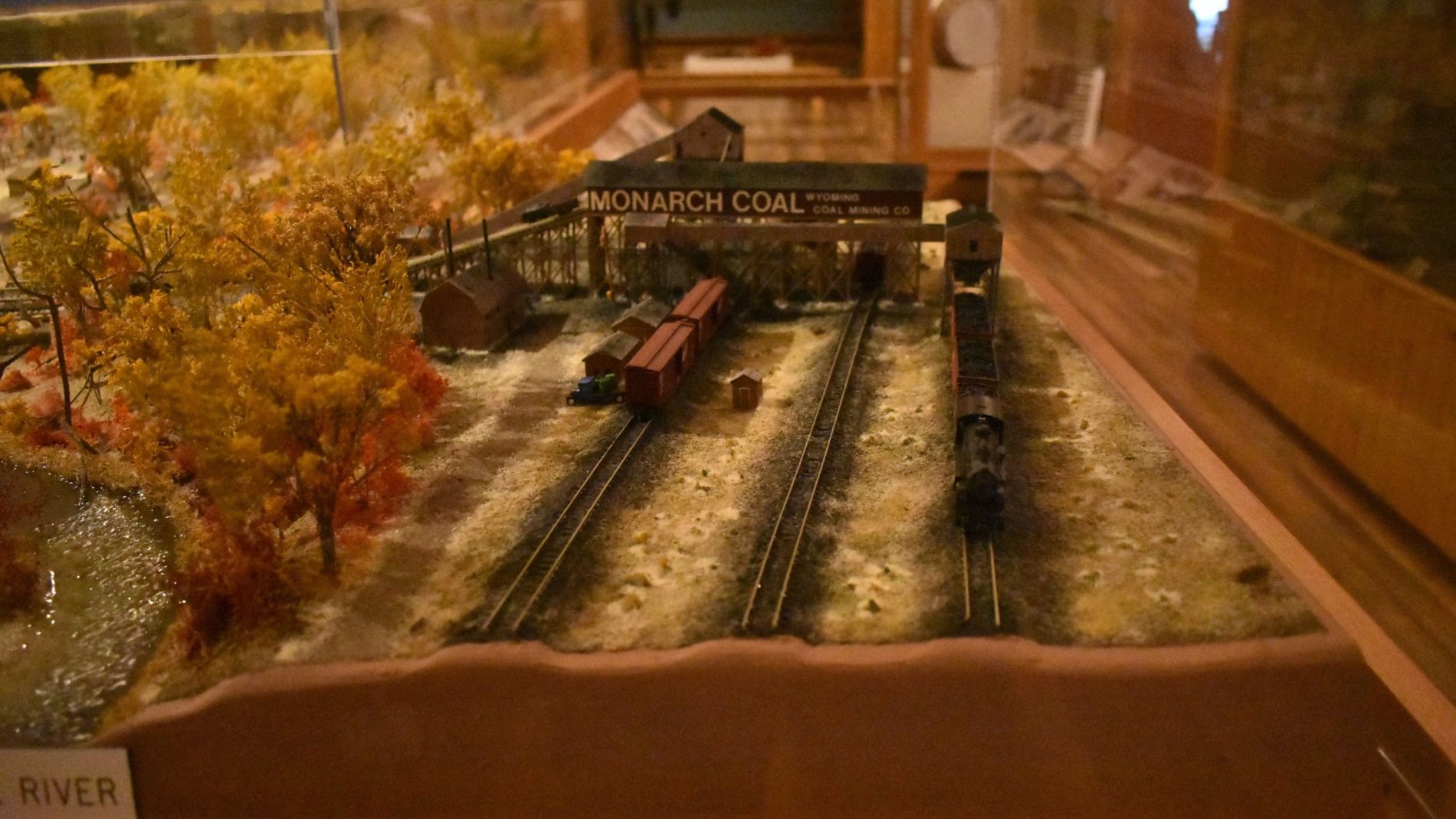
Diorama of the old Monarch Mine
There are information signs at both sites describing the once active towns as well.
At SCLT’s Welcome Center, there is a display with an old coal car, and the last remaining electric streetcar, which used to transport miners back and forth to Sheridan, is being restored.
Underground coal mining and mining towns are a part of Sheridan Counties rich history.
This program will be repeated on October 20 at 10:30 a.m. at the Tongue River Valley Community Center, Dayton.