News
UW Researchers Use Water Bears to Further Research of Converting Liquid Medicines to Dry State for Transport, Storage

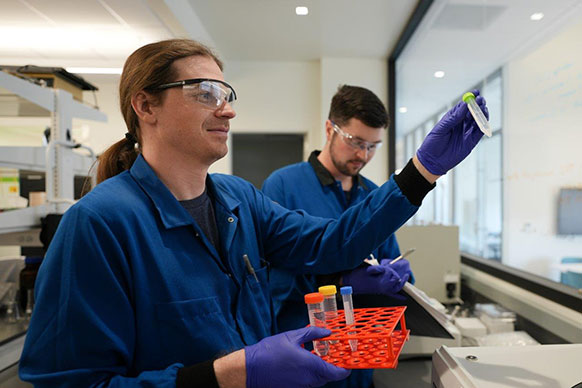
University of Wyoming Department of Molecular Biology Associate Professor Thomas Boothby and his team are working on a project to enable RNA-based medicines to be transported and stored at room temperature.
While appearing on Sheridan Media’s Public Pulse, UW Director of Internal Communications Chad Baldwin said the project is one of several at UW to receive a National Science Foundation Seed Translational Acceleration of Research (STAR) Project award through the Accelerating Research Translation (ART) program.
RNA-based vaccines, therapeutics and other medicines often require frozen storage, making them reliant on a robust cold chain. Baldwin said researchers hope to develop techniques to store and ship these medicines in a dry state by applying processes used by organisms that can survive extreme dehydration, such as tardigrades (also known as water bears), and translating that biological knowledge into a product capable of stabilizing sensitive RNA-based medicines.
C. Baldwin
According to the National Library of Medicine, mRNA vaccines deliver messenger RNA instructions to cells, allowing them to produce a harmless protein that triggers an immune response. RNA therapeutics use molecules such as small interfering RNA (siRNA) or antisense RNA to silence genes or block the production of disease-causing proteins.
Working with Sigma Genetics and led by Boothby and graduate student Tyler Gonzalez, UW reports the project, “Cold-chain Free Stabilization of RNA-Lipid Nanoparticle Formulations,” is researching methods to keep these medicines stable in a dry state, making them less sensitive to temperature and allowing them to be stored at room temperature. The technology could make the medicines easier to ship and distribute, particularly in areas without reliable electricity or refrigeration.
Baldwin said the research also has the potential to benefit Wyoming’s economy. He said some STAR award projects could eventually become spin-out companies.
In a UW report, Gonzalez said the team has made significant progress on the project. He said human trials will eventually be necessary, a process that will take time.
Learn more by clicking here.