News
Paul Hedren Presents Program at Kearney Hall

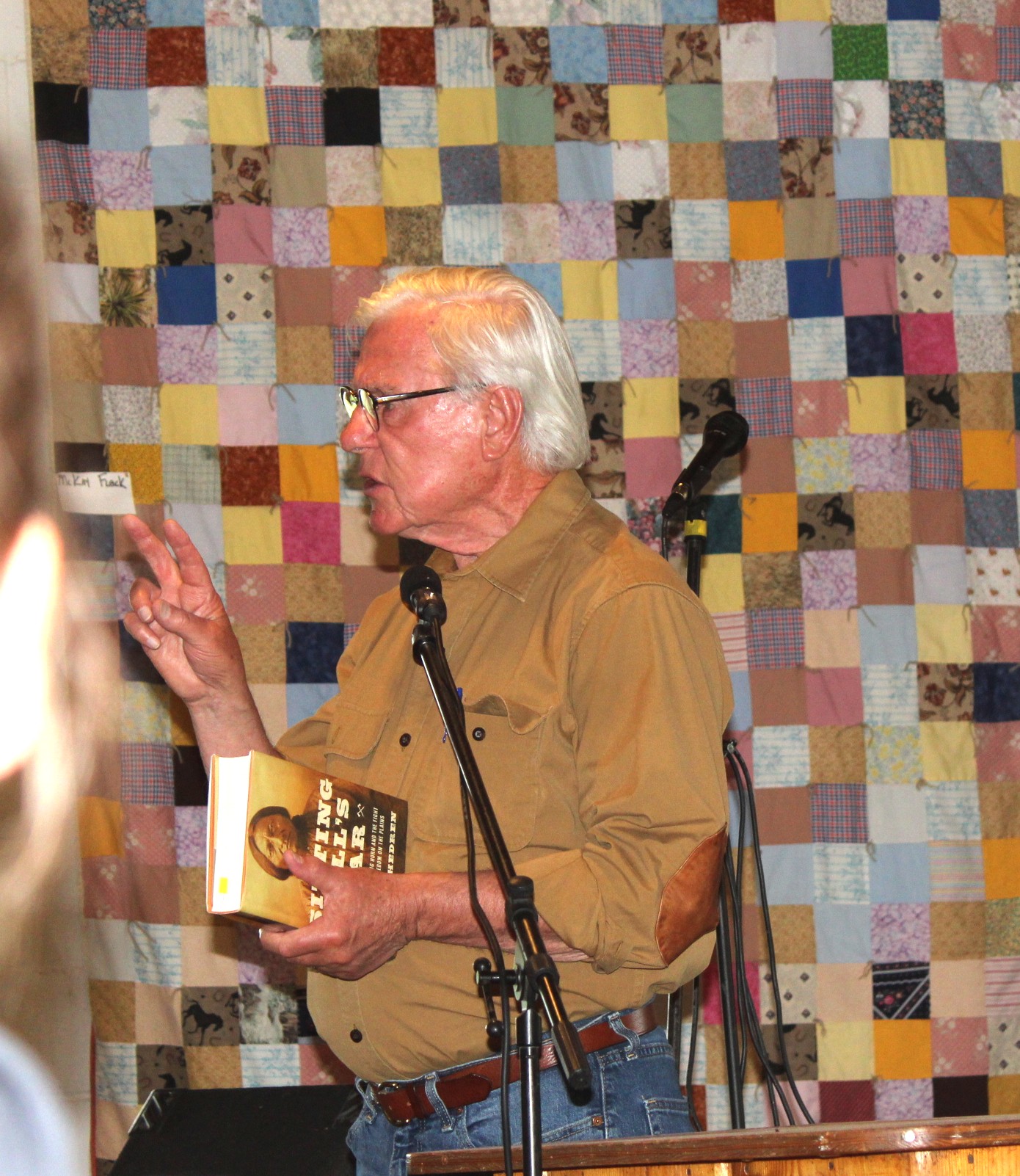
Recently, Fort Phil Kearny and the Bozeman Trail Association hosted author Paul Hedren, who talked about his latest book, “Sitting Bull’s War: The Battle of Little Big Horn and the Fight for Buffalo and Freedom on the Plains.” The book is from perspective of the Lakotas and the Northern Cheyennes, as they fought for their way of life in the Powder River Country in the mid-1800s.
Before the talk, Dave McKee. President, BTA, and Hedren drew two tickets for the winners in the rifle raffle fundraiser for the Bozeman Trail Association. One rifle was a Spencer and one was a commemorative Henry rifle. Both rifles were won by tourists from out-of-state.
Sharie Shada, site superintendent at Fort Phil Kearny introduced Hedren.
Hedren thanked the crowd for turning out to hear him, and he said he was delighted to be at Kearney Hall. He is in the midst of a 23-stop book tour and has been gone from home for 21 days. He said a friend once told him, “When you write ‘em, you gotta sell ‘em. So here we are.”
Hedren said that two of his previous books led into the newest book, and he encouraged people to read those first.
He talked about many of the writers before him who wrote about the Plains Indian Wars.
In writing the books, he researched the Cheyenne people as well and told their stories of the battles on the plains.
He added that half of the Rosebud book is the Cheyenne history of that battle. He said that there was a council of the elders, and they said, “Just leave them be,” but several warriors decided to go on and attack Crook to protect their village.
After that, Hedren said that he wondered what to do next, and that was the basis of the latest book about Sitting Bull. He said that there are many names for the Indian Wars during the 1860s and 1870s. One common name was The Great Sioux War, The Custer War, the Black Hills War, “Now, I give you Sitting Bulls War, the Fight for Buffalo and Freedom on the Plains.” This is the war from the Indian perspective.
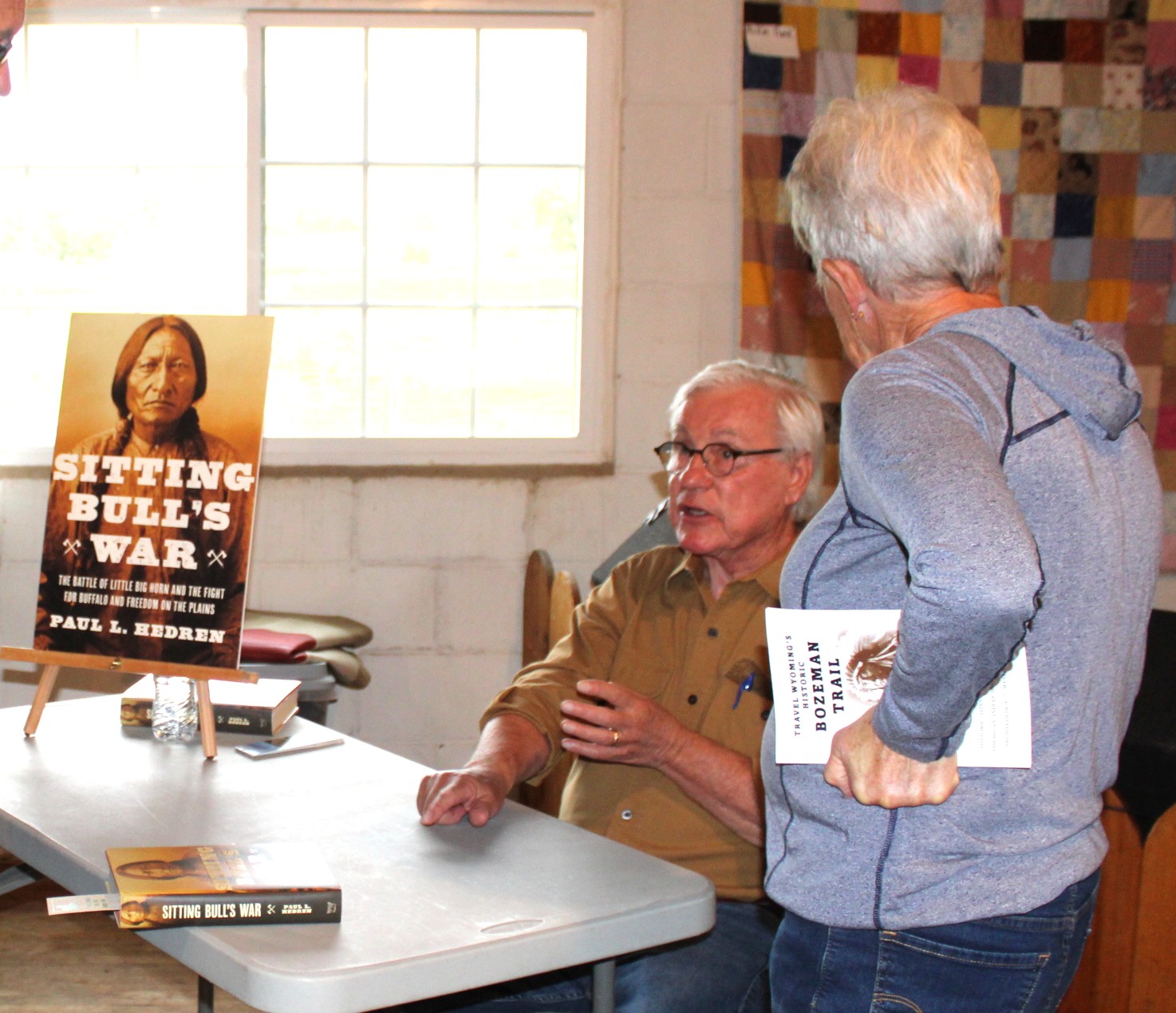
Hedren also said that an audience member at one talk he gave had a problem with him using the word, buffalo, instead of bison for the Indian’s main food source.
The book explored Sitting Bulls part in the 1860s and 1870s wars, and then his retreat into Canada for four years. The buffalo herd in that area was not sufficient to feed his tribe, and they were forced to return to the United States to surrender to the Army.
There is one chapter devoted to Crazy Horse, and the promises that the Army made so that he would bring in his people to surrender.
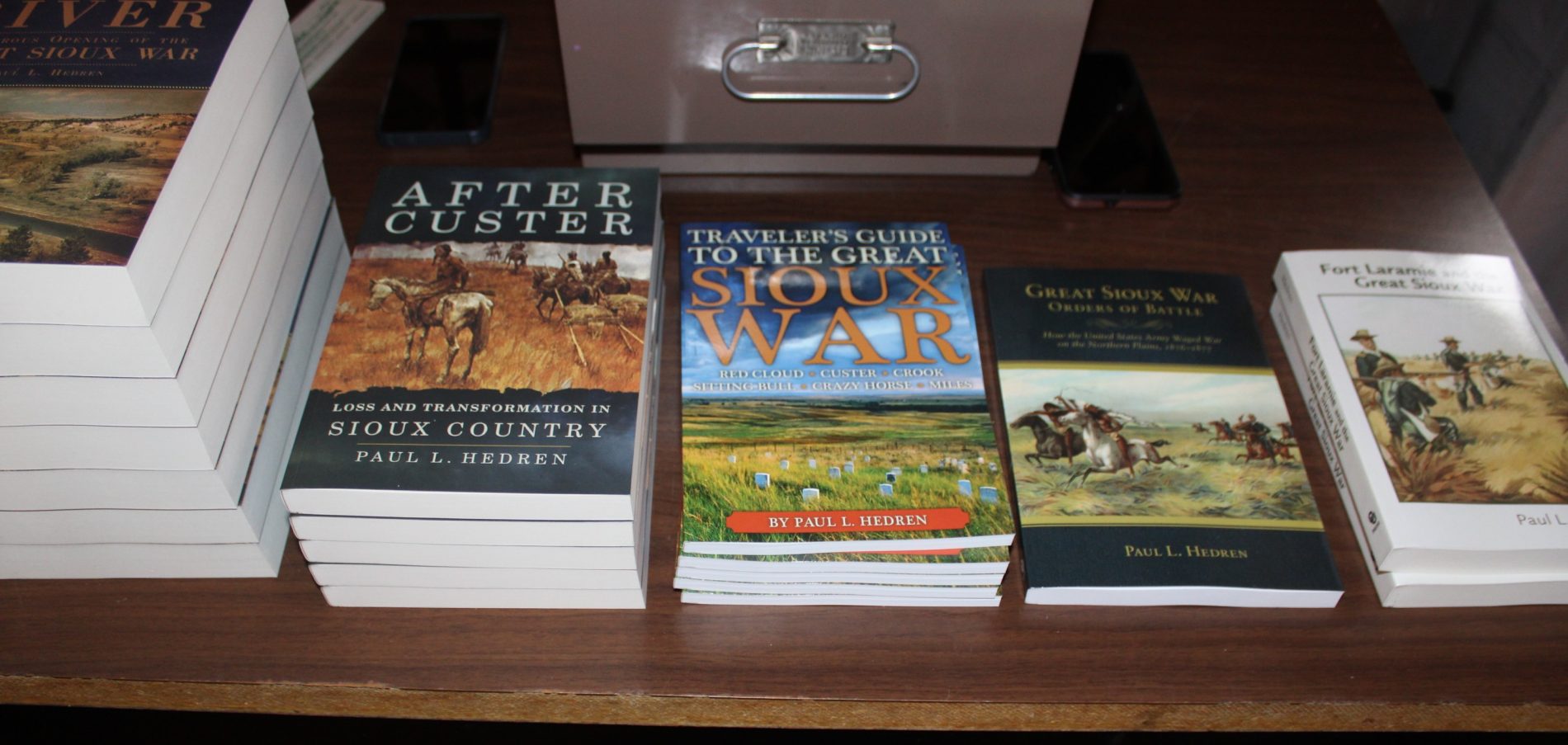
Hedren has also written several other books, including “Powder River: Disastrous Opening of the Great Sioux War“; “Traveler’s Guide to the Great Sioux War: The Battlefields, Forts, and Related Sites of America’s Greatest Indian War”; “Fort Laramie and the Great Sioux War;” and Rosebud, June 17, 1876: Prelude to the Little Big Horn. Many of these books are available at the Fort Phil Kearny bookstore.
There was a book signing after the talk and a large crowd was present at the event.