News
Pards of the Paintbrush: Cowboy Artists Across the West

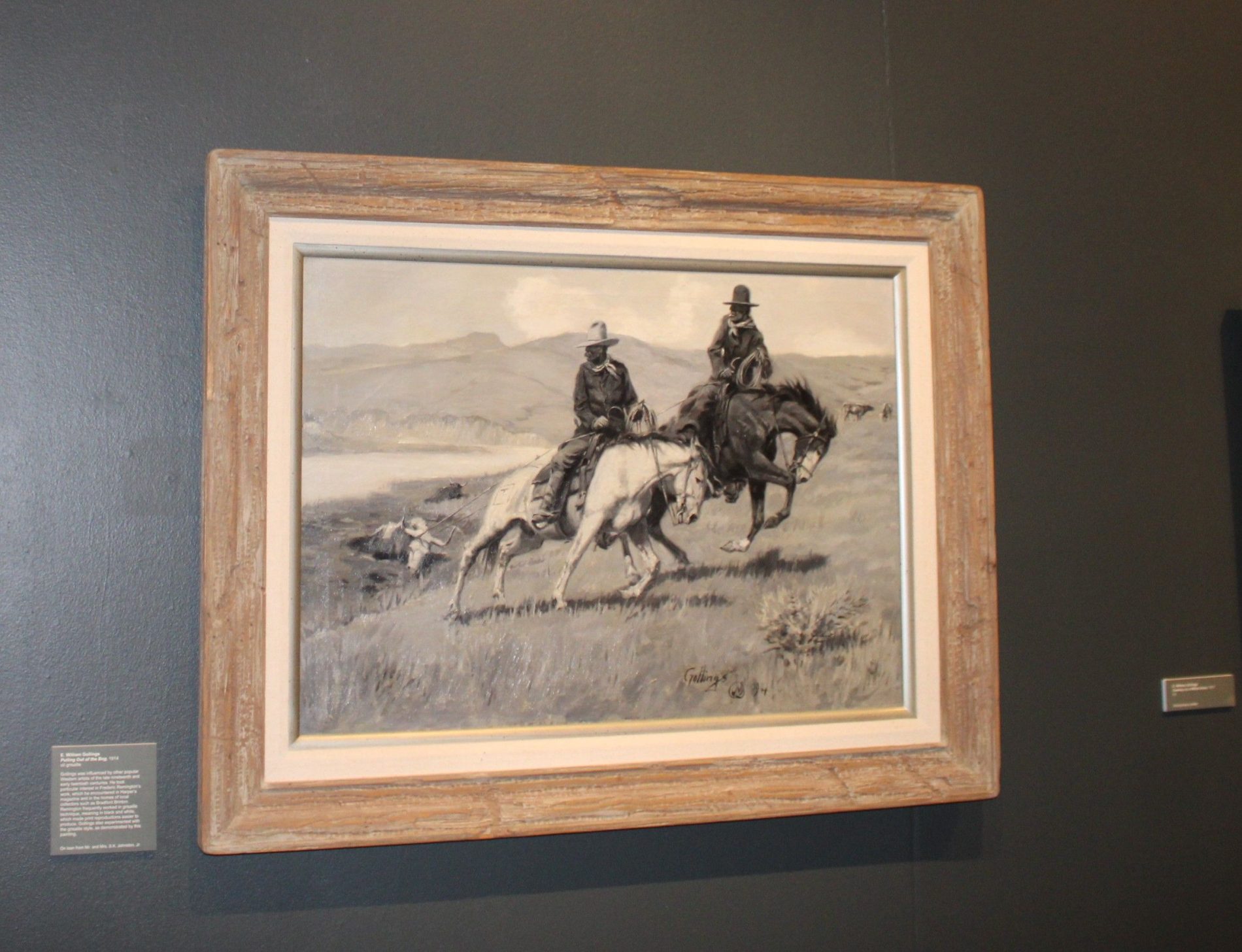
On October 9, Michael Grauer, art historian, presented a slide show and a talk at the Brinton Museum, in conjunction with the William Gollings exhibition, on the history of working cowboys who became artists.
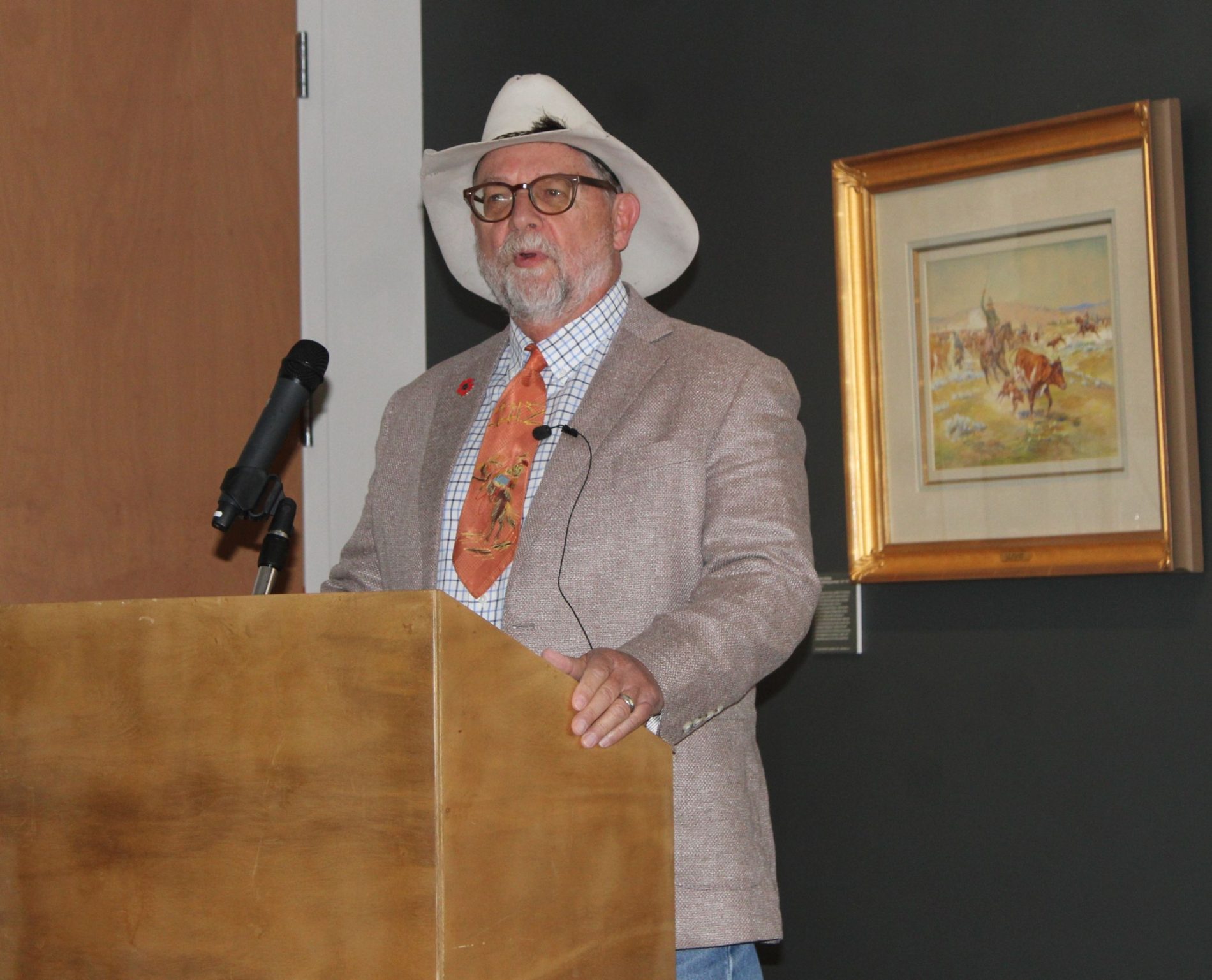
His presentation placed William Gollings within a broader story of artists who documented ranching and cowboy life from firsthand experience.
Grauer said this is his third trip to the Brinton Museum, its an honor and privilege to come up here every time. He added that the Brinton is always eager to try new things, and the Gollings exhibition was something they discussed on one of his earlier visits.
He said that he is a huge fan of cowboy artists, artists who were cowboys.
He was at the Panhandle-Plains Historical Museum in Canyon, Texas for 31 years. It was the largest history museum in Texas. “Sadly, that museum recently closed,” Grauer said.
He said he has curated exhibits on cowboy art overseas. “Europeans and Asians and the whole world are captivated by cowboys.”
He asked the audience, “What do you call a man in a western hat?…. A man in a western hat.” A western hat does not make one a cowboy.
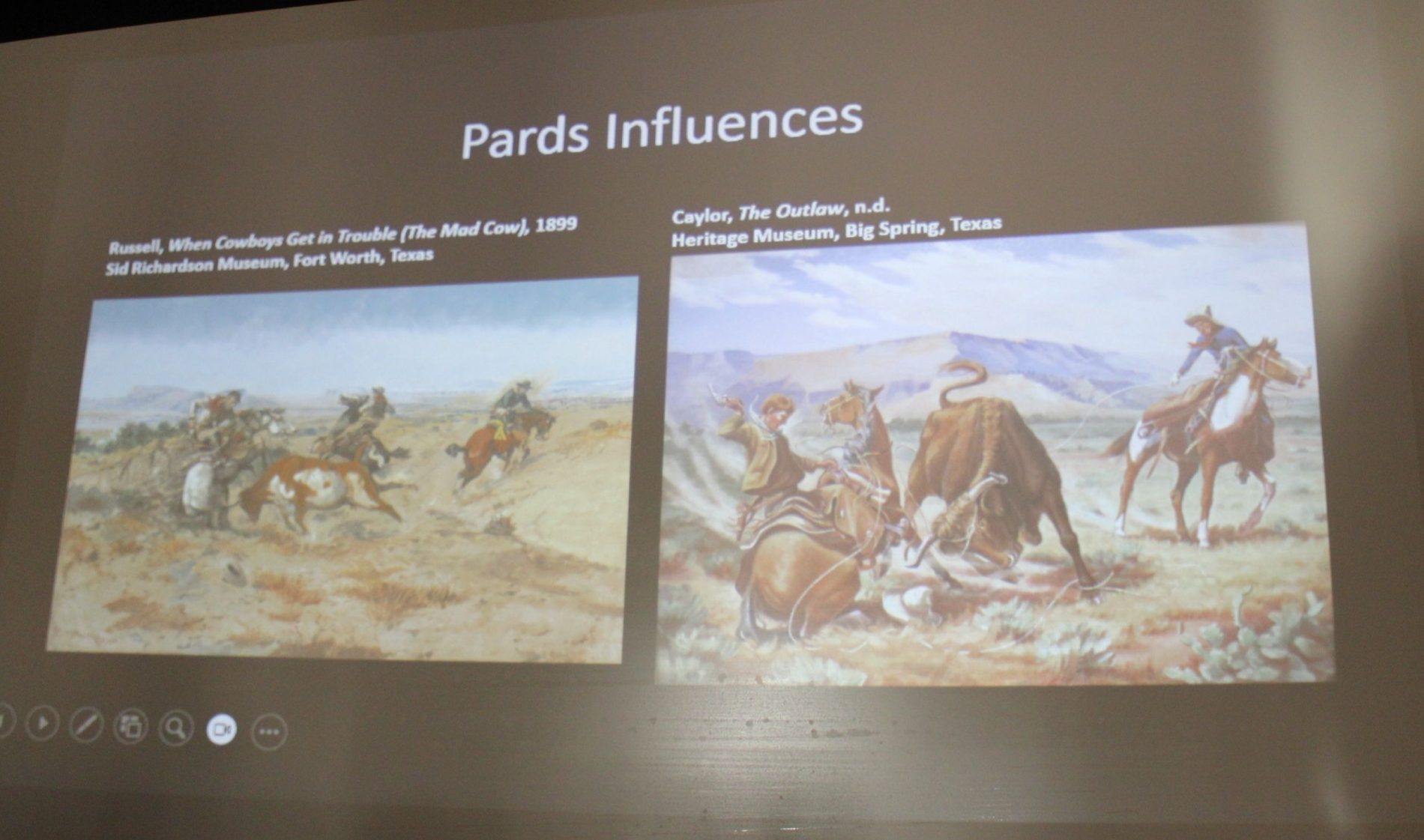
He said most had some art training, but art schools in the west were very few and far between. Some went to St. Louis, Chicago or California for some art training. “They looked to the giants of Western art.” Many popular magazines published the work of western artists.
He talked about many of the best-known western artists, as well as some lesser-known artists.
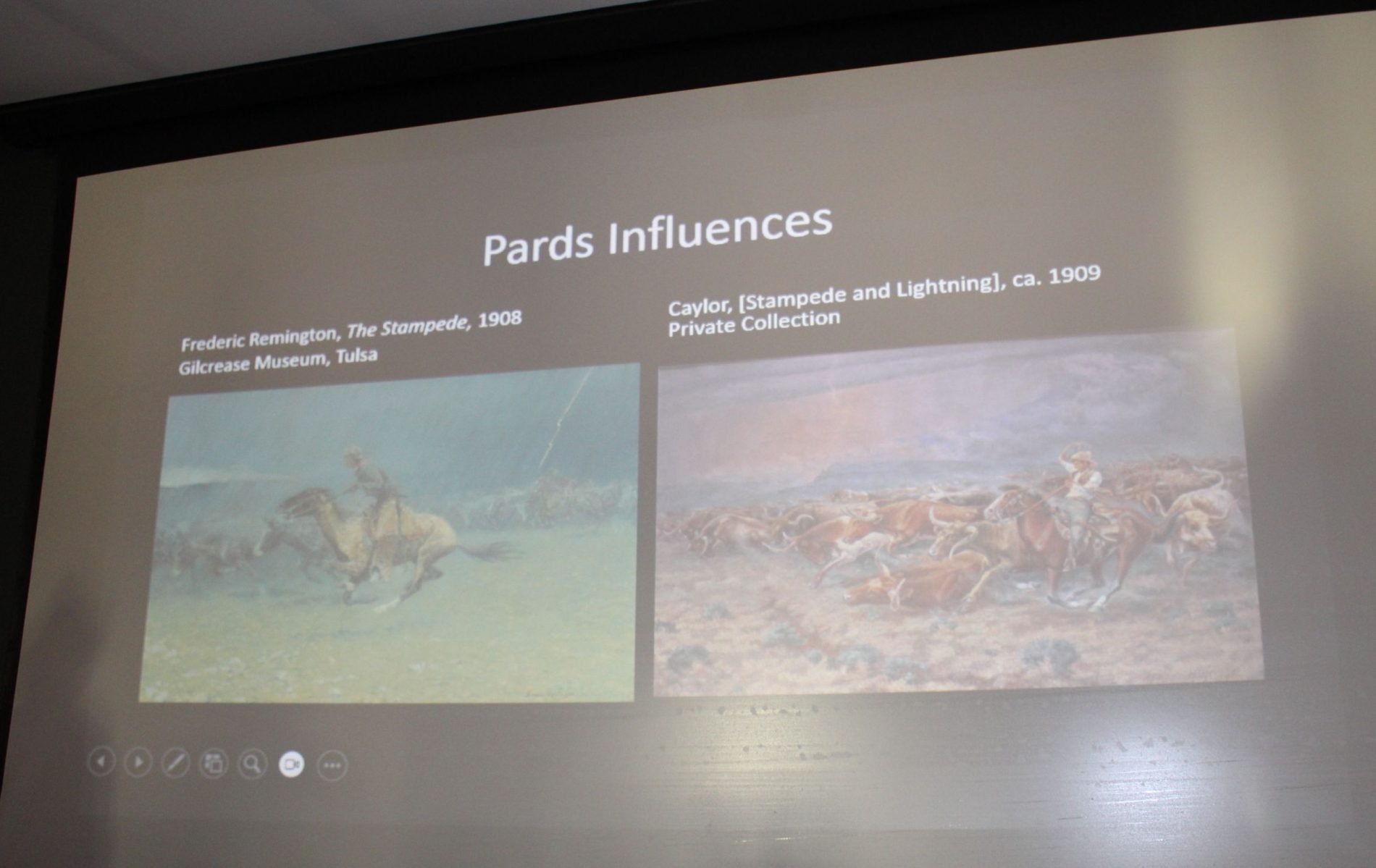
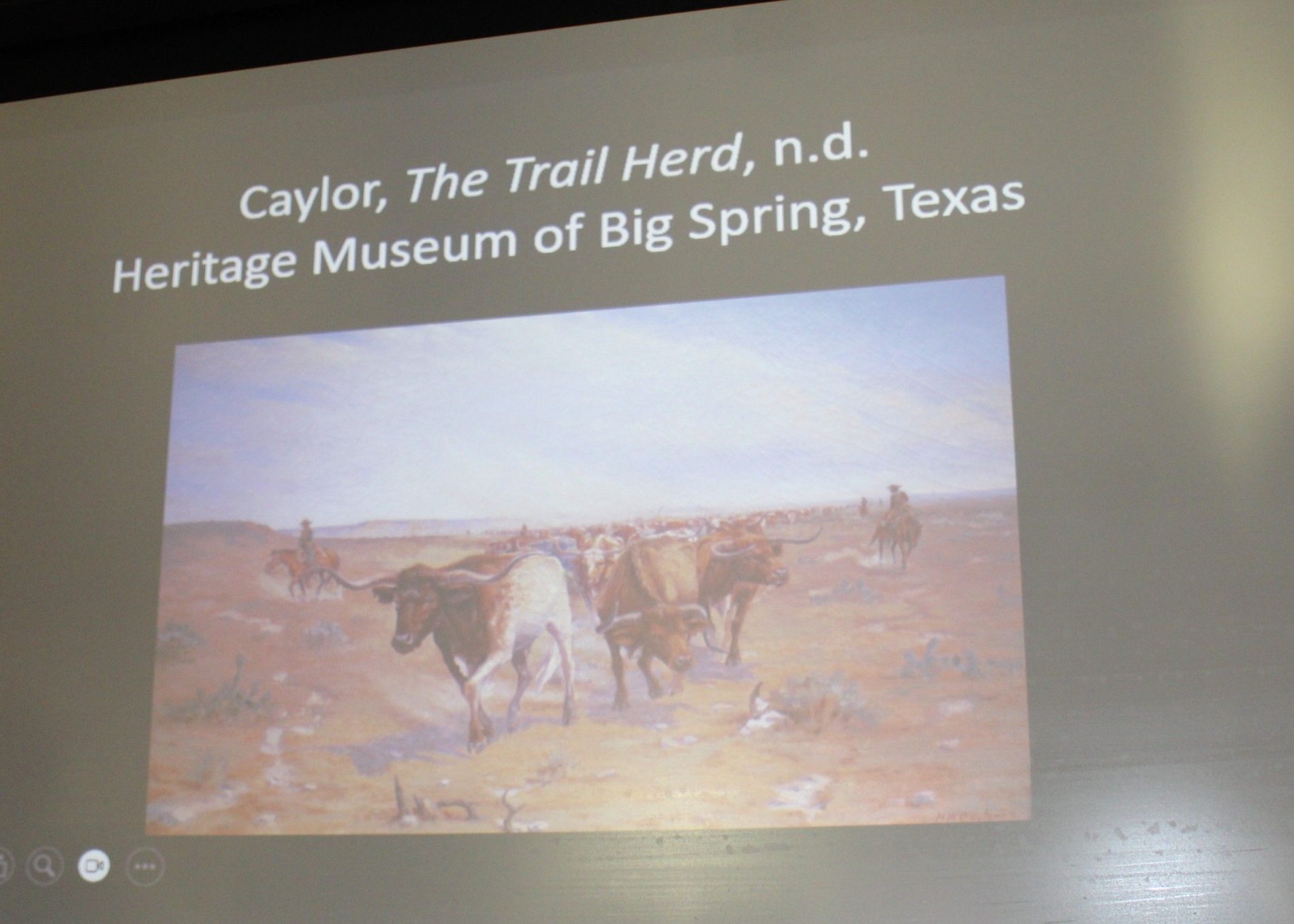
One artist, Harvey Wallace Caylor, who cowboyed in Kansas and across the west.
Many of the artists also painted Native Americans, stagecoach scenes, landscapes and even gold miners and other western scenes.
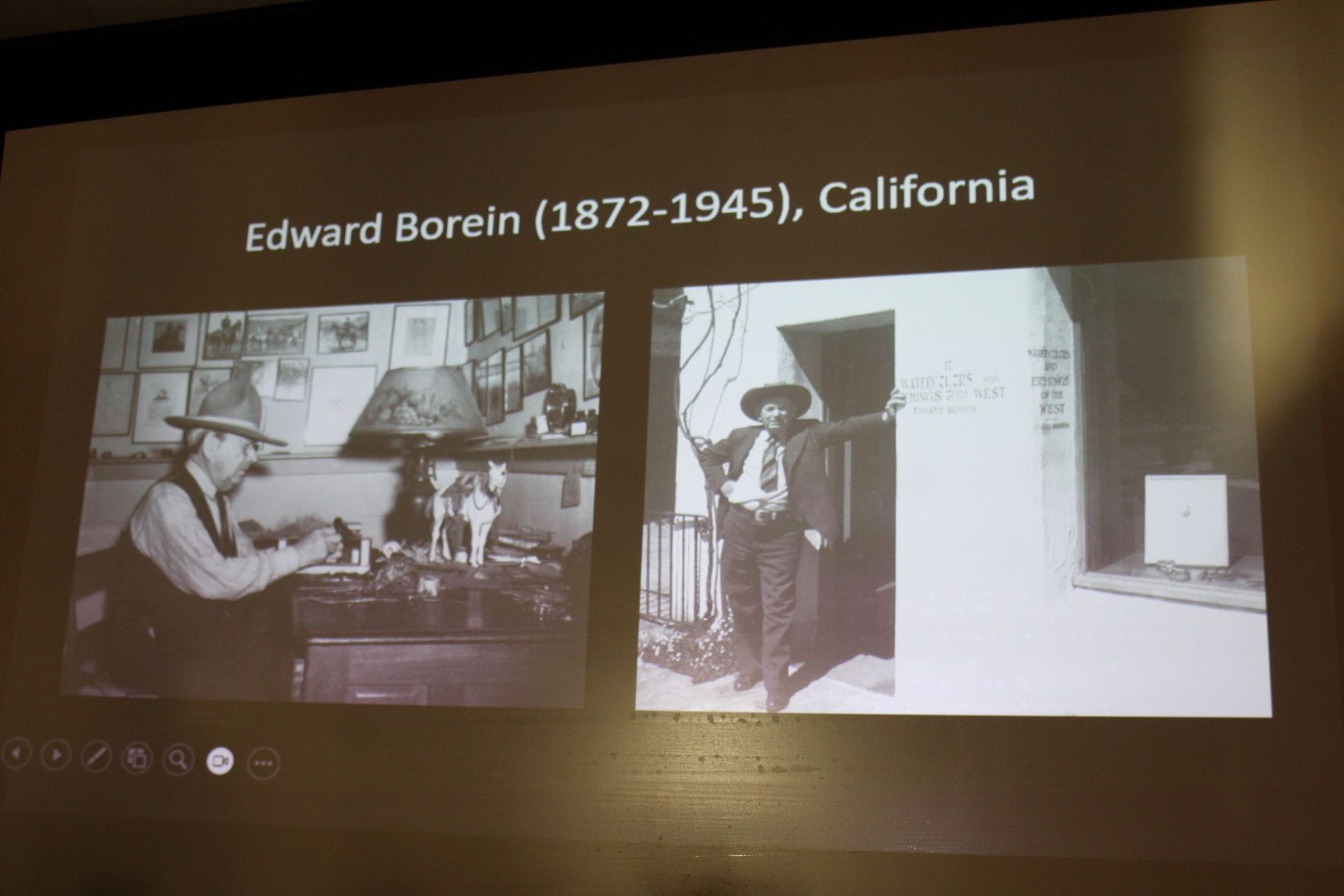
One artist he mentioned was Edward Borien went to art school in San Francisco but worked as a cowboy mainly in California.
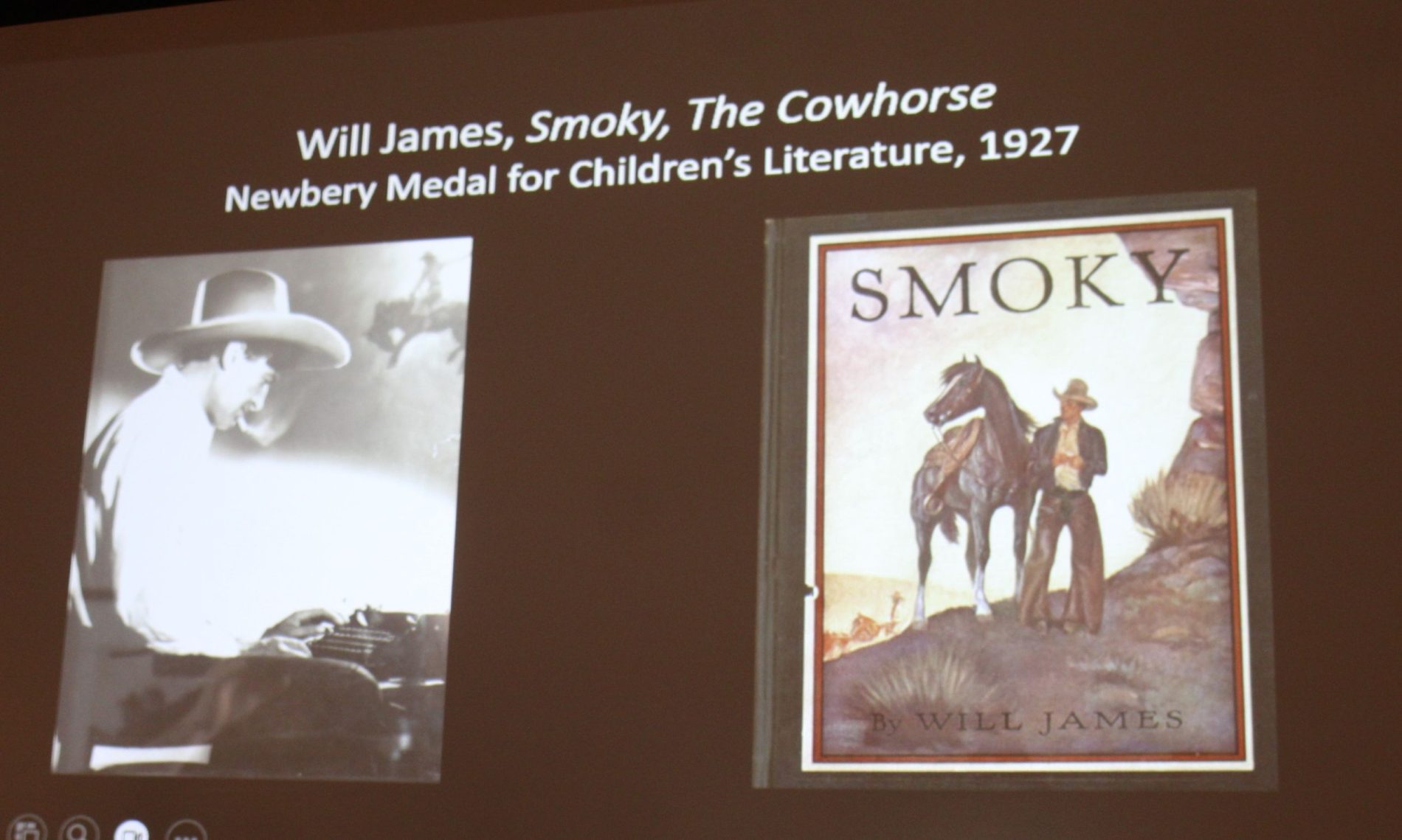
Other artists mention included Will James, who was a cowboy, an artist and a writer. He wrote the book and illustrated the book, Smoky the Cowhorse, published in 1926, which is still in print today.
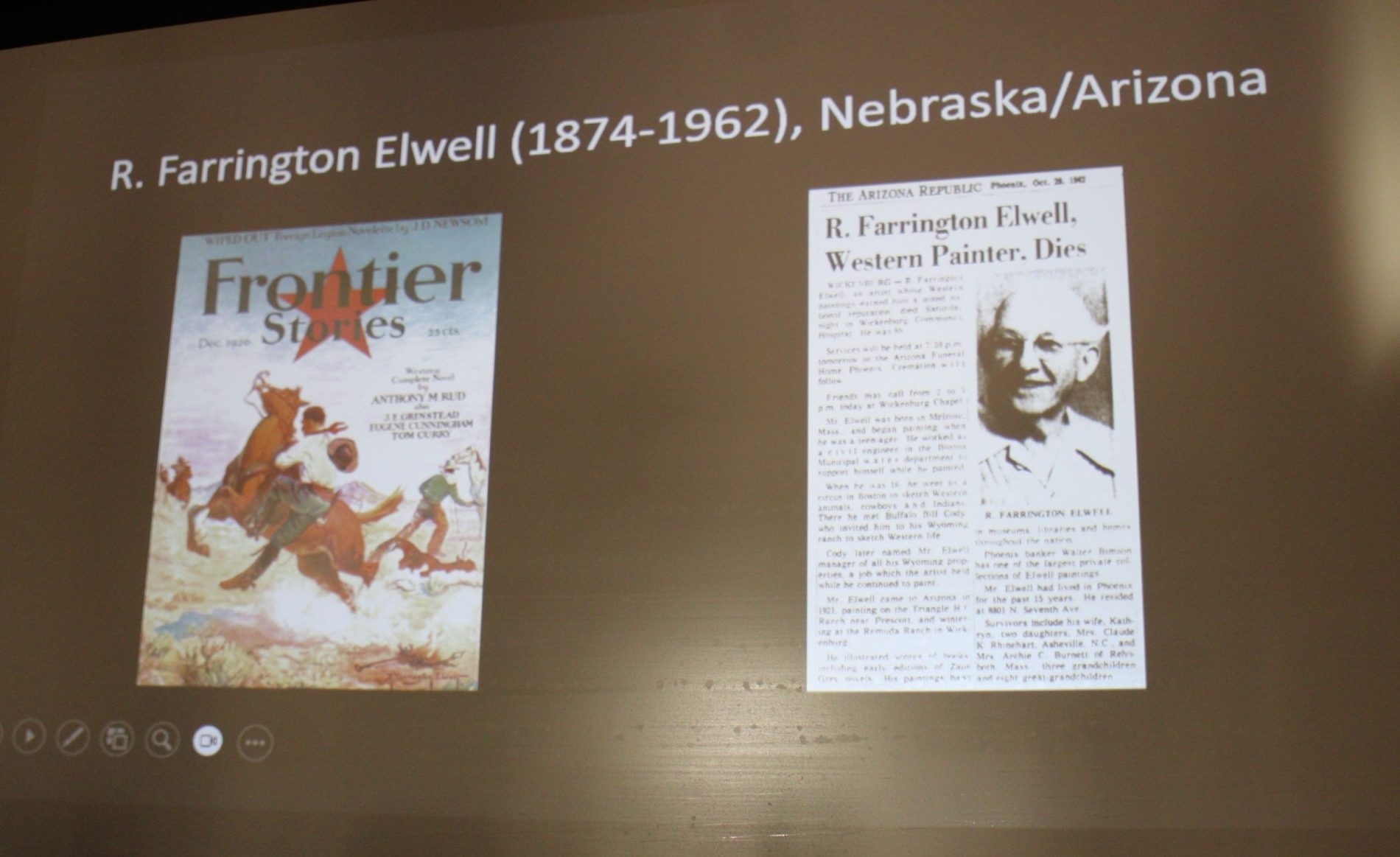
Many were illustrators for magazines which often featured western scenes on their covers.
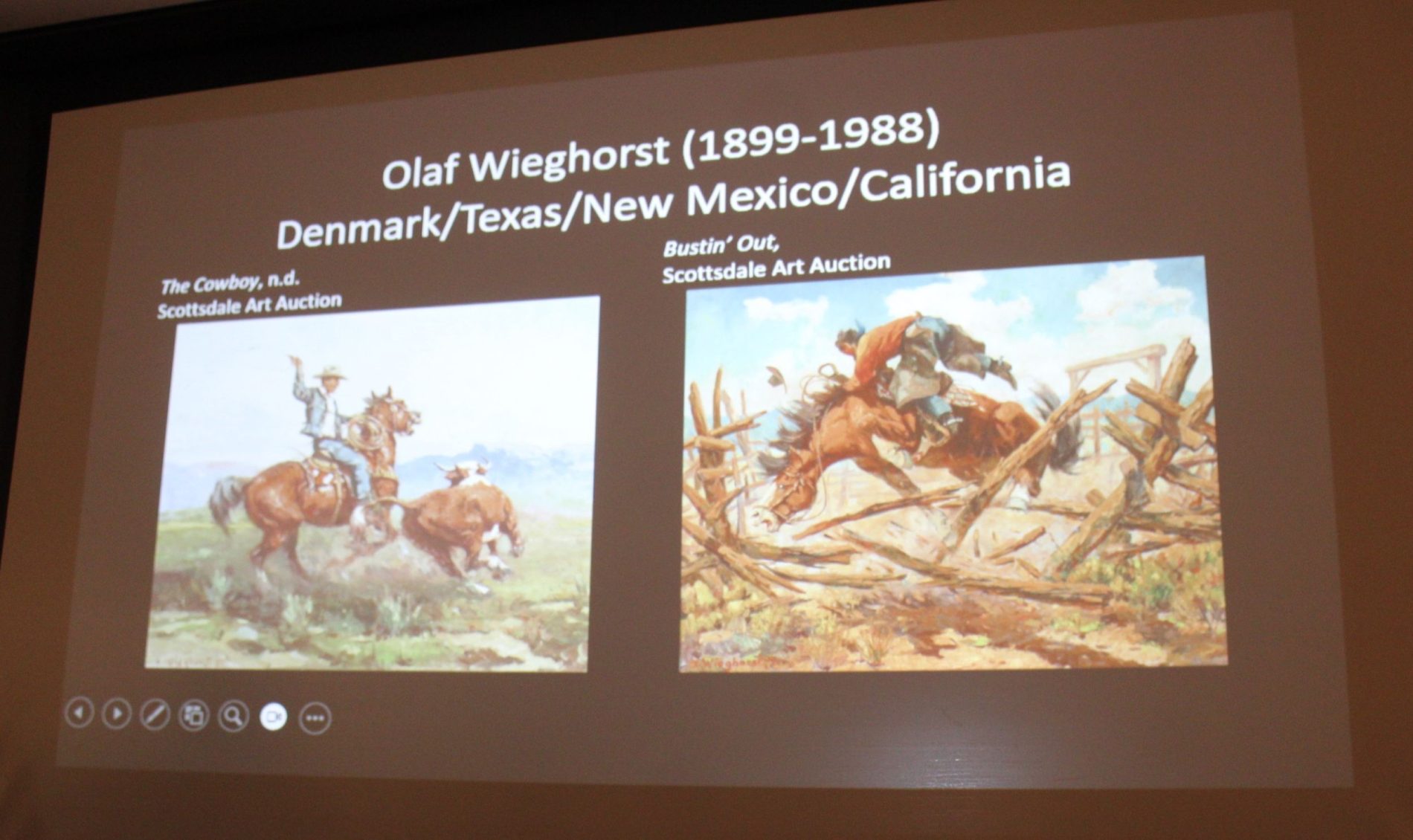
Olaf Wieghorst western artist, came from overseas to embrace the western way of life.
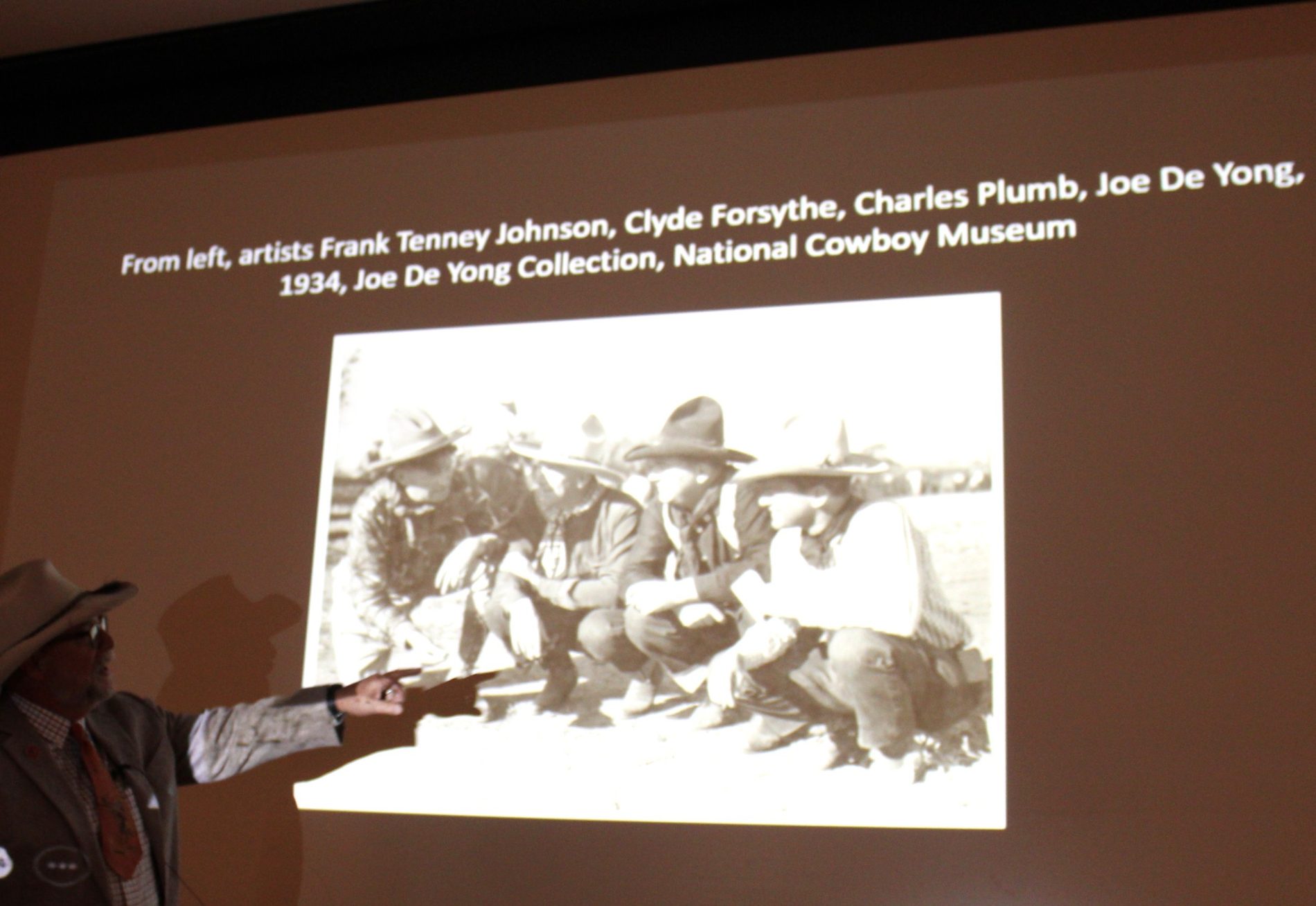
There was a great deal of information about the artists, and a large crowd attended the program.