News
History: The Infamous Outlaw Trail

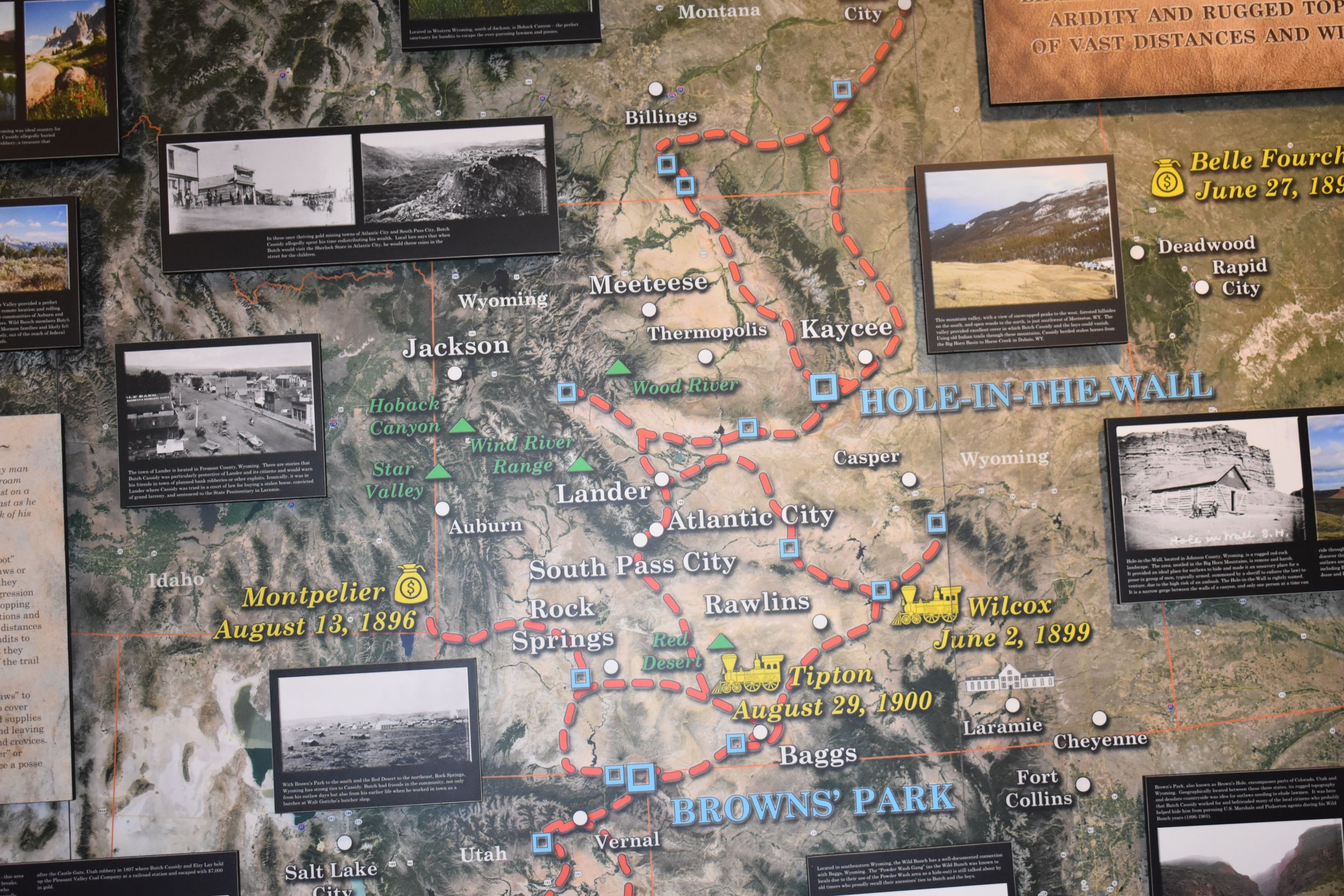
At one time running from Northern Mexico to Southern Canada, the so-called Outlaw Trail was famous, or infamous, during the later part of the 19th century. Some of it ran through Wyoming.
Although not technically a trail, The Outlaw Trail was a way for outlaws to evade law enforcement. It was a collection of ranches, rugged canyons, and water sources. There were sites along the trail in Colorado, Idaho, Utah, and Wyoming. Many of the ranch owners along the were either friendly with the outlaws or forced into compliance by the same. Some, seeing an easier way of making money, joined in with the gangs, while pretending to operate a legitimate ranch.
This story gives a good look at some of the stops along the trail, and the outlaws that were in control of the gangs.
The Clipper, Lander, Wyoming August 13, 1897 – A Disciplined Organization of Range Robbers Terrorizing Parts of Four States. Very Well Organized and Work on a Systematic Plan- Consists of Local Captaincies -Composed of Range Robbers, Bank Burglars and Highwaymen—Some of the Crimes Credited to These Bandits.
The historic depredations of the old time and famous Murrell gang of Mississippi River and southern swamp thieves and desperadoes bid fair to be far eclipsed by the record of the at present operating gang of bandits now plundering portions of Wyoming, Colorado, Idaho and Utah. Such is the information in a special to the Denver News. This great frontier bandit aggregation has an officered and disciplined organization, comprising range robbers, bank burglars, highwaymen and secret ”fences” or receivers and disposers of stolen property, Sheriff Ward, of Uinta County, Wyoming, estimating to your correspondent the total strength of the band at 600 members.
Including in their nefarious work border portions of the before-named states, these banded thieves have a systematic chain of posts or stations, for the temporary storage or handling of their plunder and as gang headquarters and operation bases, the chief of such stations being, far as known, the Robbers’ Roost, on Blue Mountain, between Utah and Colorado; Brown’s Park (or hole), on the borders of Colorado, Utah and Wyoming; Green Mountain, in Utah, south of the Rio Grande railroad crossing of Green River; Powder Springs, in southeast Sweetwater county and the-Hole in-the Wall in Johnson county, Wyoming.
This great criminal border organization appears to consist of respective local captaincies, each local captain reporting to the supreme captain, all important matters being of final reference to an executive high commission composed of the various local captains, with the supreme captain in the chair.
The local captain of the Powder Springs or the Snake River division. N. “Broncho” Johnson; the Brown’s Hole gang is directed by “Butch” Cassidy, already notorious an escaping death at the hands of the avenging citizens in last year’s slaughter of the Meeker. Colorado, bank robbers; the Robber Roost captain is Jim Stevens, wanted, it is said, by Colorado authorities for divers crimes; the Green mountain local chief is Andy Strong, well known in Utah criminal range annals, while the supreme captain is Tom Furley, a refugee from Colorado justice as the brutal murder of Ed Neiman, at River Bend, on the Kansas pacific railroad in 1878.
The local bandit companies are evidently trained to obedience and a certain military routine -the Powder Springs organization, for instance, operating south of Rawlins in the Snake River region, having sub-officers from lieutenant downward, with a regular uniform, officers’ insignia, etc.
The members of the local bandits are well supplied with $20 bills, supposed to be a result of the robbery of the United States paymaster last spring. The crime already credited to these bandits are legion, including the well-known stock depredations of the Hole-in-the-Wall gang, the United States paymaster robbery above noted, the robbery last year of the Meeker, Colo., and Montpelier, Idaho, bank raids; the Bridger, Wyo., store robbery; the late highway robbery of a Mexican, on the Snake River, of $480, and the hold up on the second of this month of the Lander -Rawlins stage.
At their Powder Springs station the thieves are said to have under herd 600 head of stolen Utah cattle awaiting a favorable sale opportunity, as well an a large number ot stolen horses.
At Baggs, on the Snake River, thirty members of the local gang lately indulged in the pastime of shooting up the town,’ stampeding the citizens and perforating doors, floors and ceilings with Winchester and revolver bullets.
Of the four members of the Robbers Roost band, who robbed last June the store Gold Brothers, at Fort Bridger, sheriff Ward of Unita County Wyo., has captured three; Henry Lee, William Meeks and John Henry alias Diek Thompson the same sheriff has lately captured Bud Meeks, one of the Montpelier, bank robbers.
Drastic measures are necessary for the elimination of this powerful and active criminal leagues The states concerned should take concentrated action. – Sun Leader
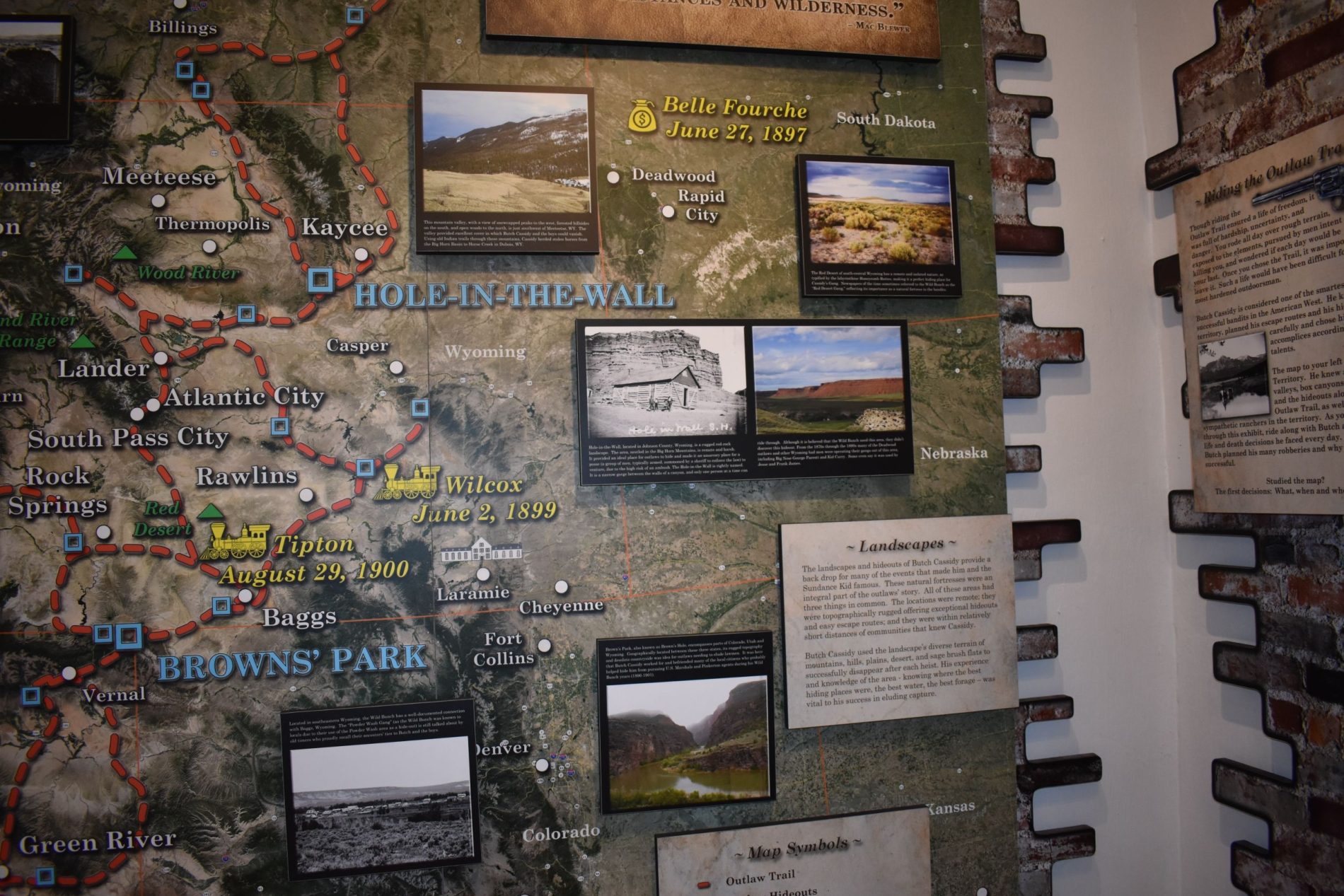
This article tells of the Powder Springs Gang, operating around Baggs, Wyoming.
The Wyoming Derrick, Casper, August 19,1897 – Powder Springs Gang of Robbers. – Denver News. A prominent cattleman of Sweetwater County, Wyoming, has the following to say regarding the Powder Springs branch of the criminal band now operating on the borders of Wyoming, Colorado, Utah and Idaho. The Powder Springs gang now numbers fully as many as the honest stockmen and range workers of that section. The band makes its headquarters at the old Crittenden horse ranch, Mr. J. Crittenden being driven from the range by the depredations of his herds by these rustlers.The Powder Springs furnish enough water for about 150 head of cattle the year round, and the gang always has on hand this number of stolen stock for favorable market purposes.
The leader of the band was originally one Dick Bender, a former small stock man of that region. Bender died last May, and, as an indication at once of his, personal popularity among the thieves and of the amount of money the band can always command, the attending physician was offered $2,000 in cash if he cured the sick leader.
The band has now held the Powder Springs region for three years and has acted in direct alliance with the Hole-in the-Wall gang further northward. The Union Pacific railroad, so report says, sent six weeks since, Frank Spurlock, in a detective capacity, to the Powder Spungs country, the railroad fearing that this band of robbers had train robbing intentions. Spurlock reported that therobbers had a large number of fine riding horses, all stolen, which they were fattening upon oats plundered from the neighboring sheep camps. A train robbing raid, therefore, seemed imminent, the bandits having, owing to their geographical position either the Union Pacific or Rio Grand roads to choose from.
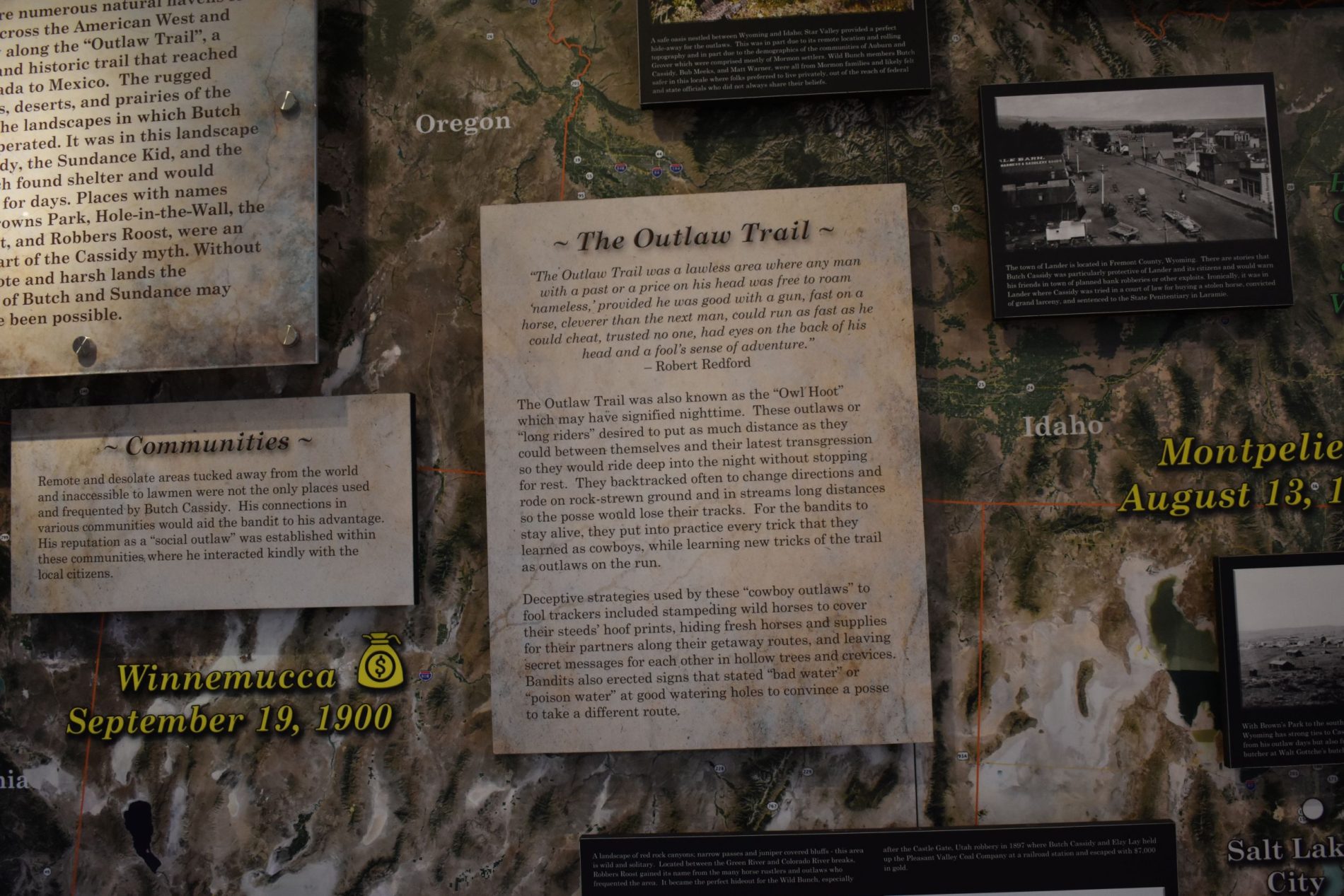
Of course, no story on the Outlaw Trail would be complete without a mention of the famous Hole-In-The-Wall country in Johnson County.
The Daily Boomerang, October 14, 1895 –Hole-In-The-Wall. – Reported Discovery of a Rendezvous for Range Rustlers. – The following story comes from the correspondent of the Denver News: “Advice indicate the existence in the mountains of Johnson County of a habitual range rendezvous and headquarters of range rustlers. It is near the waters of Powder River and is known as “the hole in the wall,” being a deep mountain canon or basin, the approaches to which, owing to rugged and often precipitous character of ground, are inaccessible to anyone not holding the key to the labyrinth. The range thieves are said to number forty or fifty and are under the most thorough organization and effective as well as daring leadership. To this gang is attributed the extensive range depredations of last winter and spring which well nigh eliminated the herds of Fremont County.
The next story was a small segment from a longer story about Range Detective Tom Horn. It is interesting because it mentions Isom Dart, who was a negro cowboy, who worked as a cowhand and possibly a rustler in Brown’s Hole.
Cheyenne Daily Leader, November 21, 1903 – Two More Murders. In 1900 Matt Rash and Isham (Isom) Dart, small ranchmen of the Brown’s Hole County, Colorado, were foully assassinated with short Interval between the crimes. As in the cases of Powell and Lewis, Dart and Rash were suspected of rustling, and it was claimed that they had been put out of the way at the instigation of large owners of cattle. Horn was in the Browns Hole country at the time, and he was known to have eaten supper with Dart, who was negro, the night before the ranchman was killed.
The Outlaw Trail can still be traveled today, although much of it is on private land. Still, one can visit some of the sites along the trail, and much of the landscape has not changed a great deal since Butch Cassidy and his gang trailed stolen cattle across the hills.
The Hoofprints of the Past Museum each year hosts a tour of the Hole-in-the-Wall country, and Mike Bezemek wrote a book Discovering the Outlaw Trail, with several sites that one can visit. In 1976, after he played Butch Cassidy in the well-known movie about the outlaw, Robert Redford traveled in Cassidy’s footsteps by horseback, car and by boat, and published a photo essay book about it. The book is titled, The Outlaw Trail: A Journey Through Time.
The Outlaw Trail, a part of Wyoming’s wild and often lawless past.
Photos taken at the Wyoming Territorial Prison, Laramie, Wyoming.