News
Explore History Program Features Donovin Sprague

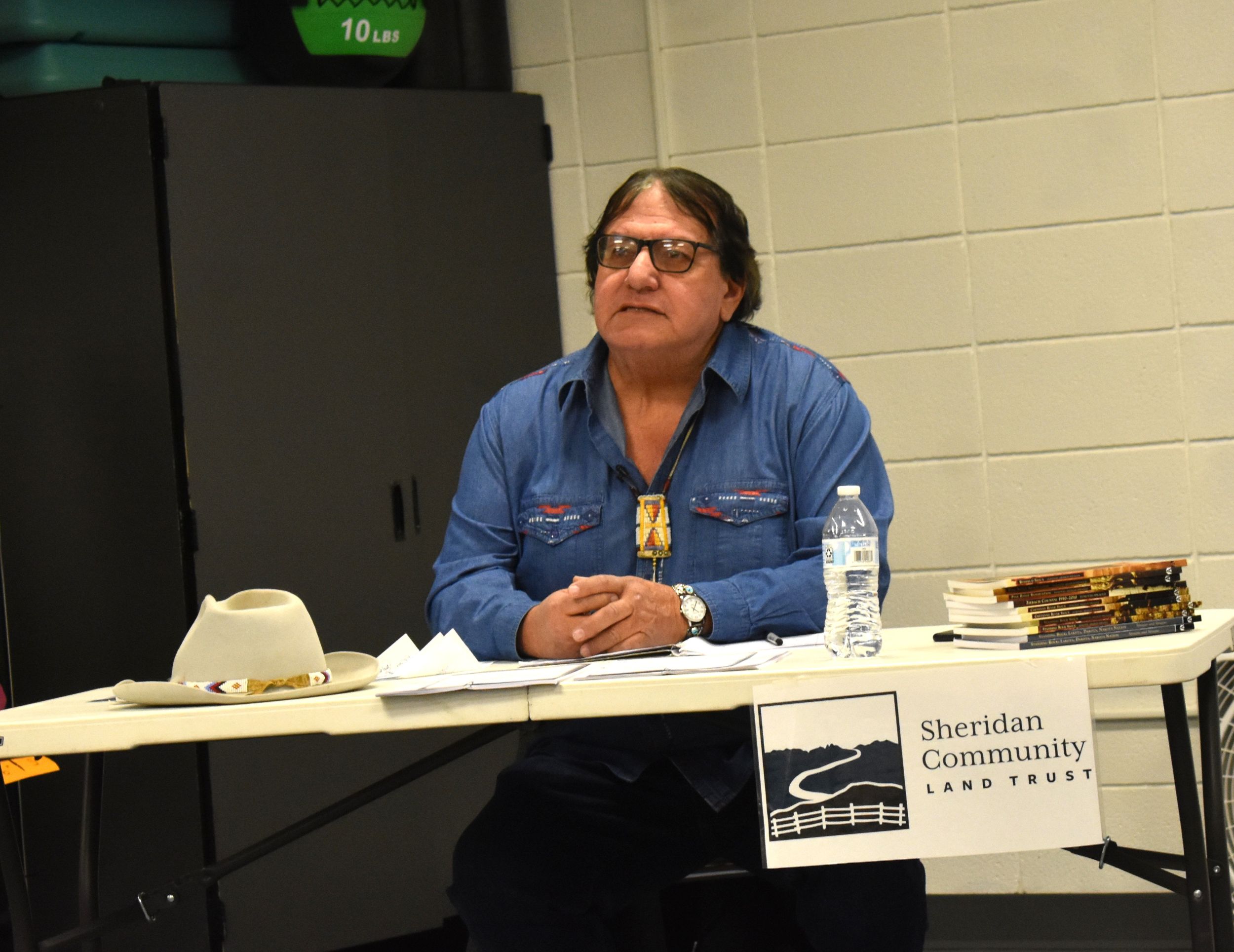
On Tuesday, February 17, the SCLT Explore History Program featured Sioux Historian Donovin Sprague, an enrolled member of the Cheyenne River Sioux Tribe and a descendant of both Chief Hump and Crazy Horse. He gave a talk and slide show presentation about the Powder River Expedition of 1865.
The room at the Tongue River Valley Community Center in Dayton was filled to capacity for the talk, and SCLT History Program manager Kevin Knapp added that there was a large crowd for the same talk held on Feb. 10 at the Senior Center in Sheridan.
Sprague started his presentation by talking about the fact that the area around Sheridan and Dayton was at one time the homeland of the Cheyenne and Sioux, along Tongue River from Dayton to Miles City, Montana. He said he has spent a lot of time in this area exploring his ancestral homeland.
He talked about the winter count buckskins that were a way of recording the most important events of each year. Sprague also talked about Sand Creek Massacre, when the Cheyenne and Arapaho brought the war pipe to the Lakota.

One of the best-known battles of the expedition was the Connor Battle, which took place is near the present-day town of Ranchester on August 29, 1865. Brigadier General Patrick E. Connor attacked a mostly peaceful band of Arapaho, and this battle caused the Arapaho to ally with the Sioux and Cheyenne during the Fetterman Fight.
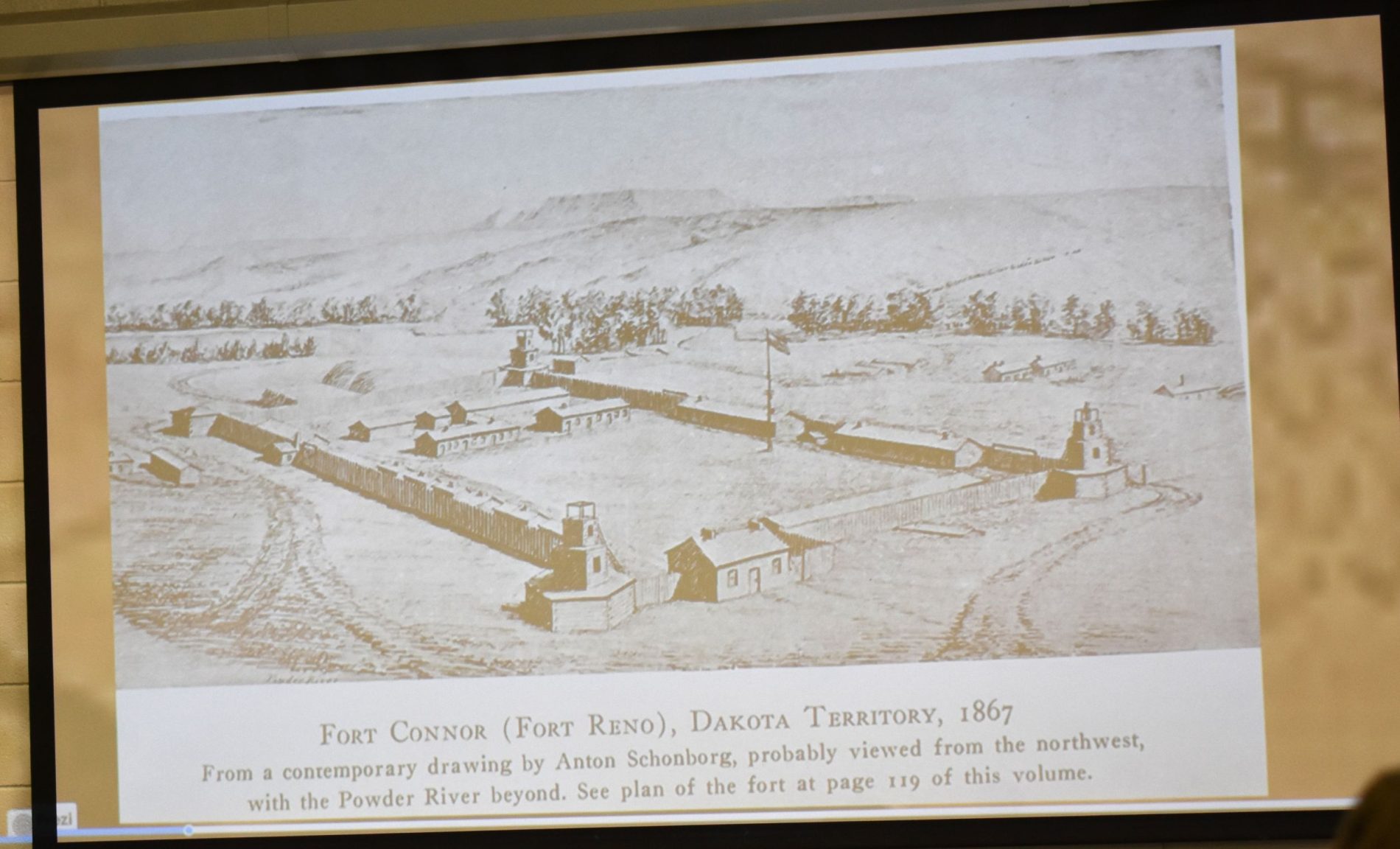
Sprague talked about the three forts along the Bozeman trail, Fort Reno, Fort Phil Kearny and Fort F.C. Smith. It was Connor’s job to establish those forts. Several fights followed when the Native American’s were opposed to the trail, and establishment of the forts. Some were the Platte Bridge Fight, the Sawyer Fight and the Red Buttes fight.

He said there were three divisions of the 1865 Powder River Expedition.
The had planned to meet up, but they didn’t find each other. “You all know how big this country is,” he added. “There were a lot of hardships with the expedition.” Although the expedition was to set up forts along the trail, it was also to punish the Indians.
James Sawyer was bringing a group of businessmen to Virginia City to start business. Sawyer was former military but at this time he was a civilian on the expedition to survey to improve the roads to the gold fields.
One September 1, 1865, Sawyer was pinned down by a group of Arapaho. Sawyer didn’t know about the earlier fight when Connor attacked the village.
Three years later, after several fights, including the Fetterman Fight and the Wagon Box fight, as well as many skirmishes and Native American harassing the wagon trains along the Bozeman Trail, the white men moved out of the area with the treaty of 1868.
Donovin said that when his ancestors went to the reservation, they only had stories about this land where they used to live and hunt.
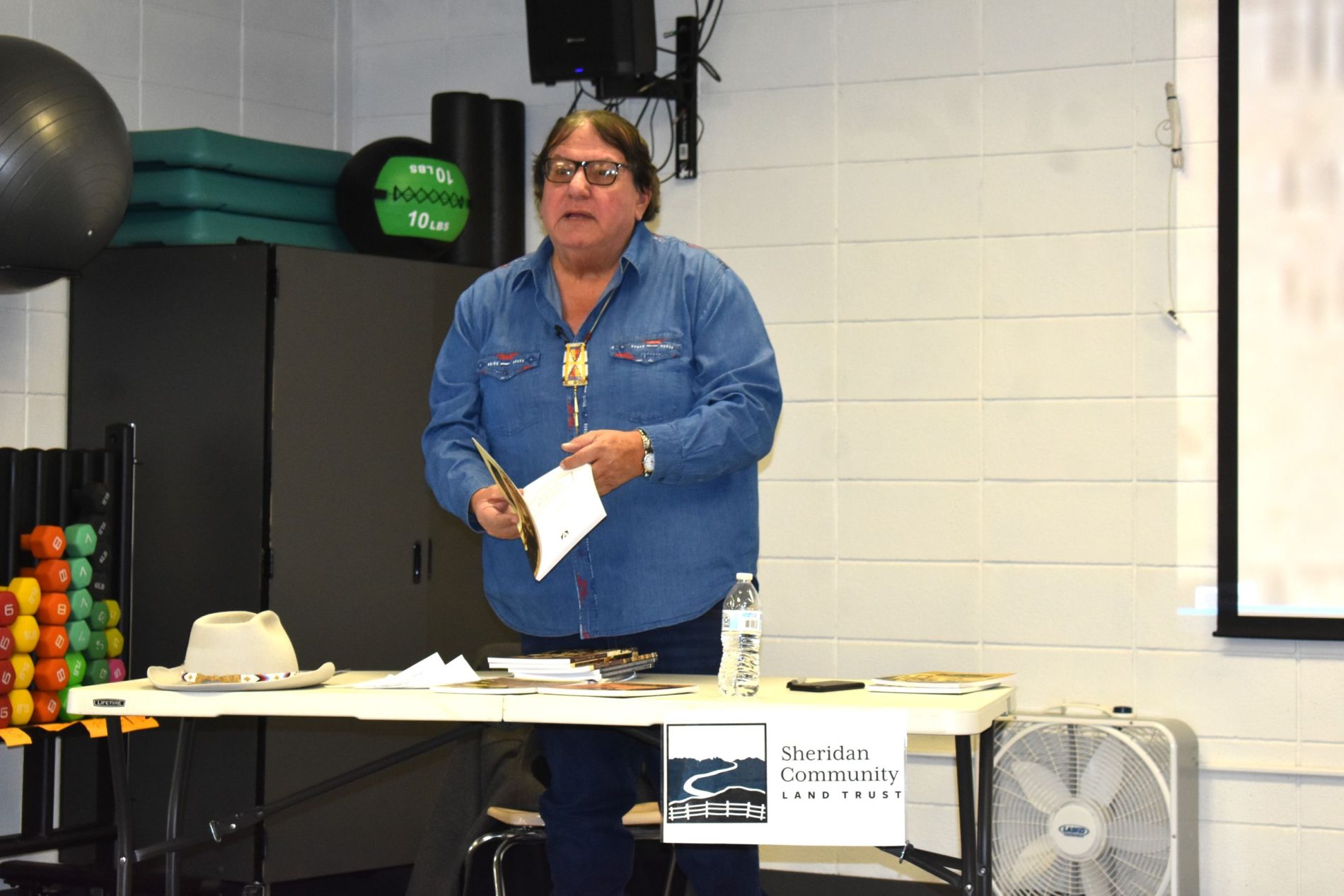
They could not leave the reservation without specific permission, and he felt very fortunate that he could now come and see and walk this land.
The program had a great deal of history of the expedition and the part that the Cheyenne and Sioux Indians played in most of the battles.