News
Dinosaurs on Sioux Land Subject of Talk


Sheridan Community Land Trust, SCLT, held their January program on the 20 at the Tongue River Valley Community Center in Dayton.
The program was presented by Tom Hebert, Director of the Natural History Museum of Wyoming, located in the Mohns Center at Sheridan College. He said that the museum is the ‘best kept secret’ in Sheridan. He is also the founder of the Earth Science Foundation, Inc.
Hebert gave a talk on digging dinosaur bones on the Standing Rock Sioux reservation in Montana.
He said it took him a long time for him to get the trust of the tribe, so they would tell him the stories and let him dig for the dinosaur bones. They believe that dinosaurs were evil spirits, and belong in the ground.
It has to be done in a specific way, Hebert said. He had an alabaster shell, and it is an important part of smudging with sage, and this is what has to be used. There will be prayers while they are doing that. It is to wash away evil spirits. Then they will burn bear root, which has curative properties and is burned to bring in healing energy to the land. Then sweet grass is burned to invite in the good energy to protect everyone there.
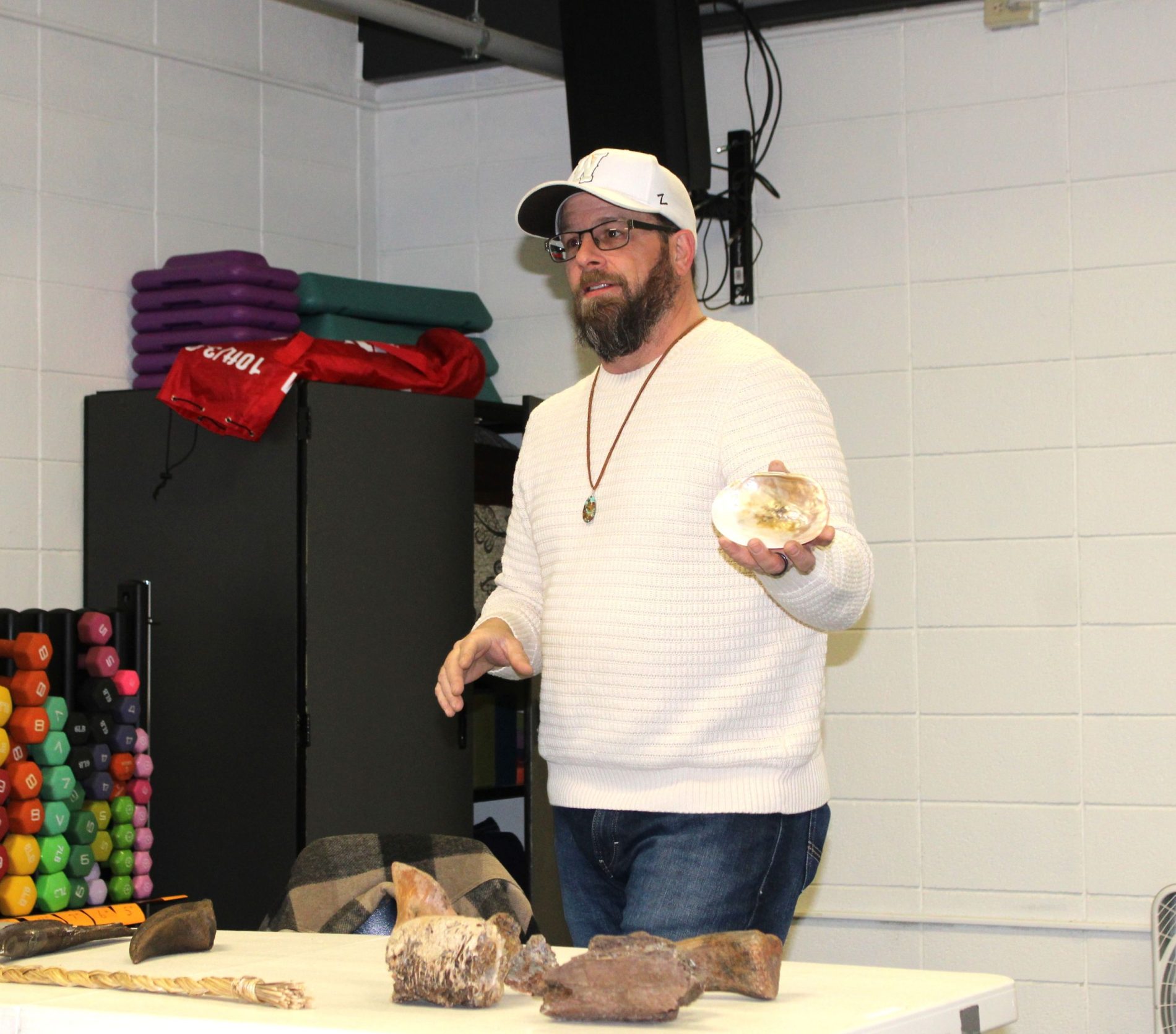
One thing that dinosaurs are to the Standing Rock Sioux tribe is an economic resource.
He said it was not only beneficial for the Sioux youngsters, because teaching kids to dig up dinosaur bones and working in the earth changes them for the better and gives them more confidence in themselves. It is good for the students but is also beneficial for the health of the entire community.
He said that at one time all dinosaur bones dug up in Montana state land has to go to the Museum of the Rockies in Bozeman, which does not help the kids in rural Eastern Montana.
“Why can’t we have local museums that could display the fossils dug up in the local areas?” Hebert asked. He talked to the Montana governor about changing the law about fossils going to the Museum of the Rockies. Now small rural museums can show off the fossils found in their areas.

Hebert said that the small town of Ekalaka has a one of the premier dinosaur museums in world and they have a Dinosaur Shindig in July, and tickets sell out within 24 hours. In 2026, the Shindig will be on held on July 25 & 26.
He said that the older generation needs to bring in the young generation into the earth sciences and let them help us find ways to use the earth in a responsible manner.
He added that some of the kids who come into the Natural History Museum of Wyoming to volunteer are high functioning on the autistic scale and they often excel in tasks that require laser type focus on a task. “Quit taking a square peg and try to put it in a round hole, lets make a square hole for these kids.” Working with the dinosaur bones in the museum helps the students to use the talents they possess.
Hebert also talked how the colleges could help to encourage students to pursue earth sciences.
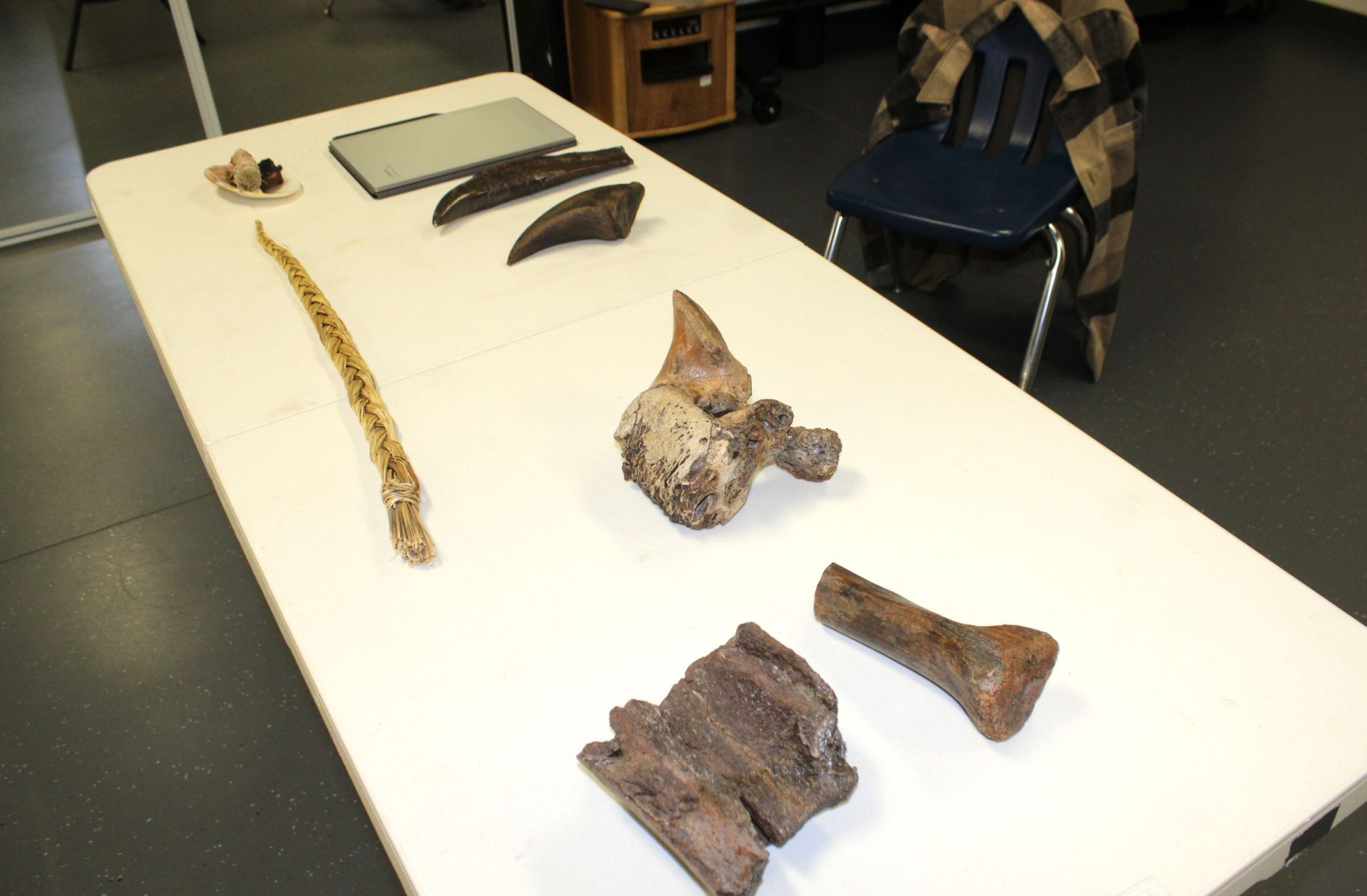
He also talked about the Natural History Museum in Sheridan.
There will be an open house on Jan. 31 to celebrate the opening for the new year.
Kevin Knapp, SCLT History program manager, talked about the upcoming Explore History Program in February.
He also talked about the Big Goose natural area, and that there is a place for people and their dogs can enjoy. There is an area for dogs to run off leash as well.
The program will be repeated on Tuesday, January 27, at 10 a.m. at the Hub on Smith in Sheridan. It is free and open to the public.