News
Native American Code Talkers Subject of Program

In war, military codes are important to securely communicate with your allies in a way that the enemies can’t understand. Unfortunately, most codes can be broken, so it is imperative to have a code that cannot be broken.
During both World War I and World War II, American Indian soldiers were used in the U.S. Army and Marines to communicate in their language, which was unbreakable, as their languages are so different from the European and Asian languages.
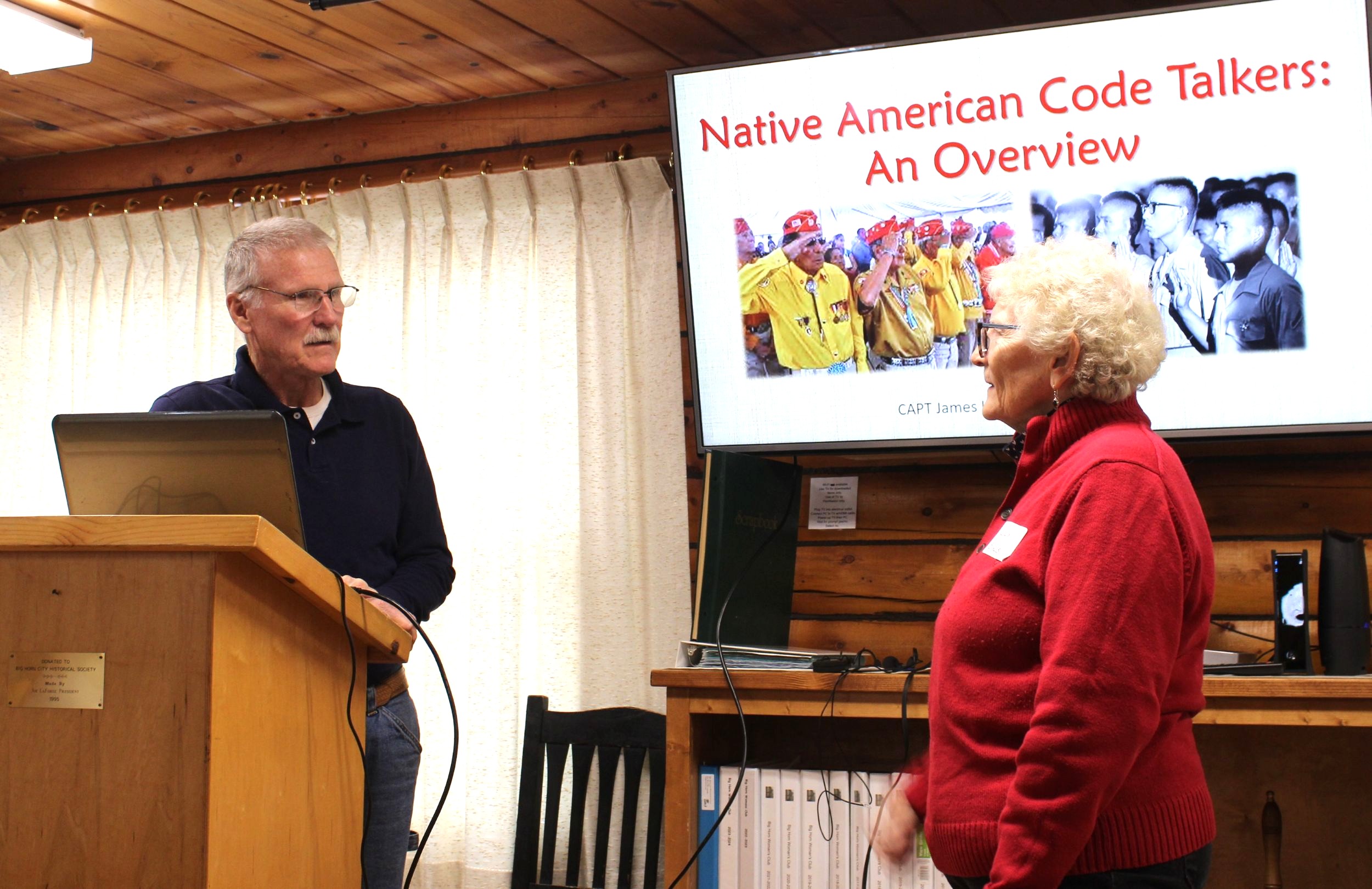
H.B. Puckett, U.S. Navy, retired, gave a talk on Sunday, November 22, at the Bighorn City Historical Society in Bighorn. Puckett talked about his military service, and Mike Kuzara, president of BHCHS, talked about code machines that were used by the military.
Kuzara said that when he was in the military, he used the KL-7 Cipher Machine. Puckett said that when he joined the Navy, that was the first machine he turned it for being obsolete.
Puckett started his talk on the Code Talkers with a slide bearing this quote.
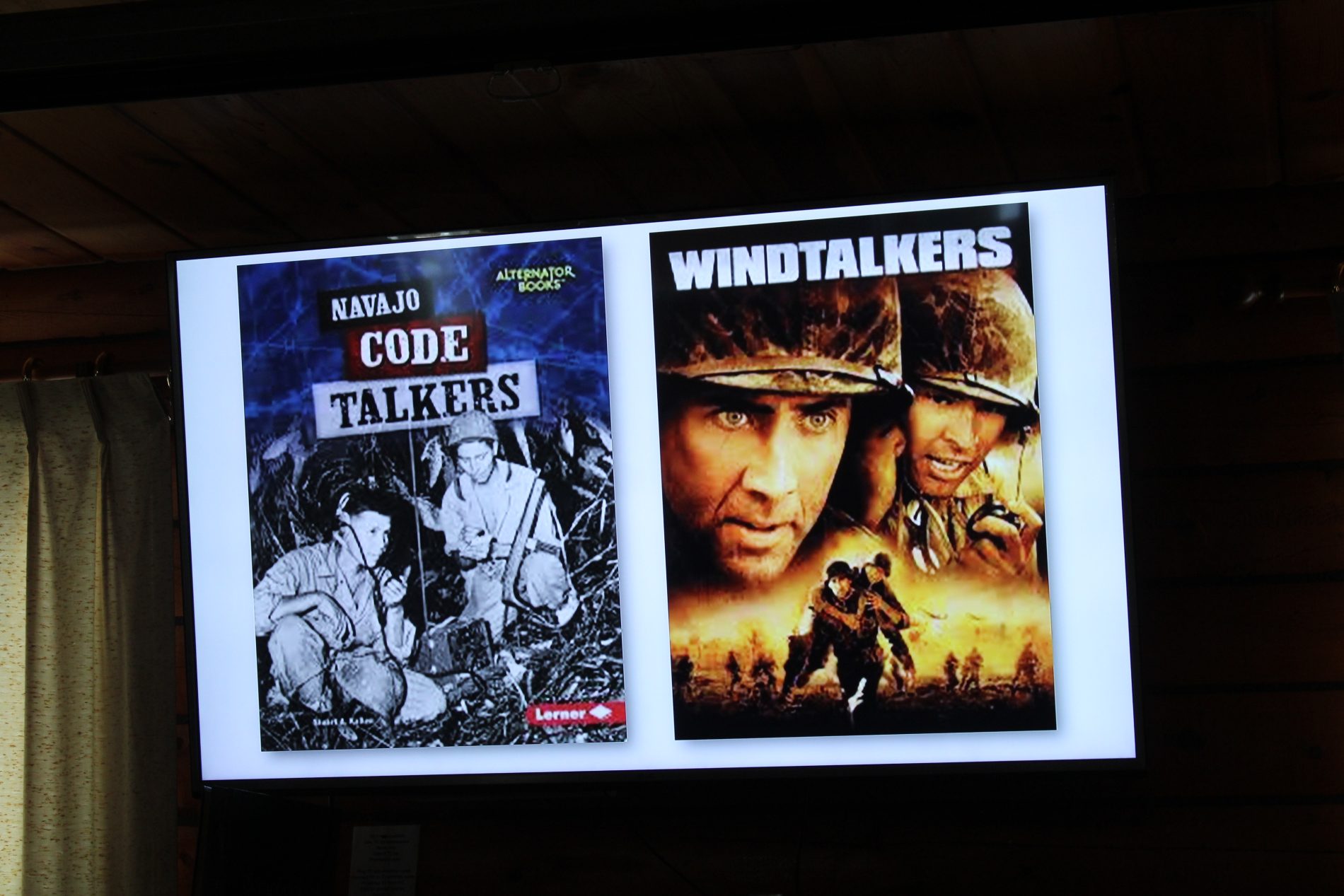
There have been numerous books written about the Native American Code talkers about them, as well as the movie, Windtalkers. Although the Navajo are the best known, other tribes contributed as well.
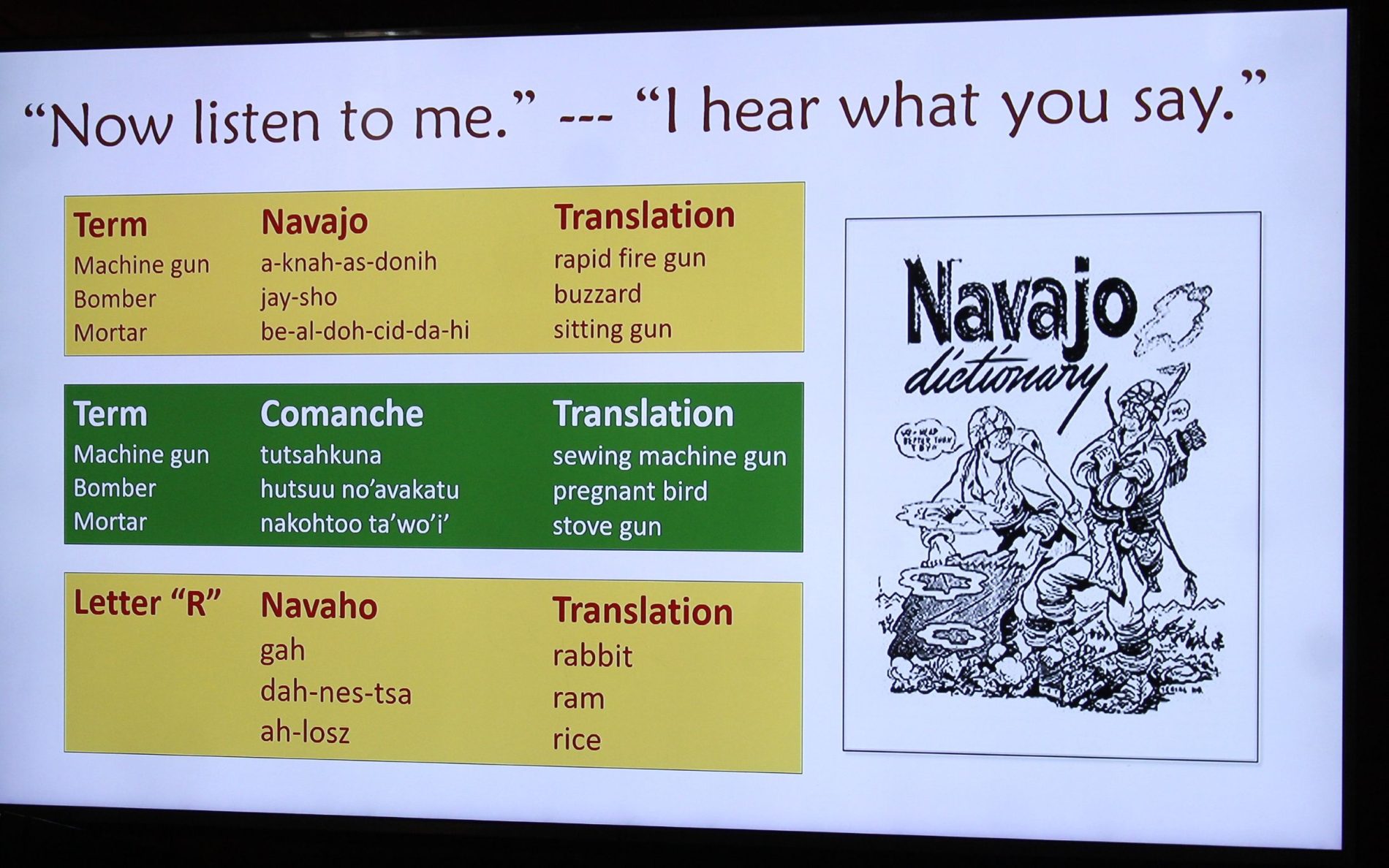
Sometimes the Indians just talked across the telephone in their language, but some languages were used as codes. The Choctaw, Comanche and Navajo were coded.
One word they used for casualty was ‘scalp.’ So, 17 casualties were 17 scalps.
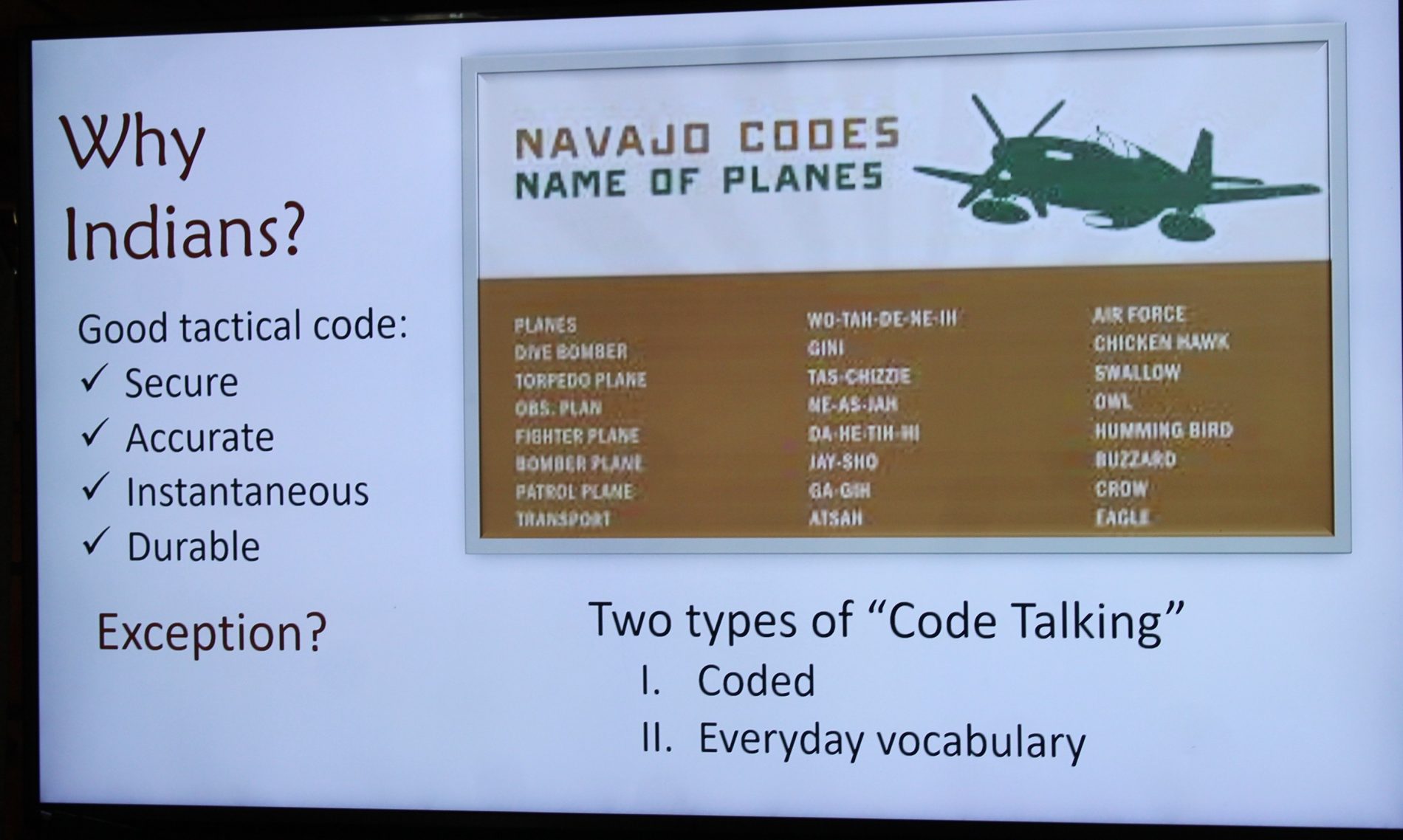
One reason the Indian codes were difficult to break, is the fact that all of the Native American languages, except for the Cherokee, were not written down. No one could find a dictionary to translate the words. The language was all in the Code Talker’s heads. The only way to break the code was to know the language, and few people, except the tribal members, knew that language. No one else could understand it.
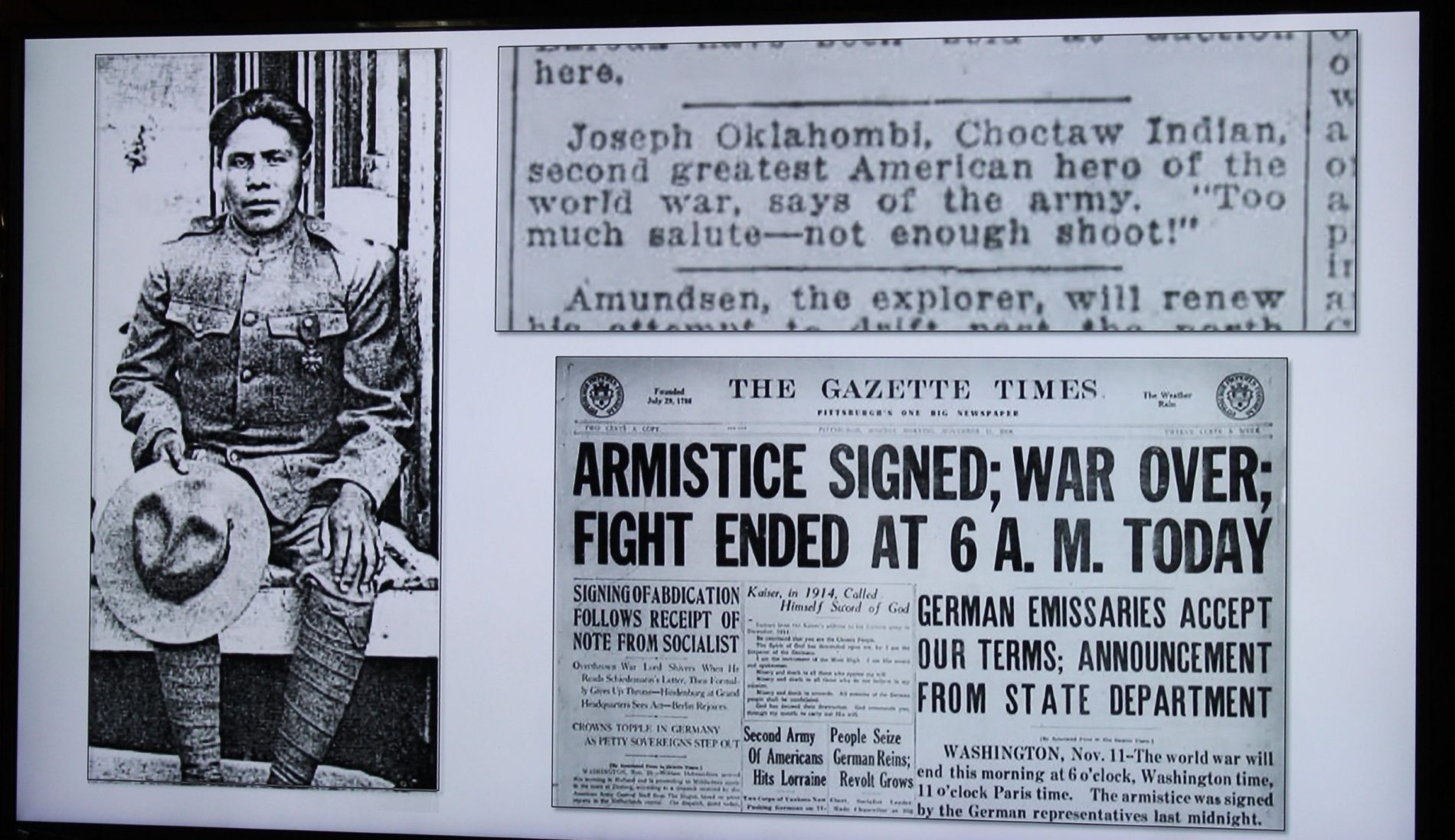
He talked about the Choctaw in WWI, and the telephone lines that were used for communication at that time. They could talk to other tribal members across the telephone lines, and the enemy couldn’t understand the communication if they did break into the line.
He mentioned the one of the most famous heroes in WWI, second only to Sergeant Alvin C. York was Private Joseph Oklahombi, Choctaw Code Talker, who with 23 other soldiers at Saint-Étienne, France, attacked an enemy position and captured 171 Germans while killing some 79 more.
He told one story from WWII, when the Comanche soldiers were in training, they had a mock battle scenario where the Comanche trainees were ‘captured’ and held as prisoners.
The Native American’s have enlisted and served in the armed forces in a greater percentage of their population than any segments of American Society. One reason for this is that the Native American’s are by and large a warrior culture, and a warrior has a high status within the tribe.
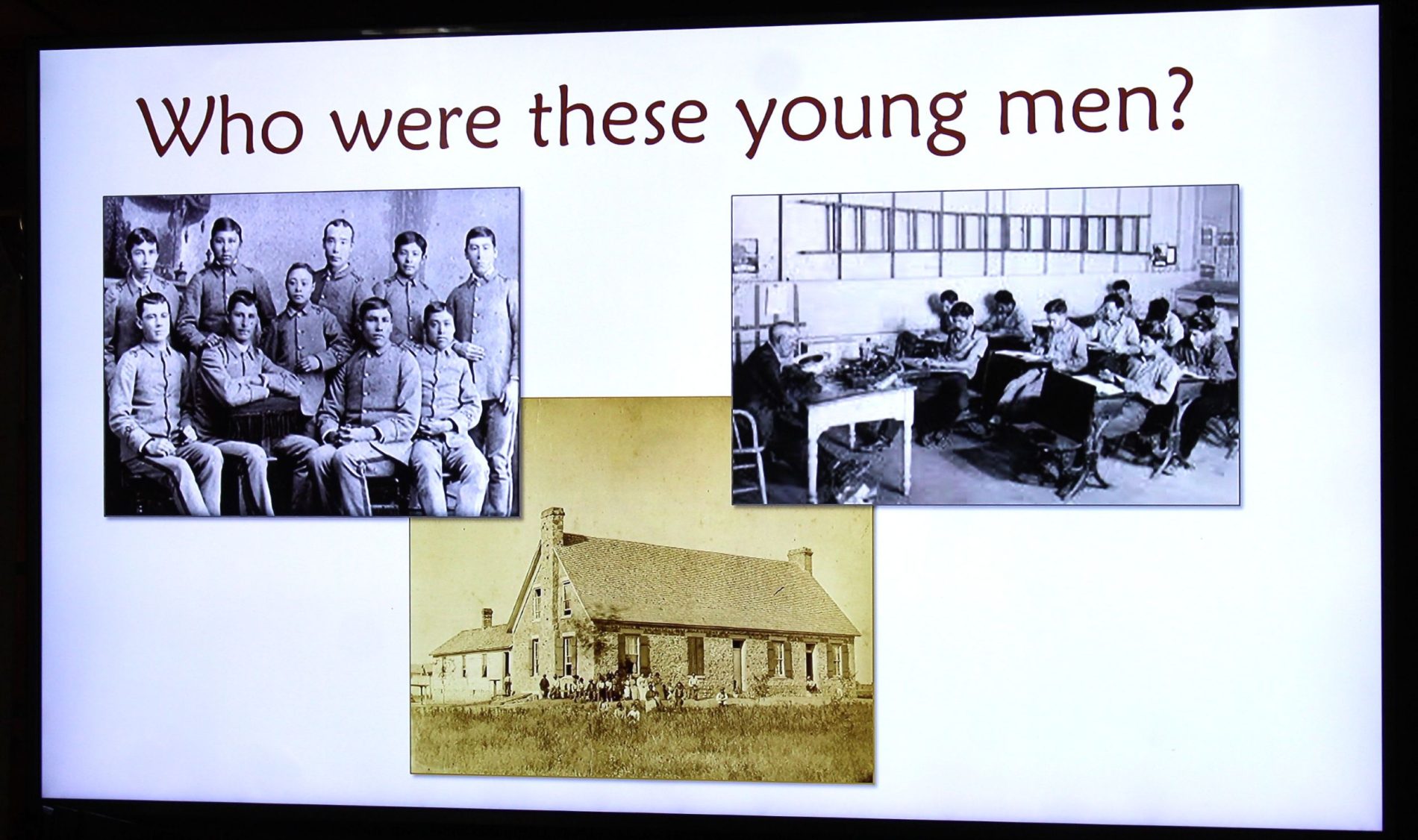
He added about the basic training in the armed services that the Native Americans had to do in addition to their work as Code Talkers.
Puckett’s talk was full of information about these brave tribal members who were employed by the US Forces, and the amazing contributions of their unbreakable communications in the nations wars.
Puckett is scheduled to give this talk again for the Clearmont Historical Group in Clearmont on December 7.