News
History: Canning – Preserving the Harvest

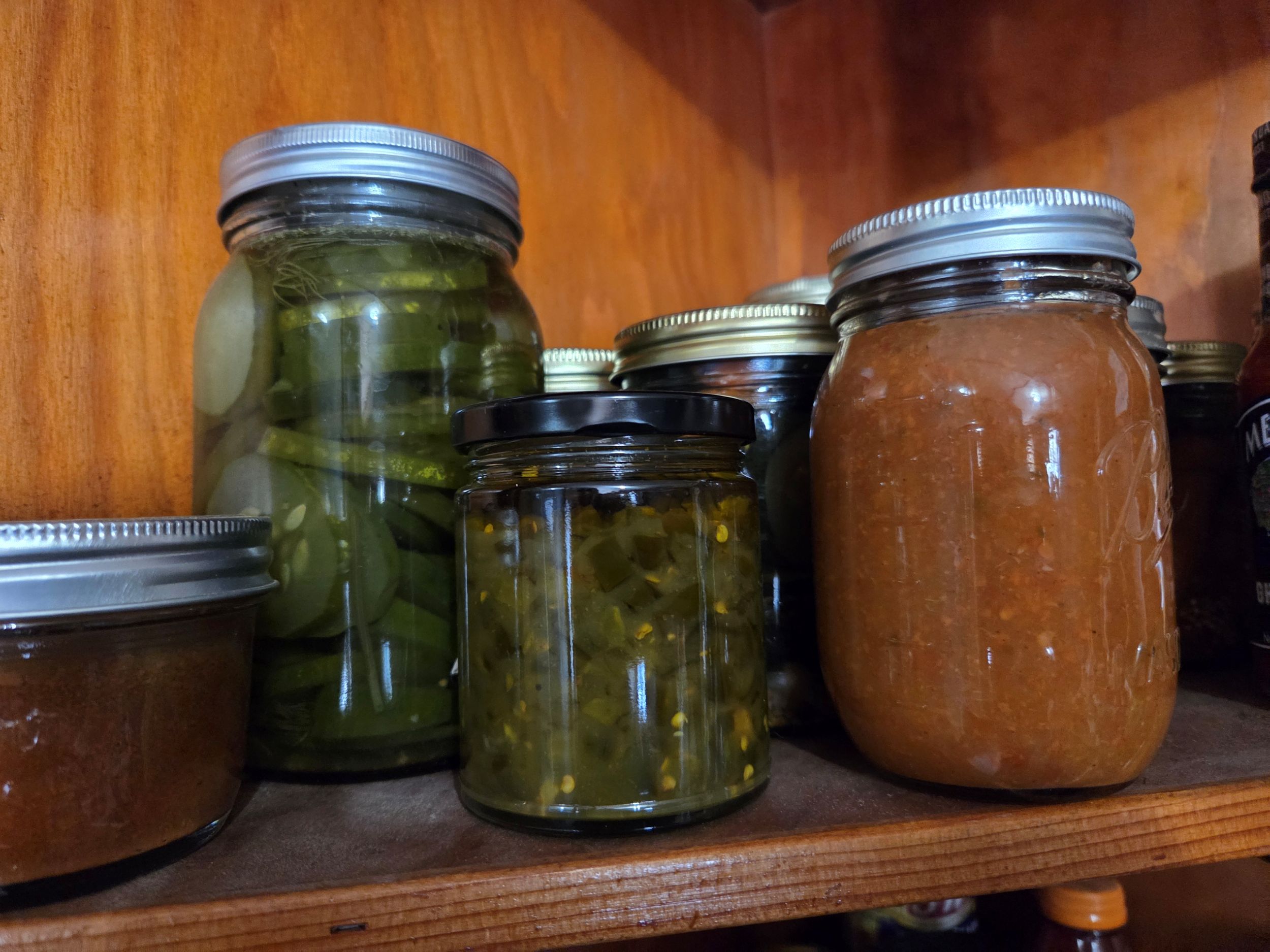
Before most of us depended on large grocery stores for our food, there were several ways to preserve food stuffs for winter or during times of when fresh food was scarce. It was also a way to make sure that nothing from the garden or the hunt went to waste.
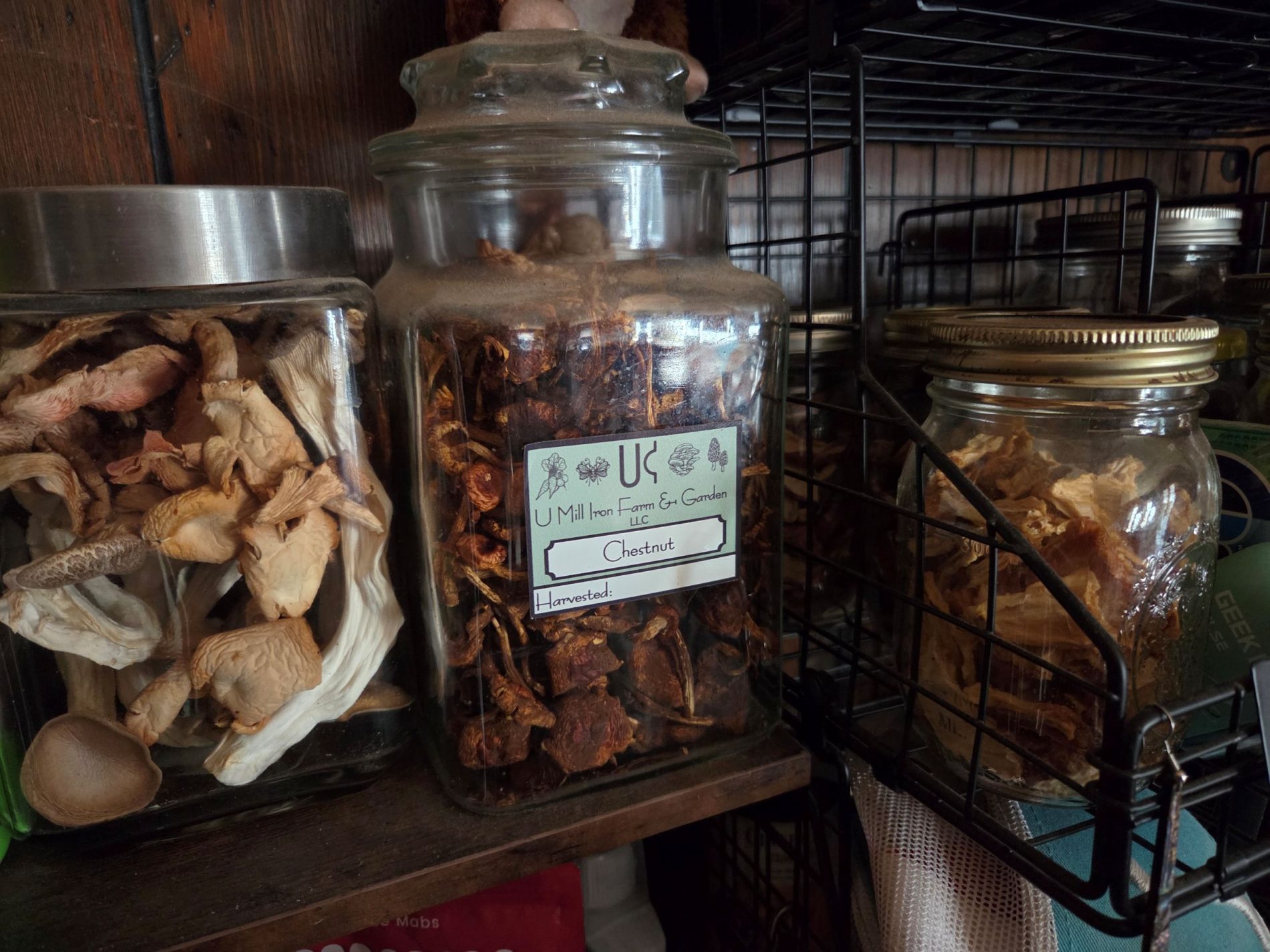
Native Americans dried plants, meat and fish to help them survive the long winters when there was little fresh meat or green plants to be found. Homesteaders and other country folks preserved their own vegetables, fruit and meat for the winter. Today, many people use dehydrators to dry certain foods as well.
But, canning was a way that many people used to preserve their foods, before freezers and refrigeration. It was almost an art form as well as a way to survive. There were even competitions for canning, as we will see later in this story.
This story is from the Wind River Mountaineer, August 2, 1918 – Community Canning – Co-operative canning of foods by the housewives of Fremont County is urged by Miss Helen Corliss, county home demonstrator, as a measure of maximum results in the conservation of food, fuel and labor. She points to the fact that if we are going to be able to rise above possible misfortunes in crop production, we must begin now to prepare for them.
One good way, she declares, is to see to it that no fruits or vegetables are wasted, and that this can best be done by co-operative action. In advocating a community cannery Miss Corliss explains a successful cooperative plan that saved the surplus garden products of Newark, New Jersey.
This city instituted a community canning factory, where women might spend their unoccupied hours conserving the vegetables and fruits for winter consumption. They were paid 15 cents an hour for this work, their pay being taken out in canned goods. The canning plant was in a few rooms centrally located and loaned to the city rent free……. The enthusiasm and earnest co-operation of the women workers were shown by urgent appeals for longer. hours and extension of time. In order to allow mothers with young children to take advantage of this canning factory and put up their share of the surplus garden products, a day nursery was opened near by, where the children could be left in charge of a trained mother’s helper, assisted by several girl scouts volunteered their services. In this way the women of Newark saved hundreds of pounds of fruit and vegetables that otherwise might have been wasted.
During World War I, there was sugar rationing, and this from the same newspaper gave the readers some ideas for canning without using sugar.
Further Sugar Restrictions – The allowance of sugar for canning purposes for the season has been restricted to 25 pounds for each family of less than five persons, and to 50 pounds for each family of five persons or more. The Federal Food Administration for Wyoming emphatically denies the report that housewives should not put up any fruit this year because of the scarcity of sugar.
If Uncle Sam is going to have sufficient supplies for his fighters and enough, to spare to the allies, every housewife in America who can, must “put up” enough for her family’s needs this winter. The problem of saving fruit without the use of sugar may solved in several ways: Canning fruit in water. Canning fruit juices without sugar. Canning fruit in fruit juice. Canning fruit butters without sugar.
Canning In Water – (a) Open kettle: Gently simmer the fruit in very little water. allowing the water to evaporate as much as possible. Fill sterilized cans with the boiling hot fruit and seal. Do not expect the fruit to keep its shape. This will make excellent pie filling. (b) Cold pack: Pack the fruit very closely in the cans. Fill with water, cover and steam from twenty to thirty minutes, according to the hardness of the fruit and the degree of ripeness. The skin will burst, and peeled fruit will drop shreds to the bottom of the can. but the shape will be kept. (e) Hot pack for small sour fruits such as cherries: Pack the fruit quickly in a hot jar. Fill the jar at once with boiling water. Clamp and set quickly into a boiler or large pail containing boiling water enough to cover. Remove the boiler at once from the stove and let the jar cool in it. Success in this method depends on promptness. The fruit will remain unbroken.
Canning Fruit Juices Without Sugar – Any fruit juice extracted for jelly may be canned without sugar by reheating to the boiling point, filling sterilized jars and sealing. This juice may be used for flavoring sauces, for beverages or for jelly making. If space must be saved, the juice may be evaporated to one half its volume before canning. Fruit juices may be canned without sugar now. There may be sugar later for jelly making. If not, the juices will keep till next season.
Canning Fruit In Fruit Juice – Any fruit sweet enough to be eaten without sugar may be canned in its own juice. This gives a product a finer flavor than can be produced by the use of sugar syrups. Divide the fruit into two equal parts, selecting the best for the canning, and leaving the porter for making the juice. Extract the juice as for jelly making and can the fruit in it, using the cold pack or open kettle method. The fruit will stay whole and keep its shape. If fruit is expensive, this juice may be poured off for jelly making before uring and the fruit recooked n syrup.
Canning Fruit Butter Without Sugar – Fruit, which is small or imperfect, though in good condition, may be poor in appearance but of excellent flavor. Such fruits, boiled till soft, rubbed through a puree sieve make a good foundation for relishes and for cake and pie fillings. Pick the fruit over carefully; cut large fruits, such as apples, in pieces. Add as much water as would be used in extracting juice for jelly and simmer till fruit is tender. Run through a sieve to remove skins and seeds. Simmer the pulp in a shallow pan over the stove, until it is as thick as cake dough. If direct heat is used constant stirring will be necessary. Adjust rubbers to the preserving can, fill it with the fruit butter, adjust the cover but do not damp. Boil 15 minutes in a closely covered steamer. Clamp cover and invert jar. The M. N. Baldwin Co. Dupont & O’neal The Cash Grocery
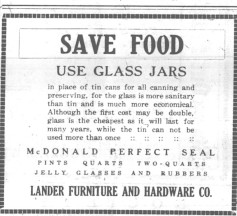
Wind River Mountaineer, August 2, 1918
There were even nationwide canning competitions and the Wyoming canning team did very well in 1919.
The Powell Tribune, October 17, 1919 – Wyoming again made a splendid showing at the Sioux City Inter-state fair, September 14-20, and carried away high honors. In a canning demonstration contest with eight other states, the Wyoming State Champion Canning team took first place. This team was the one selected at the champion contest held at Douglas during the State fair.
Misses Flora Mae Smith, Gwendolyn Mills and Norma Mumford, all of Sheridan, were the members of the state champion team, now the Inter-state Champion Canning team of the Mid-western states. Miss Emily Linhoff, assistant state club leader, who directed the training of the canning teams throughout the state, accompanied the Wyoming girls to Sioux City, where she had charge of the Wyoming exhibit and the canning demonstration. Nebraska, Colorado, Minnesota, Iowa, Kansas, Illinois and Missouri were the others that entered the canning demonstration teams at Sioux City, and with whom Wyoming competed for first place.
The Inter-State live stock fair at Sioux City is held every year. The fair board has always manifested an interest in Boys’ and Girls’ club work that it has now become one of the finest and largest features of the fair.
During WWI, along with sugar rationing, there was also a push to make everything patriotic, and a way to help the war effort. Including canning.
The Sheridan Enterprise, July 5, 1918 – Canning of Trout is Patriotic, So Here’s aMethod to Carry it Out – By L. A. Marks (Assistant Slate Club Leader.) Considerable canning work has already been done by the Girls’ Canning Clubs and housewives In this county. With the trout season in full swing a good deal of attention is being given to this Wyoming product. It has been found that trout, like vegetables and fruit are very easily canned by the Single Period Cold Pack Method.
During July the trout are very plentiful and at their best for canning. We should can fish because they can be used as a meat substitute and further because we will be conserving one of our home products which people must use to lessen the strain on transportation.
There are eleven steps which should be followed in the canning of trout as in canning anything else. 1. Sterilize the jars, caps and rubbers. 2. Grade product for size and color 3. Prepare product for canning by drawing and removing head or eyes if head is left on. 4. Blanche in boiling water for ten minutes, this is for the purpose of killing bacteria and to save the juices. 5. Cold dip to cleanse. 6. Cold Pack in sterilized hot jars. Add 2 t. of salt per quart jar. Jars may be filled with boiling water, but due to the large amount of water in fish this is not necessary. 7. Put rubber on jar so it will stick to jar and not curl up. 8. Put cover on not too tight. 9. Sterilize in canner for 4 3/4 hours, this time is figured with the altitude of Sheridan considered. (Note – Water boils at a lower temperature at higher elevations. Sheridan is a little under 4,000 feet in elevation. At 5,000 feet, water boils at 202 degrees as opposed to 212 at sea level. So, food has to cook longer due to the rise in elevation.) 10. Take product out of canner, adjust rubber and tighten lid. 11. Invert to test joints, cool.
Canning Of Greens – Among the early vegetables we have a variety of wild and cultivated edible grasses, which make a very valuable and succulent food. Any of the greens and green vegetables such as dandelions, water cress, pepper cress, beet tops, spinach, asparagus etc., may be canned by the cold pack method. In the canning a few precautions are necessary. The greens should be canned the same day that they are picked. They should be-blanched over steam in order to insure a greater shrinkage and at the same time to retain the vegetable oils and mineral salts which are a valuable part of the greens. When canning rhubarb, to be used as a vegetable, do not can the leaves as they are poisonous.
Care should be taken that the jars are packed full when the processing is over. A half full jar after processing is the result of poor blanching and packing. Bulletins on canning and drying can be obtained from the club leader or county agent at the courthouse.
Root vegetables such as beets, carrots, and potatoes store well in a root cellar or a pit, and can be kept for several months.
This from The Big Horn County Rustler, November 13, 1914 – There are several ways to store potatoes The most common one is to put them into a cellar under the house, but this many times is not too good. There is a lack of ventilation and if one tries to carry low enough temperature to keep them from sprouting, they are apt ‘o be caught by frost What is without doubt the best, is a regular outdoor root cellar, but as these are expensive if made to last, only a few growers can afford them. I believe the best way for the most of us who have to keep potatoes over till spring, is by means of pits.
In sandy soil, a hole may be dug either partly or all under the ground, but in a heavy soil the potatoes must be entirely above ground. Choose a place that is high enough so water will not stand on it, and soil is loose enough to shovel, then put the potatoes in a round pile containing not more than 125 bushels. Over the potatoes place dry straw or old hay…… I have had potatoes pitted this way that were without sprout as late as June 1.
After WWII, home canning declined due to the increased availability of home refrigeration and home freezers, which allowed housewives to easily freeze produce rather and can it. Freezing is quicker and less work than canning, so today, many gardeners opt to freeze much of the harvest, rather than canning.
Still, homemade pickles, salsa, hot peppers and other foods are still preserved in glass jars and stored for enjoying later. So, if you want to try your hand at canning, there is a wealth of information about how to do it safely and to preserve your harvest to enjoy during the months of snow and cold.